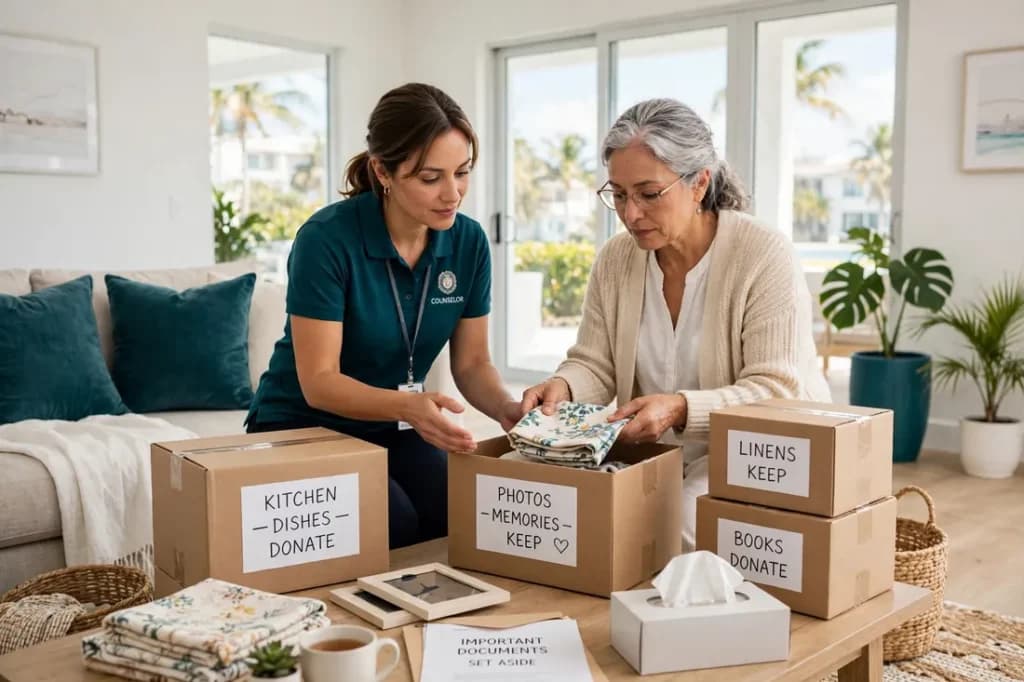
Cleaning out a loved one’s home after they pass means sorting, keeping, donating, or discarding their belongings, then restoring the home itself. Start by securing the property and pausing before you touch anything. Then work room by room at a steady pace, keep what carries meaning, and bring in professionals for anything unsafe or overwhelming.
There is no deadline that grief respects. But there is an order that makes this survivable.
The First 48 Hours: Before You Touch Anything
The instinct is to start immediately. In fourteen years of doing this work, I can tell you the pattern: families rush in the first weekend and regret it. Grief makes everything feel urgent. It rarely is.
Secure the Home First
Lock every door and window. Collect spare keys from neighbors, friends, and family members. Forward the mail or arrange for someone to pick it up, because a piling mailbox tells the street the home is empty.
Turn off the water heater if no one will be there. Set the thermostat to a reasonable level, since Miami heat and humidity will damage the home fast. These small steps protect both the property and your later options.
Pause Before You Sort
Do not throw anything away on the first visit. Not even the obvious junk. Grief narrows your judgment, and decisions made in shock tend to become regrets.
One daughter in Doral tried to clear her mother’s apartment alone in three days. By day two she was sitting on the floor, unable to decide about a set of worn kitchen towels. That was grief, not indecision. She needed permission to stop. You have that permission too.
The Sorting Method That Protects Your Grief
When you are ready, work one room at a time. Start with the least emotional room, usually a bathroom or laundry area. Leave the bedroom and personal spaces for later, when you have built some stamina.
The Four-Box System
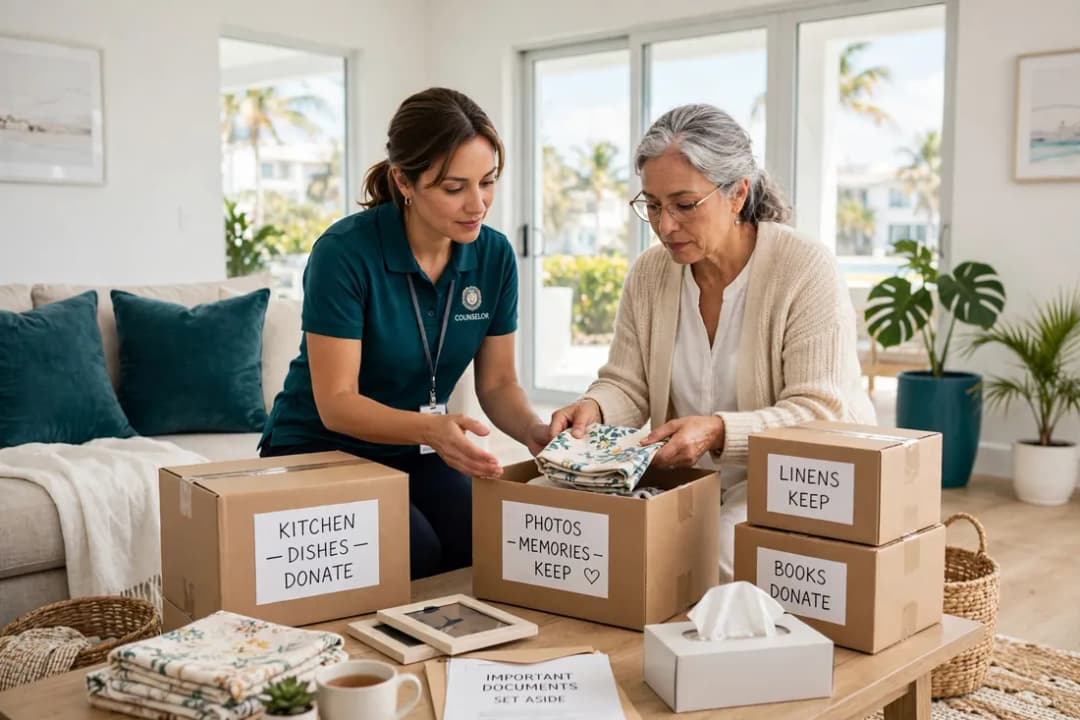
For every room, sort items into four groups: keep, donate, discard, and decide later. The “decide later” box is the most important one. It is where the hard items go without a fight.
Be honest about what “keep” means. You do not need every object to keep every memory. Photograph items you are letting go. The photo often carries the memory better than the object did.
What to Do With Sentimental Items
Clothing, letters, and personal papers carry the most weight. Give yourself a separate box for these and resist sorting it until the end. Many families find a trusted friend or unattended death cleanup professional helpful for the physical parts, while they handle the sentimental parts themselves.
If several family members are involved, agree on a shared rule before you start: no one takes anything until everyone has seen it, or each person gets equal picks. Most family fights over belongings start with a small item and a large feeling.
When Part of the Cleanup Is Unsafe
Some homes cannot be cleared by family alone, and this is not a judgment. If your loved one passed away at home and was not found immediately, the affected area may carry biological hazards. Bodily fluids can penetrate flooring, subflooring, and drywall.
That work belongs to trained crews with professional biohazard cleanup equipment and OSHA-compliant procedures, as required by OSHA’s Bloodborne Pathogens Standard (29 CFR 1910.1030). Families who try to handle it themselves risk both exposure and improper disposal.
If the death was unattended, read our guide on what to do after an unattended death is discovered before you plan anything else. A crew can restore the home while you handle the rest.
Paperwork You Cannot Skip
The belongings are the visible task. The paperwork is the one that causes the real trouble when ignored.
The Documents That Matter Most
Gather the will, life insurance policies, bank and investment statements, property deeds, vehicle titles, and recent tax returns. You will also need multiple certified copies of the death certificate, since nearly every institution asks for one.
If there is no will, most families need to open probate with the local court to gain legal authority over accounts and property. This is routine, but it takes time, so start it early rather than when a bill comes due.
Notify the Practical Parties
Banks, credit card companies, insurers, the Social Security Administration, and the landlord or HOA all need to know. Set up mail forwarding with the postal service so nothing is missed. Cancel or transfer utilities, subscriptions, and any auto-pay services.
Keep a single folder, physical or digital, where every document and confirmation number lives. Chaos with paperwork is how families end up paying bills on accounts that should have been closed months earlier.

Pacing Yourself Through the Months
Nobody finishes this in a weekend, and anyone who tells you to is not the one doing it. A realistic pace is one or two rooms per week, with full days off between sessions. Grief fatigue is real, and it shows up as exhaustion, irritability, and second-guessing.
Ask for help before you need it. A friend who sits with you and labels boxes is worth more than a crew you hire in a panic. And if the weight of the task starts affecting your sleep, appetite, or ability to function, talk to a counselor. That is not weakness. That is grief doing what grief does.
Summary
Cleaning a loved one’s home after they pass starts with securing the property and giving yourself permission to pause. Sort room by room with a four-box system, protect the sentimental items for last, handle the paperwork early, and bring in professionals for anything unsafe.
If the home needs professional restoration, contact Hazard Guard or call (888) 976-0045. Our crews respond 24/7 in Miami, and we treat your family’s home with the care it deserves.