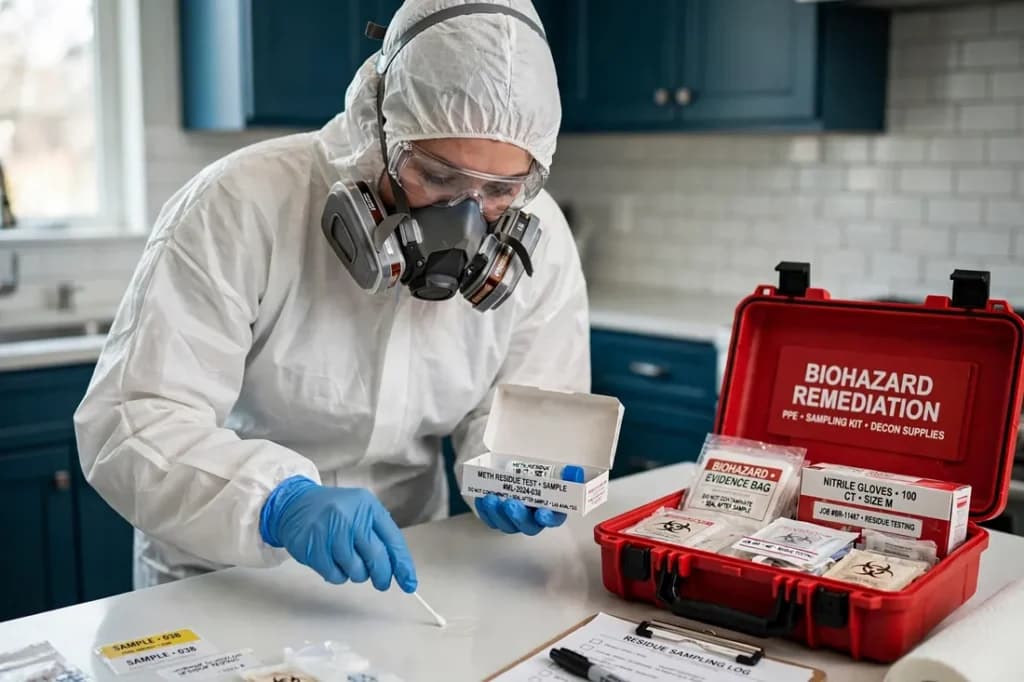
Meth lab cleanup is the professional testing, remediation, and clearance of a property contaminated by methamphetamine manufacturing or use. Specialized crews sample surfaces for chemical residue, remove contaminated materials, decontaminate what remains, and verify clearance through lab testing before anyone moves back in.
Meth residue is invisible and toxic. The chemicals used in manufacturing (anhydrous ammonia, red phosphorus, lithium, solvents) soak into walls, carpets, HVAC systems, and insulation. You cannot see them, smell them reliably, or clean them with household products.
In Miami-Dade, rental properties and motel rooms turn up as former cook sites more often than people expect. Landlords discover them during turnover. Buyers discover them during inspections. Police records sometimes flag them. Every discovery follows the same rule: do not clean it yourself, and do not reoccupy until it is cleared. Our meth lab cleanup crews in Miami handle everything from testing through final clearance.
How Meth Contamination Works
Methamphetamine residue, sometimes called third-hand meth exposure, settles on every surface a cook site touches. Cooking vapors carry chemicals into drywall, ceiling tiles, carpet backing, air ducts, and soft furnishings.
Residue levels that trigger remediation are measured in micrograms per 100 square centimeters. That is invisible to the eye. A room can look clean and test far over the limit.
Health risks from residual contamination include respiratory irritation, headaches, nausea, and skin reactions, especially in children, who absorb more relative to body weight. The EPA’s guidelines for methamphetamine laboratory cleanup frame the contamination problem and the remediation approach.
A Note on Fentanyl
Fentanyl is a separate risk. It is an opioid, not a stimulant, and it contaminates differently. The testing and remediation overlap, but the hazard profile differs. If a property may have fentanyl exposure, treat it as its own case and tell the crew up front.
Step 1: Testing and Assessment
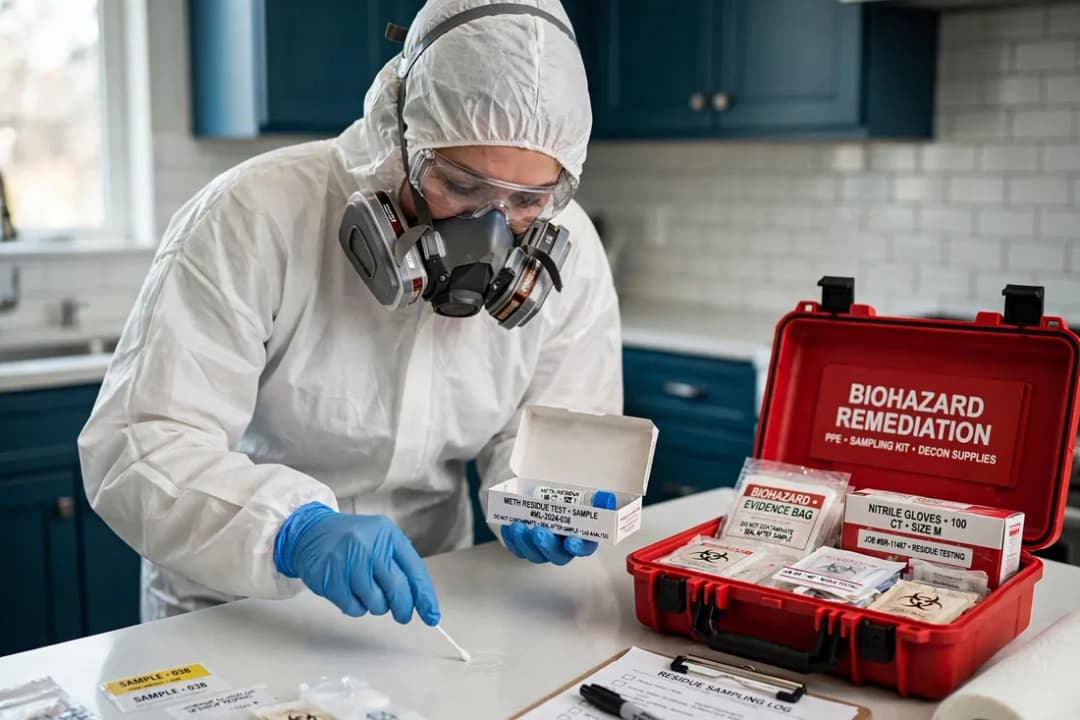
Every job starts with surface wipe testing. We take samples from walls, ceilings, HVAC returns, countertops, and flooring across multiple rooms, then send them to an accredited lab.
Lab results map the contamination. They tell us which rooms exceed remediation thresholds and which materials hold the most residue. They also tell us when we are done, because clearance requires post-remediation testing to the same standard.
I have seen buyers skip testing because a property “looked fine.” One Hialeah rental looked spotless after a cosmetic flip. Wipe tests came back hot in two bedrooms and the HVAC. The flipper had painted over contamination. Paint does not seal meth residue.
What Gets Tested
- Walls and ceilings in every affected room
- HVAC ductwork and returns (contamination travels through air systems)
- Countertops, cabinetry, and hard surfaces
- Carpet and upholstery where present
- Outdoor areas near the cook site if applicable
Step 2: Remediation
Remediation removes what testing flagged. The approach depends on contamination levels and materials.
Removal
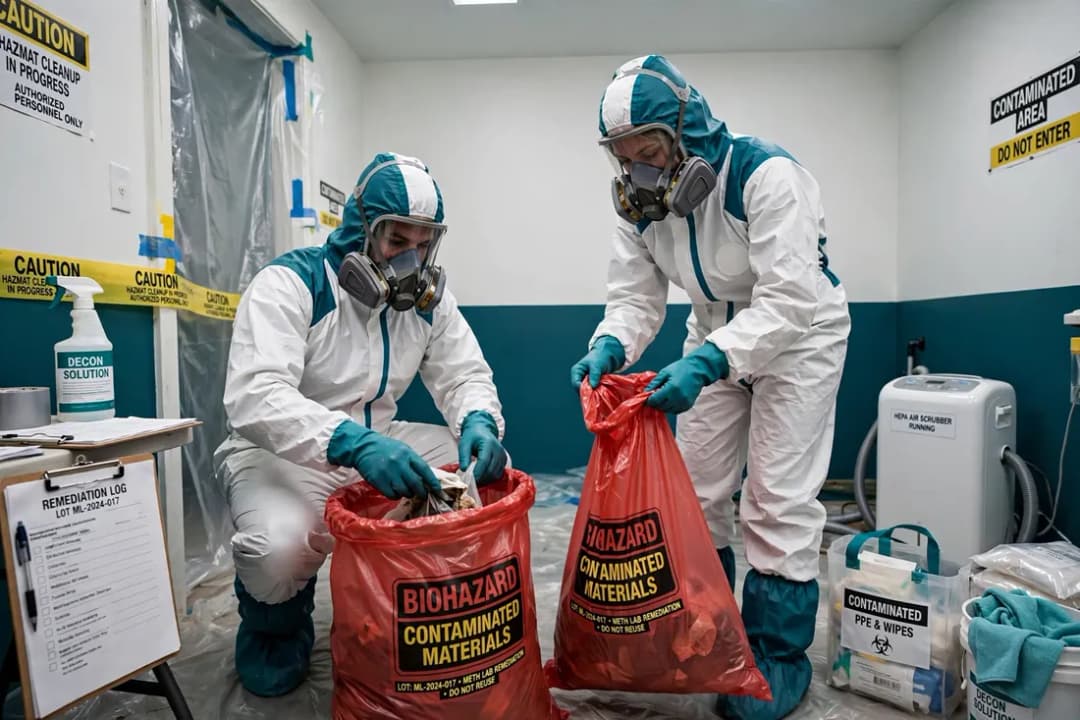
Porous materials that test hot come out: carpet and padding, upholstery, mattresses, ceiling tiles, insulation, and sometimes sections of drywall. Everything is bagged and disposed of through regulated waste channels.
HVAC systems often need professional duct cleaning or component replacement. Contaminated ductwork that stays in place will keep circulating residue.
Decontamination
Hard surfaces get multi-pass chemical cleaning with detergents and neutralizing agents formulated for methamphetamine residue. This is not a single wipe-down. It is systematic, room by room, with verification swabs between passes.
Ventilation
Air scrubbers with HEPA and carbon filtration run during remediation. They capture airborne particles and vapors released when materials are disturbed.
Step 3: Clearance Testing
After remediation, we re-test. Post-remediation wipe samples go to the same accredited lab. Clearance means every sample meets the remediation standard.
No clearance testing, no confidence. A company that finishes a meth job without post-testing has not finished the job.
Clearance documentation protects the owner legally. It proves the property was professionally remediated and tested. Landlords need it for habitability. Sellers need it for disclosure. Insurers want it on file.
Signs a Property Was Used as a Meth Lab
Discovery usually happens by accident. Watch for these:
- Unusual chemical odors: ammonia, ether, or solvent smells that do not match normal household products
- Stained or discolored walls, ceilings, and fixtures without an obvious cause
- Excessive chemical containers, cold medicine packaging, or stripped lithium batteries
- Burn marks, etching on sinks or bathtubs, and corroded plumbing fixtures
- Blackout coverings on windows and unusual ventilation setups
- Police activity records or a neighbor’s tip
No single sign proves a cook site. But two or three together mean test before you renovate, rent, or buy. Renovation spreads contamination through a property fast.
Why DIY Meth Cleanup Fails
Meth contamination is a chemical remediation problem, not a cleaning problem. Professional biohazard cleanup treats meth sites as hazmat-level work, with PPE, containment, and lab verification.
Household cleaners do not neutralize methamphetamine residue. Scrubbing spreads it across surfaces and into the air. Removing drywall without containment pushes residue through the whole house. And without lab testing, you have no idea whether you improved anything or made it worse.
Then there is the hazard itself. Disturbing a former cook site can release concentrated residue. Our crews work in full PPE with respiratory protection for a reason.
Meth Lab Cleanup Costs
Costs scale with contamination levels and property size, not with the service name. Testing alone runs in the hundreds. Full remediation of a heavily contaminated property runs into the thousands to tens of thousands.
What drives the number: how many rooms test hot, whether HVAC is contaminated, how much material must be removed, and how many remediation passes the lab results demand. Reputable companies give a written scope tied to lab data before work begins.
If someone quotes you a flat price without testing, keep calling around.
What Miami Property Owners Should Do
Discover a suspected former meth lab in a Miami-Dade property? Do this:
- Do not disturb anything. Do not start renovations or demolition.
- Keep people and pets out of the affected areas.
- Check police records for the address if you have not already.
- Get surface wipe testing from a professional remediation company.
- Remediate to clearance with documented lab results.
Landlords: a former cook site is a habitability issue. Tenants cannot legally occupy a contaminated unit. Document everything for your insurer.
Summary
Meth lab cleanup is a 3-phase professional process: lab-based testing to map contamination, systematic remediation (removal, decontamination, ventilation), and clearance testing that proves the property is safe. Meth residue is invisible, toxic, and immune to household cleaning.
Discovery signs include chemical odors, staining, and police records. DIY remediation spreads contamination and fails without lab verification. Clearance documentation protects owners, landlords, and sellers.
Suspect a former meth lab in Miami? Contact Hazard Guard or call (888) 976-0045. Our crews test, remediate, and clear to documented standards, and the call is free.