Author: Elena Vasquez, CIH, CSP, Safety & Compliance Specialist · Category: Regulations & Compliance · Map ref: R3 (pillar)
Biomedical waste is any waste contaminated with blood, body fluids, or infectious agents: sharps, dressings, tissue, lab cultures, and anything soaked with them. Its legal disposal follows a strict chain: segregate at the point of generation, package and label correctly, document it on a manifest, hand it to a licensed transporter, treat it at an approved facility, and only then dispose of the treated residue.
Every link in that chain is regulated. Skip one and the liability lands on the generator. In Florida, the Department of Health enforces the chain under Chapter 64E-16, which I covered in our guide to who regulates biohazard cleanup.
Segregation: Where the Chain Begins
The chain starts at the job site, the moment waste leaves the work area. Biomedical waste must be separated from ordinary trash immediately. Sharps go into rigid, puncture-resistant, leak-proof containers. Blood-soaked materials and other infectious waste go into red bags bearing the international biohazard symbol.
Mixing waste streams is the most common mistake I see. One unmarked bag of bloody dressings in the regular dumpster turns a routine job into a violation with a paper trail. Segregation is the cheapest compliance step in the whole chain, and it is where most failures happen.
Packaging and Labeling Rules
Florida’s packaging rules are not suggestions. Sharps containers must be rigid, puncture-resistant, and sealed when three quarters full. Red bags must be sturdy enough to prevent leakage, tied securely, and marked with the biohazard symbol.
OSHA’s Bloodborne Pathogens Standard reinforces this at the worker level: 29 CFR 1910.1030 requires contaminated waste to be placed in closable, leak-proof, labeled containers. Two rulebooks, one message: waste that is not contained correctly is waste that is not legal.
The Manifest: Waste with a Paper Passport
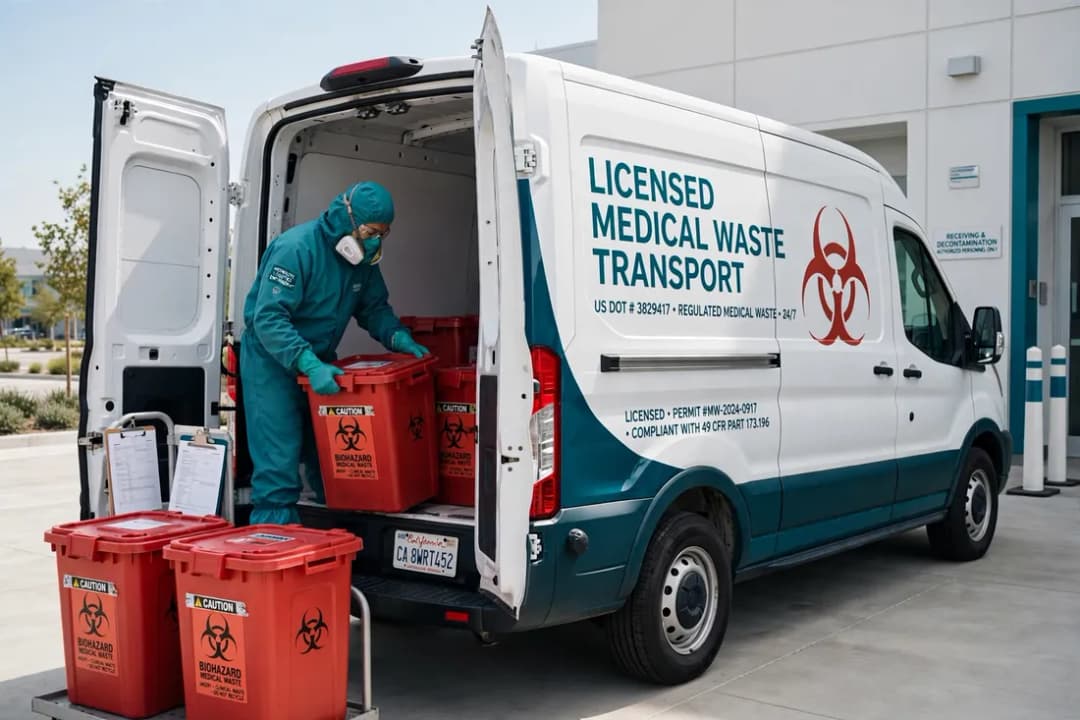
Once packaged, waste is documented on a tracking manifest. The manifest records the generator, the transporter, the type and quantity of waste, and the destination treatment facility. Every party signs it. The generator keeps a copy.
This document is your proof of legal disposal. If waste is ever found where it should not be, investigators follow the manifest trail back to the source. A cleanup company that cannot show you manifests is a company whose waste chain has a hole in it.
How Long Records Are Kept
Florida requires generators and transporters to keep waste records available for inspection, and the manifest is the document inspectors ask for first. Keep your copy with your insurance paperwork, digital or paper, complete and retrievable.
I tell clients to treat manifests like tax records. You may never need them. But the day an inspector asks, you need them fast.
Licensed Transport: Only Permitted Haulers
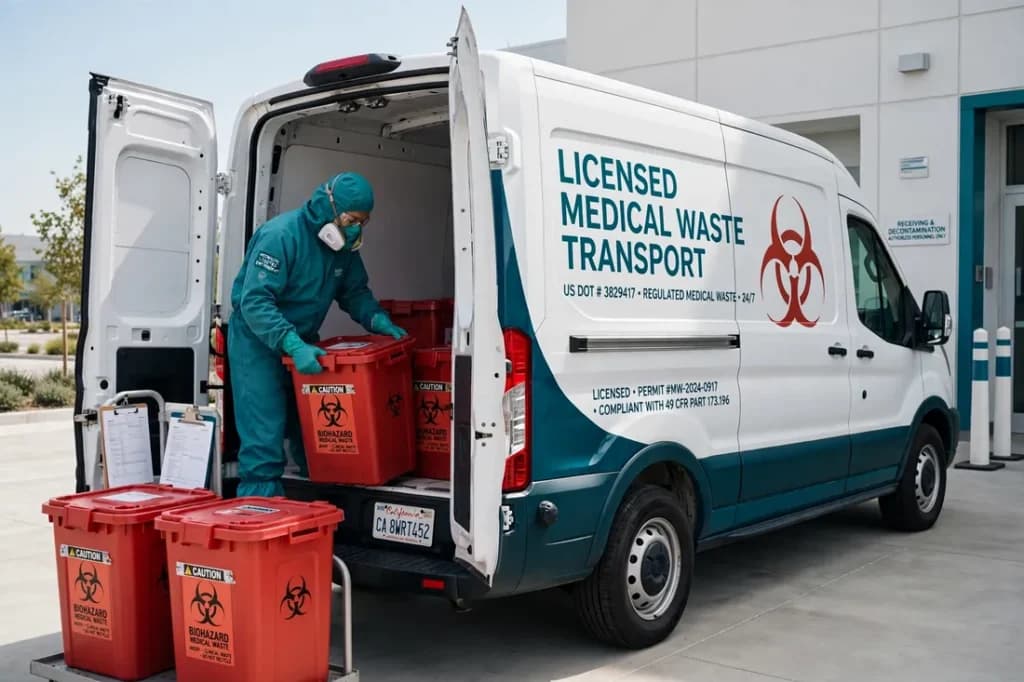
Biomedical waste can only be moved by a licensed, permitted transporter. In Florida, transporters register with the Department of Health and their vehicles carry permits. The waste travels in enclosed, leak-proof compartments, never in the open bed of a pickup.
When you hire a cleanup firm, the transporter question is a direct quality test. Ask who hauls their waste and whether the hauler holds a current Florida permit. Legitimate companies answer in one sentence. Everyone else changes the subject.
Treatment: Autoclave or Incineration
Treatment is where infectious waste stops being infectious. Florida recognizes approved treatment methods, primarily steam sterilization (autoclaving) and incineration at permitted facilities.
Autoclaves use high-pressure steam to destroy pathogens, and the treated residue can then go to a standard landfill. Incineration destroys waste through high-temperature combustion at facilities permitted under air-quality rules. The EPA’s medical waste overview describes how these treatment paths fit the federal framework.
Chemical treatment and other alternative technologies exist, but the facility must hold the proper state approval for the method it uses. The treatment method matters less than the permit behind it.
Final Disposal After Treatment
Once waste is properly treated, it is no longer infectious. The treated residue goes to a licensed landfill or other approved disposal site. The chain closes when the treatment facility returns a signed manifest confirming receipt and treatment.
For chemical contamination jobs, the path differs. Solvents and drug-lab chemicals can fall under hazardous waste rules, where meth lab cleanup requires its own handling and documentation track. That is a separate chain with separate paperwork.
Common Breaks in the Chain
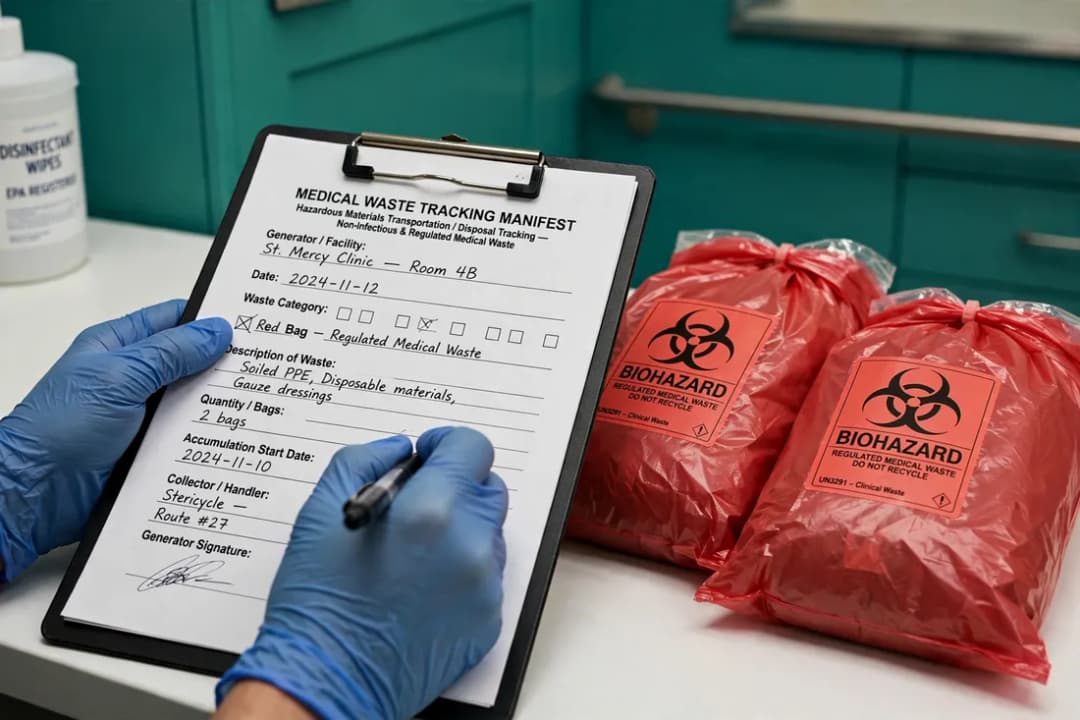
Most disposal violations I have reviewed in South Florida share the same pattern:
- Waste sitting past the storage time limit because nobody tracked the date
- Sharps in regular trash bags instead of rigid containers
- Manifests with missing signatures or missing copies
- Unlicensed haulers moving waste in unmarked vehicles
- Treatment facilities that cannot produce a current approval
Every one of these is preventable. A professional biohazard cleanup or trauma cleanup crew builds the paperwork into the job, the same way a surgeon builds the instrument count into the operation.
Summary
Legal biohazardous waste disposal is a six-link chain: segregate waste at the job site, package and label it to code, document it on a manifest, hand it to a licensed transporter, treat it at an approved facility, and dispose of the treated residue. In Florida, the Department of Health enforces every link under Chapter 64E-16, and the generator keeps liability until the chain is complete.
If you need a cleanup with fully documented waste disposal in Miami, contact Hazard Guard or call (888) 976-0045. We answer 24/7.