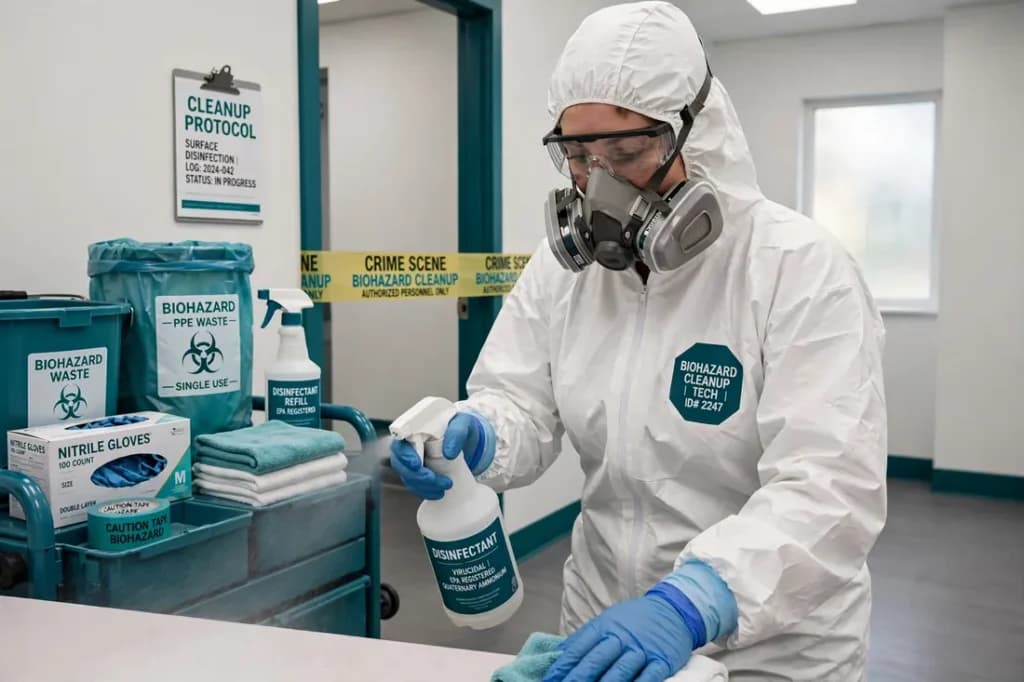
Crime scene cleanup is the professional remediation of a crime scene after law enforcement releases it. Trained crews remove blood, bodily fluids, and tissue, disinfect the space, remove odor, and dispose of all biohazardous waste through licensed channels.
It only starts after police release the scene. Officers investigate, collect evidence, and hand the property back to the owner. The actual cleaning is never done by law enforcement.
Once released, the responsibility for cleanup falls on the property owner. In Miami, our crime scene cleanup crews typically respond 24/7 and start within hours of the release call.
Step 1: Scene Release and Access
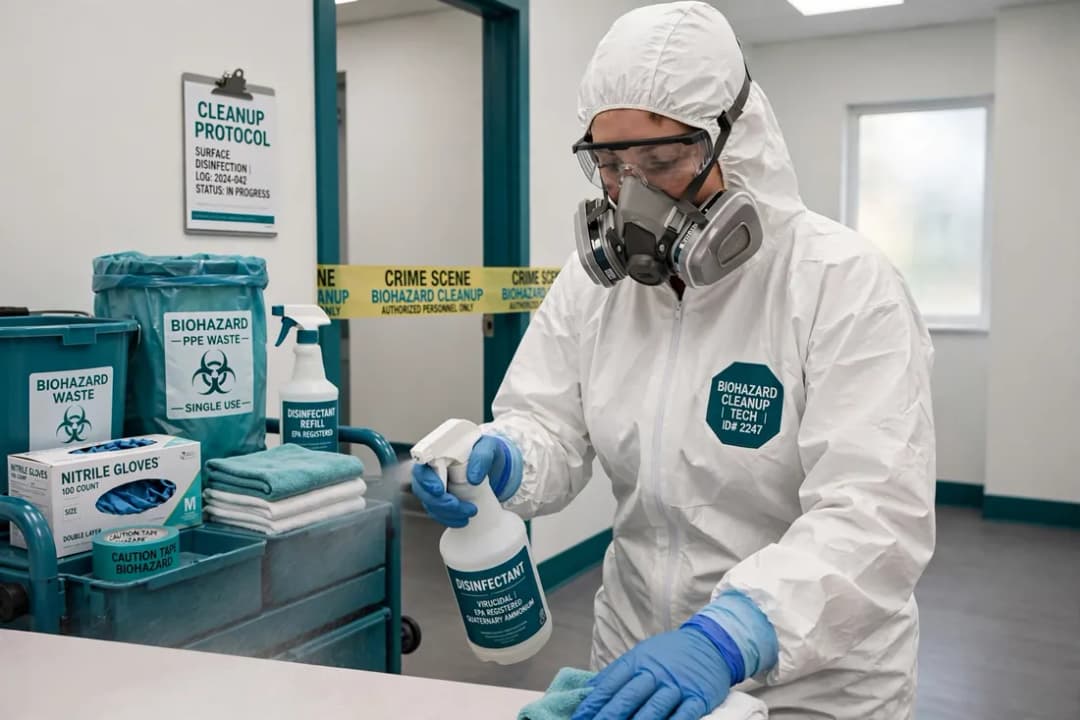
Cleanup begins when investigators formally release the scene. No crew can legally enter before that moment.
Once released, we confirm who holds authority over the property. That is usually the homeowner, landlord, or property manager. We also document pre-existing conditions with photos before touching anything.
I have seen well-meaning family members enter a released scene and start moving furniture. That spreads contamination and destroys evidence the owner may need for insurance documentation.
Step 2: Assessment and Scope
Every job starts with a full walkthrough. We map visible contamination, then look for what is not visible.
Blood travels. It seeps through carpet padding, wicks into subfloors, and splatters in patterns you only catch with angled light. On a Miami Beach job last year, a small hallway spill had wicked across the entire entry floor because foot traffic had spread it before we arrived.
This is the step most people underestimate. A proper assessment sets the scope, the price, and the disposal plan.
What Assessment Covers
- Visible blood, fluids, and tissue
- Hidden contamination in porous materials (carpet, padding, drywall, upholstery)
- HVAC exposure: whether the contamination reached vents or ductwork
- Structural materials that must be removed versus surfaces that can be treated
Step 3: Containment
Before any removal starts, we seal the work area. Plastic sheeting barriers go up. Negative air pressure equipment isolates the zone.
This matters more in Miami than most markets. High humidity moves airborne particles fast through HVAC systems. So we isolate vents and returns before disturbing anything.
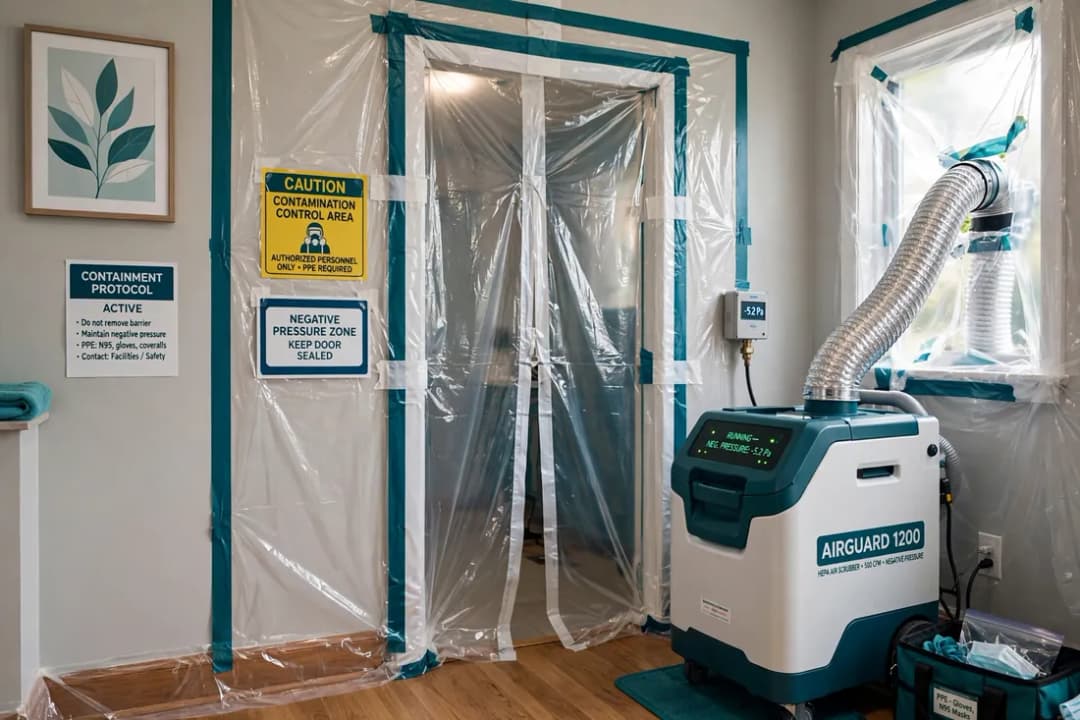
Containment protects the rest of the property. It also protects the crew’s chain of custody for anything that must be documented.
Step 4: Removal of Contaminated Materials
Porous materials that absorbed blood or fluids come out. Carpet, padding, upholstery, mattresses, and sections of drywall get cut out, bagged, and staged for regulated disposal.
Everything goes into labeled biohazard bags. This follows the waste chain governed by OSHA’s Bloodborne Pathogens Standard (29 CFR 1910.1030).
Non-porous surfaces are treated, not discarded. Hardwood, tile, and metal can usually be saved with proper decontamination.
Step 5: Cleaning, Disinfection, and Deodorization
Cleaning comes first. Disinfectants cannot work through organic matter, so all visible soil is removed before chemicals go down.
Then we apply EPA-registered hospital-grade disinfectants at label-directed dilutions with full dwell time. That wet contact time, usually 3 to 10 minutes, is what actually kills pathogens. The EPA maintains the registered disinfectant list crews work from.
Odor comes next. Blood and decomposition leave proteins that household products cannot remove. We use enzyme treatments plus hydroxyl or ozone treatment to neutralize odor at the source.
Spray-and-mask is not remediation. If a company promises odor gone with a scented fogger, keep calling around.
A Note on Blood on Different Surfaces
Porous versus non-porous decides the whole approach. If you are dealing specifically with blood contamination, our guide to professional blood cleanup covers the surface-by-surface method in detail.
Step 6: Regulated Disposal and Clearance
All biohazardous waste leaves the site through a licensed medical-waste transporter. Florida biomedical waste rules require segregation at the point of generation, labeled red bags or sharps containers, and a manifest trail to the treatment facility.
We verify the space before calling the job complete. The owner gets documentation of the work, the disposal manifest, and photos that support any insurance claim.
That documentation matters. It is what your adjuster will ask for, and it is what proves the property was professionally remediated.
How Long Crime Scene Cleanup Takes in Miami
Most scenes take one to three days. A contained single-room scene can finish in a day. Larger scenes, scenes with structural removal, or jobs with odor treatment take longer.
Coroner and investigation holds extend timelines, not the cleaning itself. Once investigators formally release the property, professional crews can begin the same day.
Crime Scene Cleanup vs Trauma Cleanup
The processes are nearly identical. The difference is the context, not the chemistry.
Crime scene cleanup follows a criminal investigation, so scene release is the gate. Trauma cleanup covers accidents and unintentional injuries, where there is no investigation hold but the same biohazard risks.
Both require the same PPE, the same disinfectants, and the same disposal chain.
Common Mistakes Property Owners Make
Three mistakes show up on almost every job I walk into.
Entering the Scene Too Early
Family members walk in before containment. Contamination spreads under shoes and hands. Stay out until the crew arrives.
Using Bleach as the Answer
Bleach fades the stain. It does not remove the proteins blood leaves behind, and it fails in organic matter. The odor always comes back.
Putting Waste in Household Trash
Bagging bloody materials for the regular trash violates biomedical waste rules. Fines and liability are real. Licensed transporters exist for a reason.
When to Call Hazard Guard
If law enforcement has released a scene in Miami-Dade County and you are facing the cleanup, do not handle it alone. Bloodborne pathogens (hepatitis B, hepatitis C, HIV, as documented by the CDC) survive in materials for days. The risks are invisible and the disposal rules are strict.
Our crews respond 24/7 across Miami, Miami Beach, Coral Gables, Doral, Hialeah, Kendall, and Homestead.
Summary
Crime scene cleanup is a 6-step professional process: scene release, assessment, containment, removal, disinfection and deodorization, and regulated disposal with clearance. It starts only after police release the scene. The property owner bears responsibility for the cleanup.
Assessment and containment decide whether the job succeeds. Removal handles porous materials. EPA-registered disinfection with proper dwell time handles the rest. Licensed disposal closes the chain legally.
Facing a released scene in Miami? Contact Hazard Guard or call (888) 976-0045. Our crews are available around the clock, and the call is free.