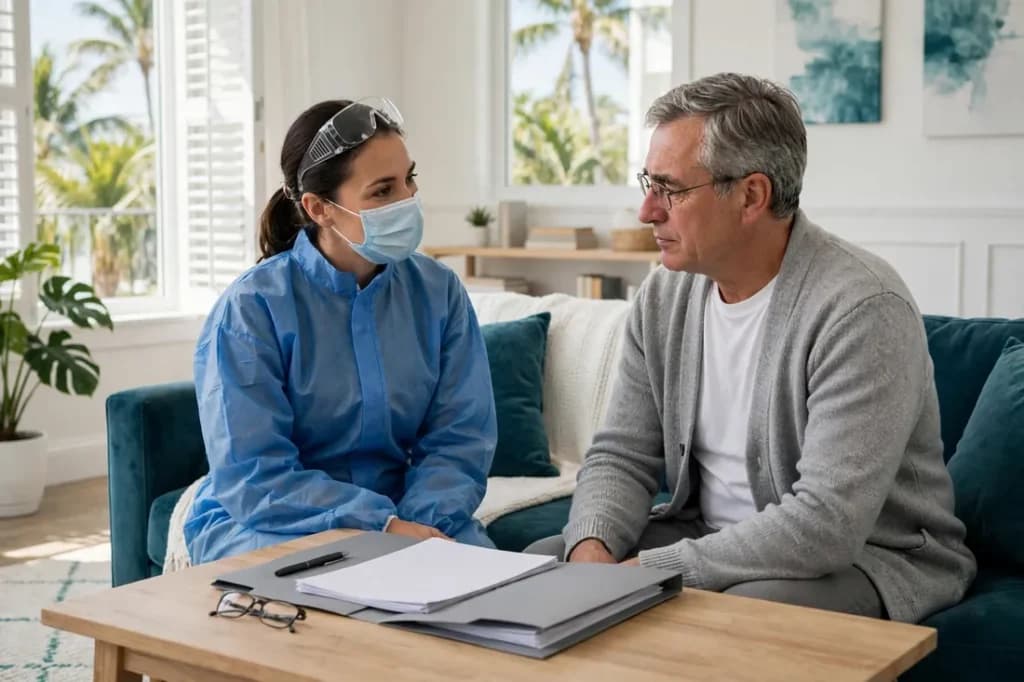
After a death at home, three separate roles take over in sequence. The coroner or medical examiner determines the cause of death and releases the body. The funeral home or crematorium cares for the deceased and the family arrangements. A professional cleanup crew restores the home once the scene is released.
Families suffer most when those roles blur. Each role has its own authority, its own timeline, and its own limits, and no one of them covers the others.
The Coroner and Medical Examiner Role
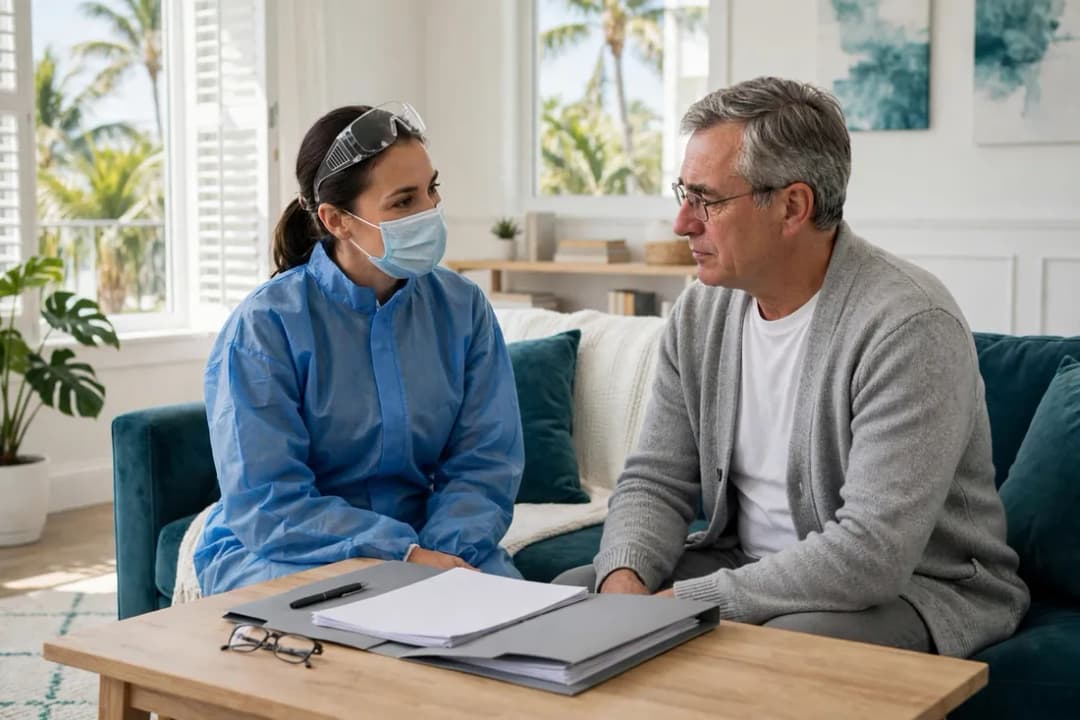
In Miami-Dade County, the medical examiner investigates deaths that are sudden, unexpected, violent, or unattended. The office determines the cause and manner of death, and it decides when the body and the scene may be released.
That investigation comes first, and it cannot be rushed by a family or a landlord. The body is removed by the medical examiner or by a funeral home acting on their authorization, never by family members or a cleanup crew.
What families can do during this phase is limited, and that is by design. Stay out of the room where the death occurred. Do not move belongings, clean surfaces, or remove items that may be part of the investigation. Anything moved can complicate the examiner’s work and the family’s own record later.
A practical note from years of supporting families: ask the examiner’s office for the case number and a contact name before you leave the scene. You will need both for the death certificate, the funeral home, and any insurance paperwork that follows.
The Funeral Home Role
Once the medical examiner releases the body, the funeral home takes custody. Its role is care of the deceased and support for the family’s arrangements, including transport, embalming or cremation preparation, viewing, and burial or cremation.
The funeral home does not clean the home. I say this plainly because families often assume otherwise in the shock of the first days, and then discover a contaminated room still waiting when they return.
Choose a funeral home early, even before the release if you can. Give them the medical examiner’s case details, the family’s wishes, and a single family contact for decisions. One contact prevents conflicting instructions when several relatives are grieving at once.
Costs, timelines, and paperwork vary, so ask for a written price list and a timeline in the first meeting. Grief makes every later surprise harder to absorb.
The Professional Cleanup Role
Cleanup begins only after the medical examiner releases the scene. A professional crew then assesses contamination, removes affected materials, disinfects, deodorizes, and verifies the home is safe to re-enter.
That sequence matters. A crew that starts before release risks disturbing an investigation. A crew that skips assessment risks missing contamination hidden under flooring or inside fixtures.
For an unattended death in a Miami home, the work often includes decomposition odor, fluid contamination in porous materials, and pest activity. These are biohazard conditions, not ordinary cleaning jobs. A biohazard cleanup team in Miami follows containment, EPA registered disinfection, and regulated waste disposal for exactly that reason.
Families should not be present during the active cleanup if they can avoid it. The crew works faster, and the family is spared images that stay with them. A walkthrough after completion, with photos, is a kinder and clearer way to confirm the work.
Who Does Not Do What
Confusion about roles causes most of the secondary distress I see. Police secure the scene and investigate, but they do not clean it. Paramedics provide emergency care, but they do not remove the body or restore the home. Landlords manage the property, but they do not handle the deceased or the family’s arrangements.
Neighbors and friends often want to help by cleaning, and their intentions are kind. In a home with decomposition or bodily fluids, that help can expose them to pathogens and can destroy evidence or documentation the family later needs.
The safest division is simple. Officials investigate. The funeral home cares for the deceased. Professionals restore the home. Family and friends provide emotional support, meals, paperwork help, and presence, not physical cleanup.
The Timeline Families Can Expect
Timelines vary with the circumstances, but the order stays the same. First, the medical examiner investigates and releases the body and the scene. Second, the funeral home takes custody and begins arrangements. Third, cleanup begins and the home is restored.
A straightforward release may take a day or two. A complex investigation takes longer, and no one on the outside can give a reliable date in advance. Families should plan for uncertainty rather than booking travel, viewings, or a home return around a guessed date.
Cleanup itself usually takes one to three days for a single room, longer for a whole home or a heavily affected unit. Ask the crew for a written scope and a completion note, not just a verbal estimate.
Our guide on what to do after an unattended death is discovered walks through the first hours in detail, including who to call first and what to leave untouched.
Paperwork Each Role Produces
Each role leaves a paper trail, and families need all three. The medical examiner produces the death certificate process and the case record. The funeral home produces the arrangement contract, the burial or cremation authorization, and transport records.
The cleanup crew should produce a written scope, before and after photos, a completion note, and waste disposal documentation for any biohazardous material removed. Keep all three sets together in one folder, physical or digital.
That folder matters for insurance claims, estate matters, landlord discussions, and the simple question, months later, of what exactly was done. I have watched families struggle to reconstruct a timeline from memory when a single folder would have answered every question.
Supporting the Family Between Roles
The gaps between roles are where families feel most alone. The body has left, the funeral is days away, and the home is not yet safe to enter. Practical support in those gaps helps more than advice.
Help with phone calls, meals, childcare, and transport. Offer to be the single contact for the funeral home or the cleanup crew. Sit with the family during the post cleanup walkthrough if they want company.
Avoid pressing for decisions about belongings during this window. Sorting a loved one’s home deserves its own time, and our guide on cleaning a loved one’s home after death explains a gentler order for that work once the home is safe.
If grief becomes overwhelming, or if children are involved, a grief counselor or a trusted clinician is a better call than another well meaning volunteer. Professional support is not a sign of failure. It is part of the same division of roles that protects everyone.
Summary
After a death at home, the coroner or medical examiner investigates and releases the scene, the funeral home cares for the deceased and the arrangements, and a professional cleanup crew restores the home. No role covers the others, and cleanup begins only after release.
Keep the paperwork from all three roles in one folder, avoid cleaning a contaminated scene yourself, and let family and friends help with support rather than physical cleanup.
Need help restoring a Miami home after a death? Contact Hazard Guard or call (888) 976-0045. Our crews respond discreetly, around the clock, and the call is free.