Biohazard cleanup certifications are the training credentials, safety courses, and industry certifications that show a cleanup crew is trained to handle bloodborne pathogens, chemical hazards, and regulated medical waste safely, and the two names that matter most in Miami are IICRC certification and OSHA training. There is no single Florida biohazard cleanup license, so these credentials, plus insurance and a documented process, are how you vet a company.
That distinction matters. A badge on a website is easy to print, and a training record is harder to fake.
No Single License, So Credentials Carry the Weight
Florida has no single biohazard cleanup license that covers every job. That surprises most property owners, and it changes how vetting works.
Instead of asking for one license, ask for a set of credentials: OSHA bloodborne pathogens training, hazard communication training, respirator fit testing, and IICRC coursework relevant to the job. Then ask for proof, not just a claim.
I review training files for crews in this field, and the gap is usually documentation, not intent. A company may train well and still fail to keep records, and a company may claim training it cannot document at all. The record is the difference.
OSHA Training Every Crew Member Needs
OSHA training is the safety floor for biohazard work, and it is not optional for a professional crew.
Bloodborne Pathogens Training
The OSHA Bloodborne Pathogens Standard (29 CFR 1910.1030) requires employers to train workers who may be exposed to blood or other potentially infectious materials. Training covers exposure risks, protective equipment, hepatitis B vaccination, and what to do after an exposure.
Training must be provided at hire, annually, and whenever procedures change. A certificate from three years ago, with no refresher, is a red flag.
Hazard Communication and PPE Training
Hazard communication training, under the OSHA Hazard Communication Standard (29 CFR 1910.1200), covers chemical labels, safety data sheets, and safe handling of disinfectants and decontaminants.
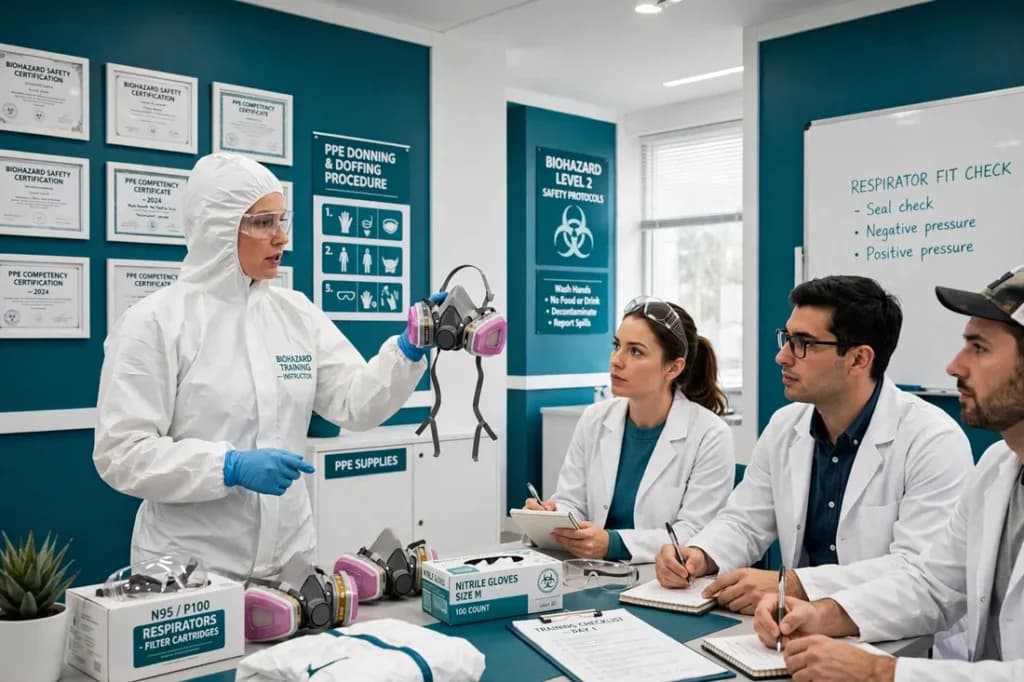
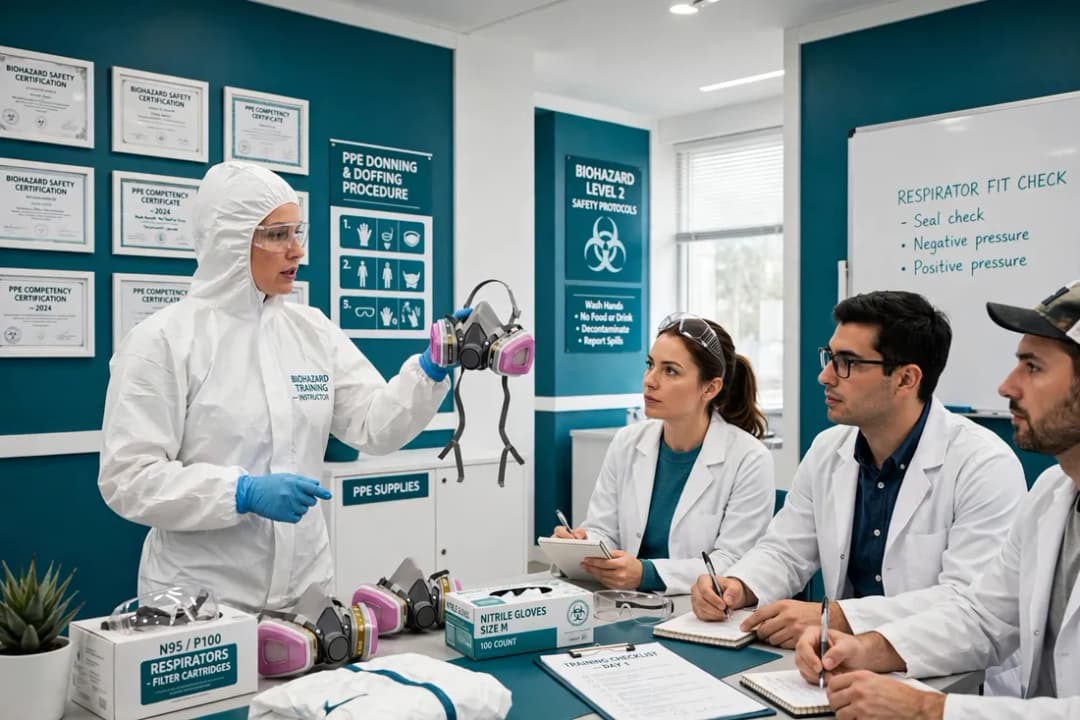
PPE training covers selection, fit, use, and removal of suits, respirators, gloves, and eye protection. Respirator use also requires medical evaluation and fit testing, not just a one-time demonstration.
A crew that cannot explain its PPE program, or that reuses disposable respirators across jobs, is not meeting the standard, whatever its website says.
IICRC Certification and What It Actually Means
The IICRC, the Institute of Inspection, Cleaning and Restoration Certification, sets standards and certifies technicians in cleaning and restoration disciplines. For biohazard work, the relevant coursework covers trauma and crime scene cleanup, odor control, and microbial remediation principles.
IICRC certification means a technician completed coursework and passed an exam in that discipline. It does not, by itself, prove experience on real scenes, and it does not replace OSHA training.
The honest way to read it is as one layer. IICRC coursework shows technical knowledge, OSHA training shows safety compliance, and field experience shows judgment under real conditions. A strong company has all three.
Our guide on biohazard cleanup paperwork explains the documents a company should hand you, including training summaries and waste manifests, and our guide on how property managers should vet a biohazard cleanup company covers the full vetting checklist beyond certifications.
Other Credentials Worth Checking
Beyond OSHA and IICRC, several credentials add real weight, depending on the job.
First, first aid and CPR training, because crews work in homes where medical emergencies and distressed families are common. Second, confined space or ladder safety training, for jobs involving attics, crawl spaces, or multi-story work.
Third, medical waste handling training, covering segregation, labeling, manifesting, and transport rules under Florida biomedical waste requirements. Fourth, drug residue and chemical remediation training, for meth and fentanyl jobs where standard biohazard training is not enough.
Ask which credentials match the job you actually have. A trauma cleanup certification does not automatically qualify a crew for a meth remediation, and a mold certification does not qualify a crew for bloodborne pathogen work.
How to Vet a Company in Five Checks
Use this checklist before you hire, and ask for documents, not assurances.
- OSHA bloodborne pathogens training records, current within the last year, for the crew that will attend your job.
- Respirator medical evaluation and fit test records, for every crew member who will wear one.
- IICRC certificates in a discipline matching your job, with technician names you can match to the crew.
- General liability and workers compensation insurance, current and verifiable with the carrier.
- A written process: assessment, containment, disinfection, waste disposal, and verification, plus a sample completion summary.
A company that hesitates on any of these is telling you something. A company that produces them promptly is showing you its operating standard.
Our biohazard cleanup service and trauma cleanup service in Miami operate under this credential set, and we welcome the same five checks from any owner, landlord, or property manager.
Red Flags That Outweigh a Logo
Four red flags matter more than any logo on a van.
First, a company that cannot name its training provider or produce a certificate. Second, a company that quotes a price without an assessment, and promises clearance without testing.
Third, a crew that arrives without full PPE for a blood or decomposition job. Fourth, a company that disposes of biohazard waste in ordinary trash, or cannot explain its manifest trail.
I have seen all four in Miami, and each one ended with a job that had to be redone, a claim that failed, or a landlord left with liability. Credentials are not bureaucracy here. They are the evidence that a crew will do the job safely, and that the result will stand up if it is ever questioned.
Summary
Biohazard cleanup certifications are the training and credential record that replaces a single Florida license: current OSHA bloodborne pathogens and hazard communication training, respirator fit testing, relevant IICRC coursework, insurance, and a documented process. Vet companies on records, not logos, and use the five checks above before you hire.
If you need help in Miami, Contact Hazard Guard or call (888) 976-0045. Our crews respond around the clock, work discreetly, and the call is free.