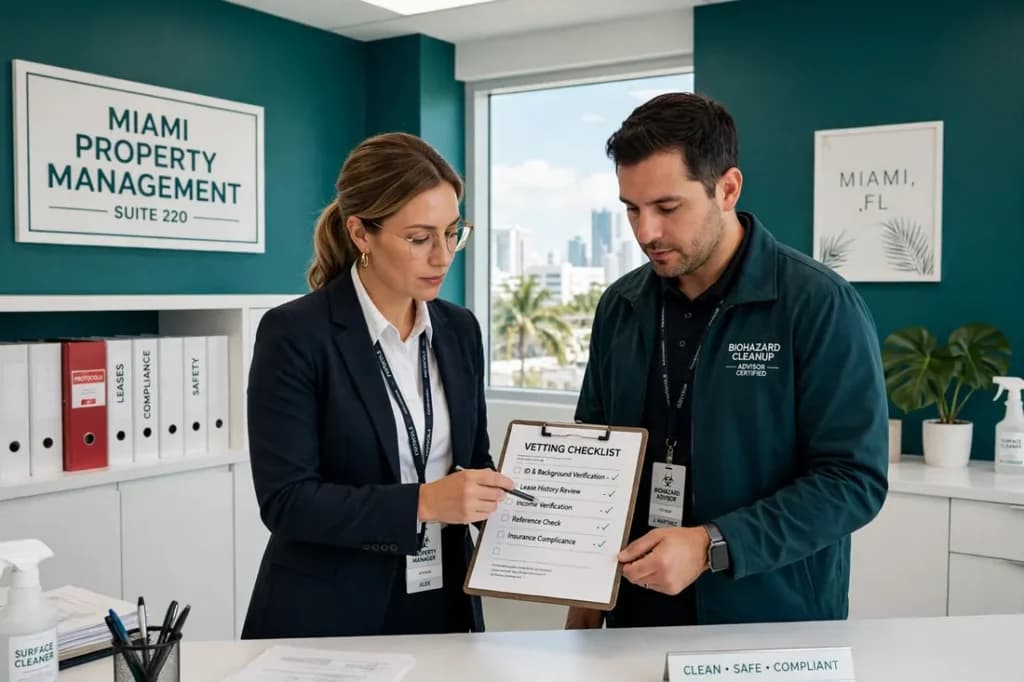
Vetting a biohazard cleanup company means verifying its insurance, certifications, response capability, documented process, and references before you ever need them. In Miami’s rental market, you want this done when the phone rings, not after.
The wrong vendor costs you more than a bad bill. It can stall unit turnover for weeks.
It can also void parts of your insurance claim. And it can expose your tenants to risks your liability policy never anticipated.
Here is the checklist I give every property manager I work with.
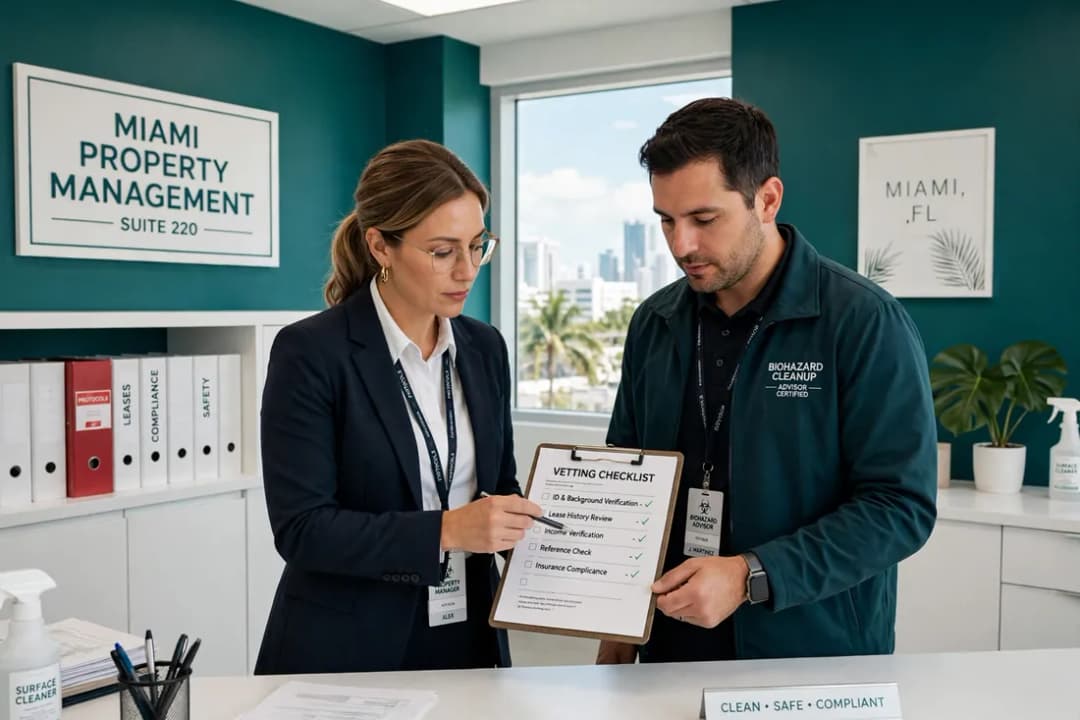
Start With Proof of Insurance, Not Promises
A legitimate company shows you its certificates before you ask. That means general liability insurance, workers’ compensation, and pollution liability coverage.
Pollution liability matters most. Standard general liability often excludes contamination events.
If a crew’s disinfectant damages flooring or waste handling goes wrong, you want the pollution endorsement active.
Ask for the certificate directly from their insurer or broker. A PDF the vendor generated itself is not verification.
I’ve seen managers accept a screenshot of an expired policy. Then a worker got injured on site, and the “insured” vendor had no active workers’ comp.
The property owner ended up in the claim chain.
Certifications That Actually Signal Competence
Florida has no single license for biohazard cleanup companies. That is exactly why credentials need scrutiny. (Florida Department of Health: Biomedical Waste)
Look for IICRC certification in trauma and crime scene cleanup. Look for crews trained under OSHA’s Bloodborne Pathogens Standard, 29 CFR 1910.1030. These are the two baselines our own compliance guide walks through in detail.
Ask who holds the certifications. A company certificate on the wall means little if the tech on your doorstep was never trained.
Ask for the training date. OSHA bloodborne pathogens training is annual.
Anything older is stale.
The Five Questions That Expose a Weak Vendor
Ask these on the first call. Strong vendors answer all five without hesitation.
What is your guaranteed response time in Miami-Dade?
You need a number, not a vibe. Two hours or less for emergency calls is the Miami standard.
Ask whether that time is contractual or aspirational.
Vacant units bleed money daily. Every day a biohazard scene sits unaddressed is a day of lost rent plus potential contamination spread.
Do you work directly with insurance adjusters?
Good vendors document the scene photographically and produce the detailed invoices adjusters require. Our biohazard cleanup team in Miami builds every invoice to adjuster standards. They know how landlords should handle cleanup in rental properties without jeopardizing coverage.
Weak vendors hand you a one-line invoice and disappear. That is how claims get denied.
How do you handle regulated medical waste?
The answer must mention segregation at the source, labeled red bags or sharps containers, a licensed transporter, and a manifest trail. Anything vaguer than that is a red flag.
Florida biomedical waste rules are strict about the chain of custody. If the vendor cannot describe it, they are not following it.
Can you give me three property manager references?
Not three homeowner reviews. Three property managers or asset managers who use them for turnover emergencies.
Call all three. Ask one question: “When something went wrong, how did they handle it?”
Will you put the scope in writing before work starts?
Written scope, written price, before the first glove goes on. No open-ended hourly billing.
No “we’ll figure it out on site.”
A written scope protects the vendor too. Professionals welcome it.
Red Flags Property Managers Miss
Most bad hires show the same warning signs. Watch for these.
They quote over the phone without an assessment. No reputable company prices a biohazard scene sight unseen. Contamination extent is invisible until a tech walks it.
They demand full payment upfront. Deposits are normal. Full payment before work begins is not.
Insurance-paid jobs especially should never require upfront full payment.
They have no documented process. Ask for their standard operating procedure.
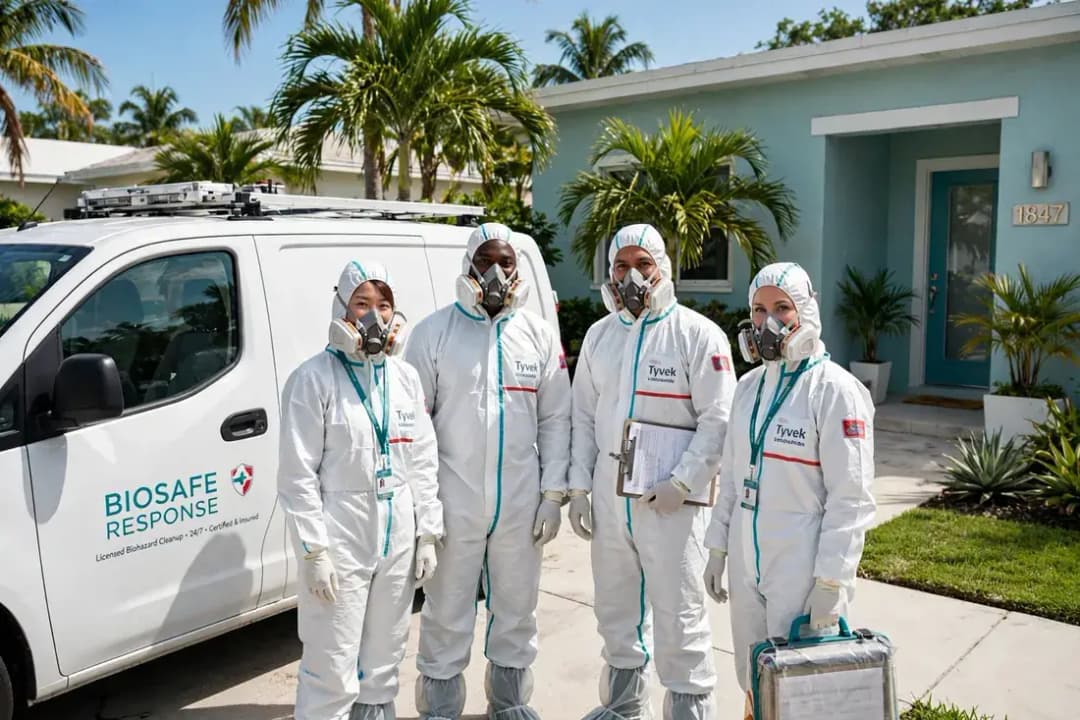
Our crews follow a fixed sequence of assessment, containment, removal, disinfection, deodorization, and verified disposal. Any vendor should describe something equally structured.
Their vehicles and paperwork look improvised. Discreet unmarked vehicles are fine and often preferred. But a company with no contracts, no manifests, and no invoices is not a company you want on your books.
Why Insurance Coverage Shapes Vendor Choice
Here is the part most vetting checklists skip. Your choice of vendor affects your insurance outcome.
Adjusters look for reasonable, documented, professional remediation. If your vendor’s invoice is vague or their process undocumented, the carrier can challenge the claim.
You end up paying the difference out of pocket.
A vendor that works with adjusters routinely knows what documentation carriers want. That means photos with timestamps, itemized scopes, waste manifests, and clear chain of custody.
Whether the job is trauma cleanup after an unattended death or a crime scene after police release, the documentation standard stays the same.
That documentation is the difference between a reimbursed claim and a disputed one. Vet for it deliberately.
Build a Pre-Approved Vendor List Before You Need One
Do not vet vendors during an emergency. Emergencies compress your judgment.
Keep two vetted companies on file. One primary, one backup.
Review the list annually. Confirm insurance is current, confirm the response-time commitment still holds, confirm the contact person hasn’t changed.
Share the list with your on-site staff and your after-hours answering service. When a tenant reports an incident at 2 AM, nobody should be Googling.
The best time to vet a biohazard cleanup company was before the incident. The second best time is this week.
Summary
Vetting a biohazard cleanup company means verifying insurance, checking IICRC and OSHA-based training credentials, and asking five pointed questions. Watch for red flags like phone quotes and upfront full payment.
Build your pre-approved vendor list before an emergency. Keep one primary and one backup.
Review it every year.
Need a vetted partner in Miami-Dade? Contact Hazard Guard or call (888) 976-0045. Our crews serve property managers across Miami with written scopes, adjuster-ready documentation, and 24/7 emergency response.