
Filing an insurance claim for biohazard cleanup is the formal process of asking your insurer to pay for professional decontamination after a covered event, such as a crime, trauma, sewage backup, or unattended death. The steps are simple: document everything, read your policy, call your insurer early, get a professional written estimate, then file with your documentation and track the claim to payout.
Order matters. Do these steps in the right sequence and the claim moves. Skip one and it stalls.

The Claim Process in 5 Steps
Step 1: Read Your Policy Before You Call
Open your homeowners policy and find the covered perils section and your deductible. Most policies cover biohazard cleanup when it results from a covered peril, like vandalism, a crime, or a burst pipe causing sewage backup. Normal wear and gradual damage are typically excluded.
If you are unsure whether your situation qualifies, read our guide on whether homeowners insurance covers biohazard cleanup first. Knowing your coverage before you call keeps the conversation productive.
Step 2: Document Everything Immediately
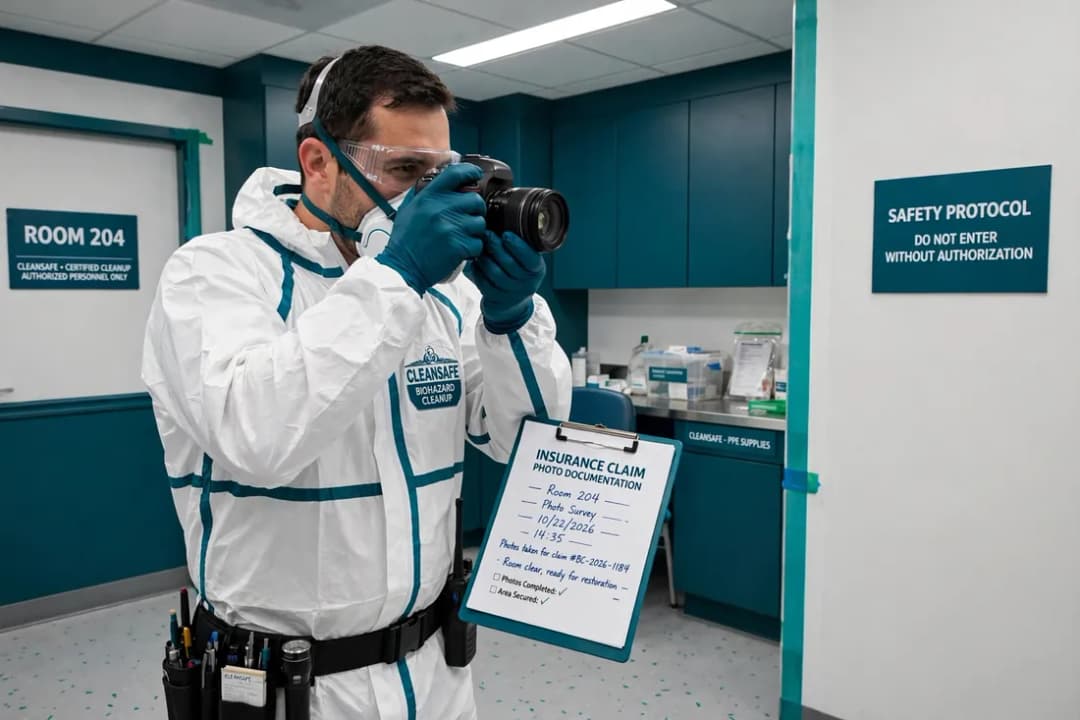
Take dated photos and video of every affected area before anything is moved or cleaned. Get wide shots of each room plus close-ups of contamination and damage. Write down the date, time, and a short description of what happened.
Keep every receipt from this point forward: emergency board-up, temporary lodging, anything. Adjusters decide based on evidence, and the families who get paid fastest are the ones with the thickest folders. Poor documentation is the single most common reason I see claims delayed.
Step 3: Call Your Insurer Early
Report the claim as soon as it is safe to do so. Most policies require prompt notice, and delays give the insurer room to argue the damage worsened because you waited. Have your policy number, the date of the event, and a brief factual description ready.
Ask three questions on that first call: your claim number, your adjuster’s name and direct contact, and exactly what documentation they need. Write the answers down. This five-minute call sets the tone for everything after.
Step 4: Get a Professional Written Estimate
Insurers pay based on scope and documentation, not guesses. Get a detailed written estimate from a professional biohazard cleanup company before the adjuster visits. A proper estimate lists each room, the contamination found, the remediation steps, and the materials being removed.
This is also where realistic numbers help. Our breakdown of biohazard cleanup costs in Miami shows the honest price ranges by situation, so you can tell whether an estimate is fair. If the adjuster’s number comes in low, a documented professional scope is your leverage.
Step 5: File, Follow Up, and Track
Submit the claim form with your photos, the written estimate, receipts, and the police or incident report if one exists. Then follow up on a schedule. Adjusters handle dozens of claims, and the organized claimant gets attention first.
Keep a log of every call: date, who you spoke with, what was said. If the claim stalls past a few weeks without explanation, escalate in writing. The National Association of Insurance Commissioners advises consumers to keep complete records of every step, and they are right.
What Homeowners Policies Usually Cover
Standard HO-3 homeowners policies cover biohazard remediation when it stems from a covered peril. Crime scenes, vandalism, and sudden water damage from burst pipes are the most common qualifying events. Both trauma cleanup after an accident and sewage remediation after a backup typically qualify.
What usually is not covered: gradual damage, maintenance neglect, and contamination the homeowner caused intentionally. Flood-related sewage backup needs separate flood insurance in most cases. Your deductible applies first, so weigh the repair cost against it before filing.
Why Biohazard Claims Get Denied: 3 Common Reasons
Most denials are preventable. The three I see most often:
1. Late reporting. Waiting weeks to call gives the insurer an argument that the damage worsened on your watch. Report promptly.
2. Thin documentation. No photos, no estimate, no incident report. The adjuster has nothing to approve. Document like your payment depends on it, because it does.
3. Uncovered peril. Filing a claim for gradual mold or long-term neglect will be denied, and the denial goes on your record. Check your coverage in step one and save yourself the trouble.
Working With Your Adjuster: Advice From the Field
Adjusters are not your enemy, but they are not your advocate either. Their job is to settle the claim for the least the policy requires. Be polite, be factual, and be specific.
Never agree to a settlement number on the first call. Never let anyone start demolition before you have photos and a written scope. And if the adjuster will not come to the scene, ask for that decision in writing. In my experience, claims where the adjuster actually walks the property settle faster and fairer than ones handled from a desk.
If your claim is denied and you believe it should be covered, you can appeal in writing, get an independent estimate, and involve your state’s insurance regulator. Denials are not always final.
Summary
Filing an insurance claim for biohazard cleanup comes down to five steps: read your policy, document everything, call your insurer early, get a professional written estimate, and track the claim to payout. Clean documentation and prompt reporting decide most outcomes.
Need a professional estimate for your claim? Contact Hazard Guard or call (888) 976-0045. We provide detailed written scopes that insurers accept, and we respond 24/7 across Miami.