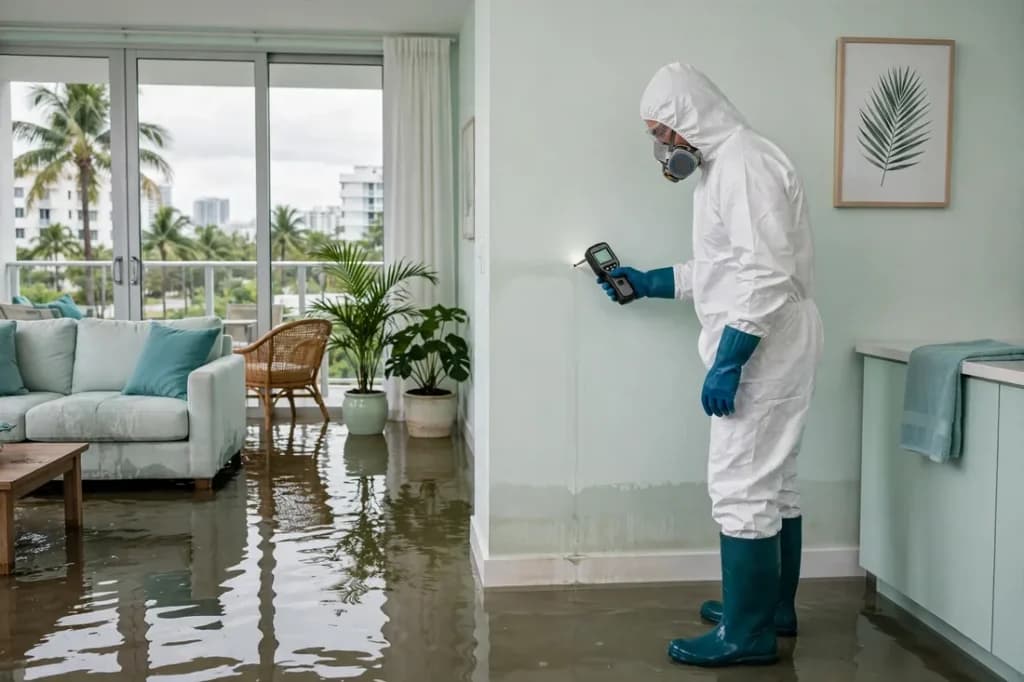
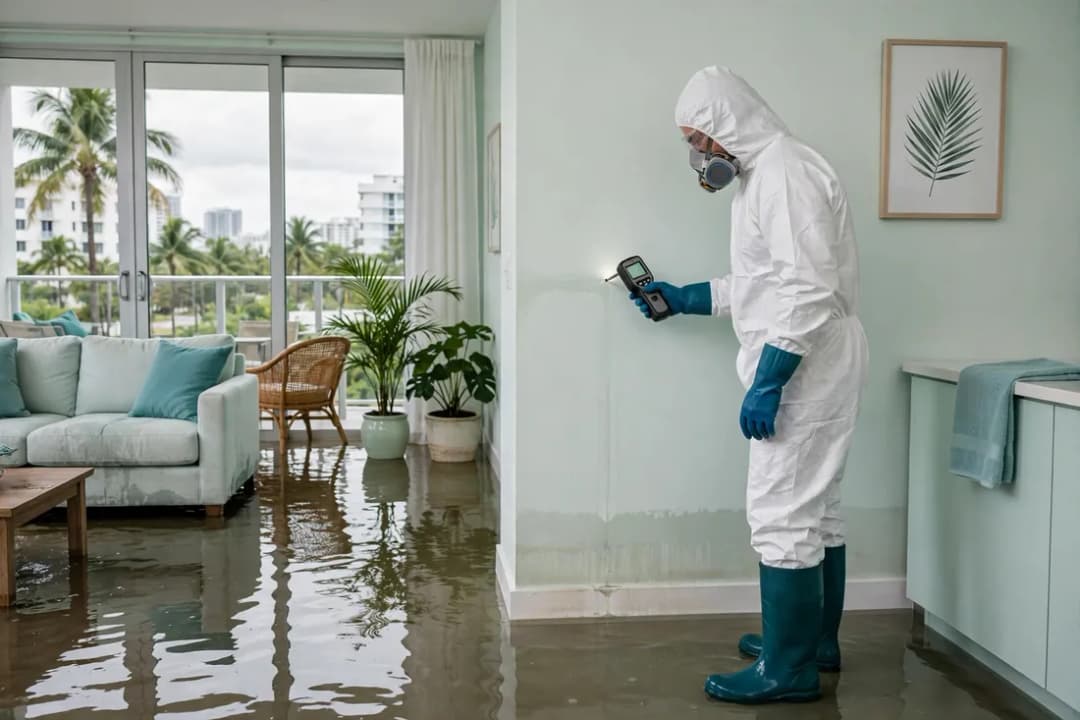
Floodwater contamination cleanup is the professional decontamination of a home after floodwater has entered it. Floodwater is not clean rainwater. It can carry sewage, chemicals, fuel, bacteria, and debris, and it soaks into materials that look dry on the surface.
In Miami, that risk is seasonal and familiar. Summer storms, king tides, and tropical systems push water into ground-floor rooms, garages, and low-lying neighborhoods from Hialeah to Homestead. Treat every indoor flood as contaminated until a professional verifies otherwise.
Floodwater Is Category 3 Water, Not Ordinary Rain
The restoration industry classifies floodwater as Category 3 water, the most contaminated category. The IICRC S500 Standard for professional water damage restoration uses this classification for water that is grossly contaminated and can cause serious illness.
Category 3 water can contain sewage, pesticides, heavy metals, and pathogens. That classification drives everything that follows. Porous materials that absorbed it usually cannot be cleaned in place. They must be removed.
Homeowners often ask whether a few inches of clear-looking water is really dangerous. On Miami jobs, I have seen clear-looking floodwater test as contaminated because it passed through a street drain, a septic area, or a garage floor first. Appearance tells you nothing reliable.
Immediate Safety Steps Before Help Arrives
Your first job is safety, not cleanup. Floodwater hides electrical, structural, and slip hazards.
Cut Power Safely, or Stay Out
Do not walk through standing water to reach a breaker panel. If water has reached outlets, appliances, or the panel itself, stay out and call an electrician or the utility.
If the panel is dry and safely reachable, shut off power to the affected area. Never touch electrical equipment while standing in water.
Keep People and Pets Out of the Water
Keep children and pets away from flooded rooms. Floodwater can carry bacteria such as E. coli and Leptospira, and sharp debris hides below the surface.
Wear waterproof boots and gloves if you must enter briefly to retrieve essentials. Wash hands and skin thoroughly afterward, and do not let floodwater contact open cuts.
Document Before You Move Anything
Take photos and short video of water lines, damaged items, and affected rooms before cleanup starts. Our sewage backup safety guide uses the same documentation approach, because insurers and adjusters need the before picture.
Note the time water entered, how high it rose, and where it came from. That timeline helps the cleanup crew and the claim.
Call for Professional Assessment Early
Floodwater damage worsens by the hour in Miami humidity. Mold can begin growing on wet drywall within 24 to 48 hours, and soaked materials keep wicking water upward.
Our biohazard cleanup team in Miami responds 24/7 for flood-related contamination. Early assessment limits both the health risk and the repair bill. For local response details, see the Miami biohazard cleanup service page.
What Professionals Remove, Clean, and Verify
Professional floodwater cleanup follows a sequence. Skipping a step is how odor and mold return weeks later.
Water Extraction and Contaminated Material Removal
Crews extract standing water, then remove porous materials that absorbed Category 3 water. That usually includes carpet and padding, soaked drywall up to the water line plus a safety margin, insulation, and upholstered items that cannot be verified clean.
Homeowners hate losing flooring and furniture. I understand that. But a carpet that soaked up street runoff cannot be made safe by drying alone.
Cleaning and Disinfection
Hard, non-porous surfaces are cleaned first, then treated with EPA-registered disinfectants at label-directed dilutions and dwell times. Pre-cleaning matters, because disinfectants cannot work through mud and organic matter.
The CDC flood cleanup guidance stresses the same order: clean, then disinfect, and protect yourself with gloves, boots, and eye protection throughout.
Drying and Moisture Verification
Drying is not guesswork. Crews use air movers and dehumidifiers, then verify with moisture meters. Walls that feel dry can still hold moisture behind baseboards and inside cavities.
Our guide to after a sewage backup is cleaned explains moisture verification in detail, and the same checks apply after flooding.
Mold Watch and Safe Re-Entry
After drying, crews watch for mold growth and confirm the space is safe to re-enter. That check includes odor, visible growth, moisture readings, and the condition of HVAC components that may have taken in contaminated water.
Do not move back into a flooded room on appearance alone. A meter reading and a documented check are what make re-entry safe.
Common Flood Cleanup Mistakes in Miami Homes
Several mistakes repeat after every major Miami storm, and each one creates a second problem.
- Running the HVAC while ducts or filters are contaminated, which spreads particles through the home
- Drying only the surface while wet drywall and insulation stay soaked behind it
- Using household bleach on large flooded areas without ventilation or proper dilution
- Throwing contaminated debris in household trash instead of following local disposal guidance
- Waiting days to call, by which time mold has established in wall cavities
The HVAC mistake is the most costly. I have walked into homes where a single flooded room became a whole-house odor problem because the system ran for two days after the water receded. Isolate vents early, and have ducts checked before restarting the system.
Floodwater, Sewage, and Storm Surge Are Different Risks
Not all Miami floods carry the same contamination, and the source changes the response.
Street Flooding and Stormwater
Street runoff picks up oil, chemicals, animal waste, and debris. Treat it as Category 3 water even when it looks clear.
Sewage Backup During a Storm
Heavy rain can overwhelm drains and push sewage into a home. That is a biohazard event in its own right, with its own safety steps. See our sewage backup safety guide for the immediate actions.
Storm Surge and Saltwater
Surge water carries salt, sediment, and contaminants from streets and structures. Salt accelerates corrosion in wiring, appliances, and metal framing, so electrical and appliance checks matter even after surfaces look clean.
In every case, the first move is the same. Keep people out of the water, document the damage, and get a professional assessment before deciding what can stay.
When to Call Professionals Immediately
Call right away when any of these apply.
- Water reached outlets, appliances, or the electrical panel
- Sewage is present, or the water smells of sewage or fuel
- Water soaked drywall, insulation, or flooring across a room or more
- Anyone in the home is elderly, immunocompromised, or has open wounds
- Mold is already visible, or the home stayed wet for more than a day
These are not borderline cases. They need trained crews, proper PPE, and documented verification, not a mop and a fan.
Our first steps after discovering a biohazard guide covers the same isolate, document, and call sequence for any home biohazard.
Summary
Floodwater in a Miami home is Category 3 contaminated water, not clean rain. Keep people and pets out, cut power only when it is safe to do so, document everything, and call professionals early.
Professional cleanup removes what cannot be verified clean, disinfects hard surfaces properly, dries to meter-verified levels, and checks for mold before safe re-entry. That sequence is what keeps a flood from becoming a long-term health problem.
Facing floodwater in your Miami home? Contact Hazard Guard or call (888) 976-0045 for 24/7 floodwater contamination help.