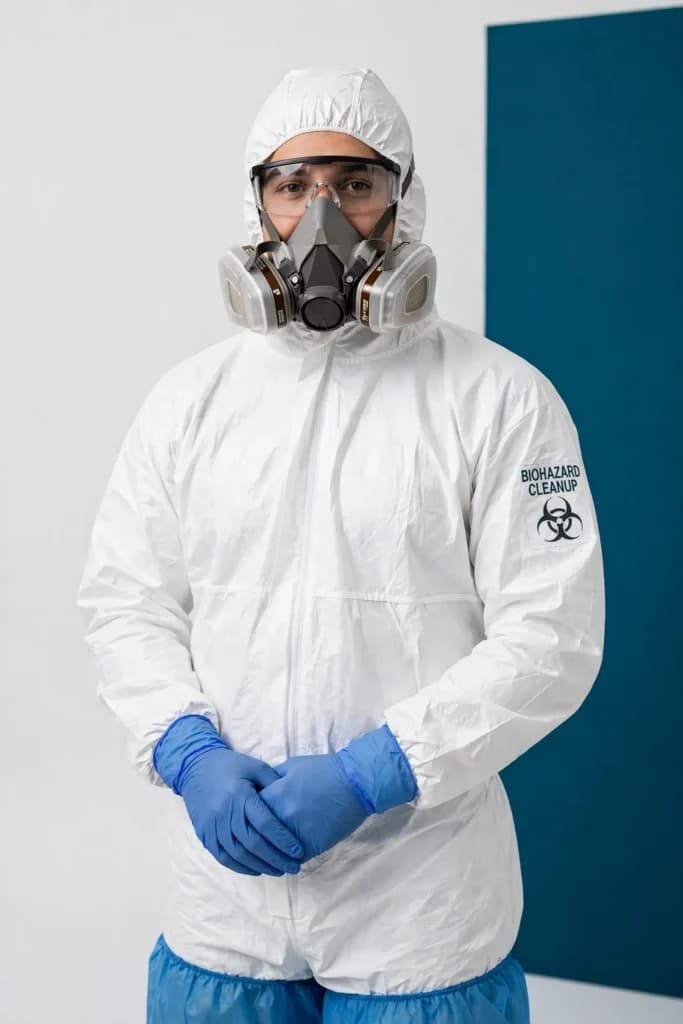
Personal protective equipment, or PPE, is the layered barrier system biohazard crews wear to block contact with bloodborne pathogens and contaminated materials. Every professional setup includes six layers: respiratory protection, a fluid-resistant suit, double gloves, eye protection, boot covers, and proper seal discipline at every joint.
This is not overkill. On a blood job, the suit is the only thing between the technician and hepatitis B, hepatitis C, or HIV exposure.
OSHA treats it that way, and so do we.
Here is exactly what my crews wear on every biohazard cleanup job and why each layer exists.
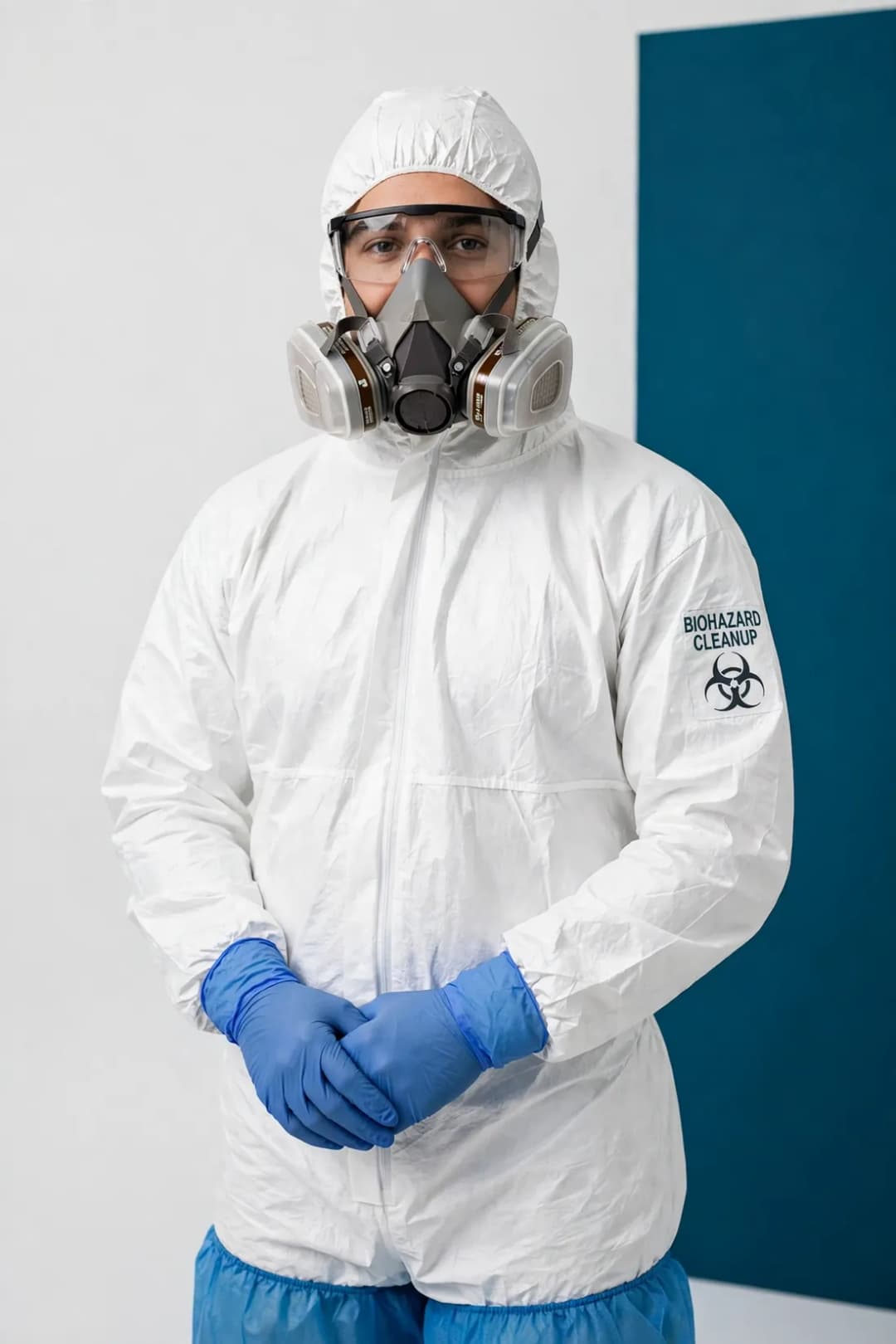
The Six PPE Layers Every Biohazard Crew Wears
Each layer covers a failure point the others cannot. Remove any one and the chain breaks.
1. Respiratory Protection
A half-face or full-face respirator with P100 or organic vapor cartridges, depending on the job. Simple dust masks do not count.
Respirators matter for two reasons. Decomposition scenes release airborne particulates.
Chemical jobs like meth or tear gas release vapors a mask cannot touch.
Every crew member wearing a tight-fitting respirator must be fit-tested annually under OSHA’s Respiratory Protection Standard (29 CFR 1910.134). Facial hair breaks the seal.
My guys know: if you want the beard, you sit out the respirator jobs.
2. Fluid-Resistant Coverall Suit
A full-body coverall, usually Tyvek or equivalent, with an attached hood. It covers street clothes completely, head to ankle.
The suit’s job is splash and contact protection. Blood, bodily fluids, and disinfectant overspray all stay on the disposable outer layer.
The hood matters more than people think. Hair traps contaminants.
A hooded suit eliminates that reservoir.
3. Double Nitrile Gloves
Two pairs, layered. The outer pair gets changed between zones and tasks.
The inner pair stays on until final doffing.
Double-gloving exists because gloves fail. They tear on drywall edges, snag on broken glass, and puncture on hidden sharps.
On a hoarding job in Hialeah last year, my lead’s outer glove tore three times before lunch. The inner pair never broke.
Cut-resistant liners go under the nitrile when sharps are likely. Never trust a single glove around a scene.
4. Eye Protection
Sealed goggles or a full-face respirator. Regular safety glasses with side gaps do not qualify.
Eyes are a mucous membrane entry point for bloodborne pathogens. OSHA’s Bloodborne Pathogens Standard (29 CFR 1910.1030) specifically requires eye protection whenever splashes or sprays are reasonably anticipated.
Splashes happen during pressure washing, carpet removal, and mattress handling. All three are routine on our jobs.
5. Boot Covers or Chemical-Resistant Boots
Disposable boot covers over dedicated work boots, taped at the shin. Blood wicks into shoe fabric and survives there.
Cross-contamination through footwear is one of the most common mistakes I see in DIY attempts. People protect their hands and face, then walk contamination through the whole house on their sneakers.
Boot covers come off inside the containment zone, before the tech steps out. That is the discipline.
6. Seal Discipline at Every Joint
Tape at the wrists, tape at the ankles, hood over respirator straps, goggles over the hood edge. Every transition point gets sealed.
This is the layer most crews skip when they get comfortable. It is also where exposures happen.
The gear is only as good as its weakest gap.
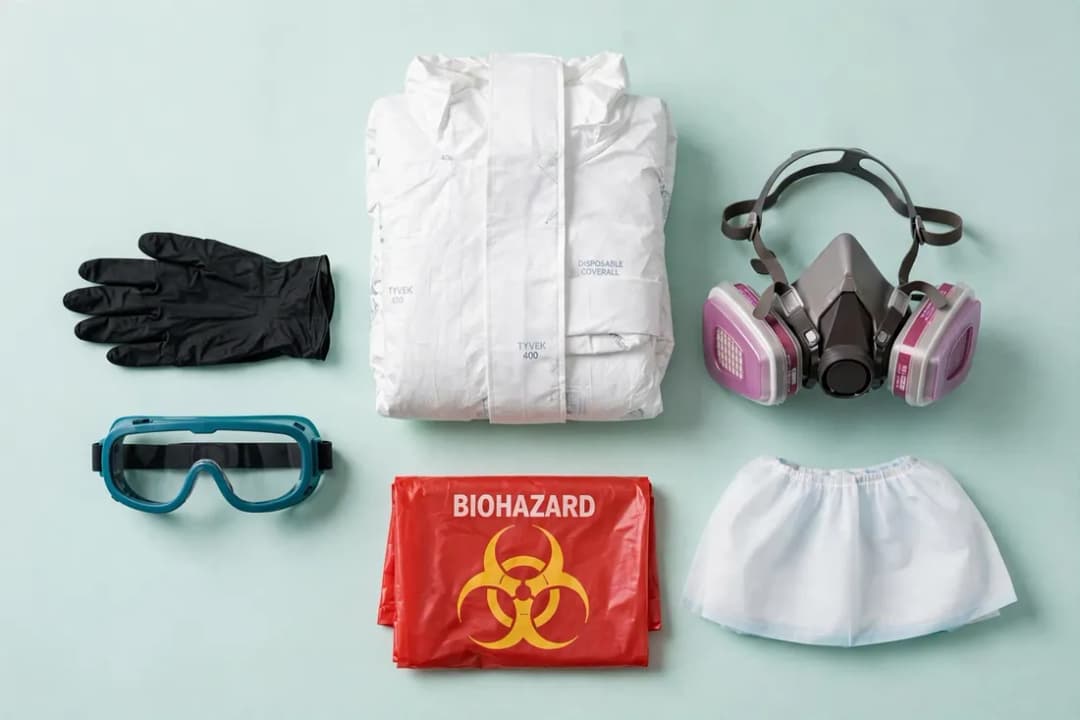
Why This Setup Follows OSHA Rules
OSHA’s Bloodborne Pathogens Standard requires employers to provide PPE at no cost and ensure it is used. That includes an exposure control plan, proper selection for the task, and training on use and removal.
The removal part is called doffing, and it is where most exposures actually occur. Peeling a contaminated glove wrong touches your own skin with the dirty surface.
Our crews practice doffing sequences the way medics practice drills.
The CDC’s guidance on bloodborne pathogen exposure backs the same principle. Contamination control is a system, not a single product.
If a company shows up in t-shirts and latex exam gloves, they are not following the standard. That is your signal to send them away.
What Happens When PPE Comes Off Too Early
The most dangerous moment on a biohazard job is the end. The scene looks clean, and the tech feels hot in the suit.
The temptation is to pull the respirator off for fresh air.
Do not. Airborne particulates are still settling, and ozone or hydroxyl treatment may still be running.
The room is not declared clear until verification is done.
I have lost count of how many times I have stopped a junior tech from lifting a mask early. Every time, the answer is the same: the suit comes off in the doffing zone, in order, after clearance.
Not before.
Homeowners should apply the same discipline. If you are doing any cleanup yourself around blood, at minimum: nitrile gloves, eye protection, ventilation, and a real disinfectant with label-directed dwell time.
And know the line where DIY stops. For anything beyond that, call a professional blood cleanup crew. Our guide on cleaning blood yourself draws that line honestly.
Summary
Professional biohazard crews wear six PPE layers: a fit-tested respirator, a hooded fluid-resistant coverall, double nitrile gloves, sealed eye protection, boot covers, and taped seals at every joint. Each layer covers a failure point the others cannot, and the system follows OSHA’s Bloodborne Pathogens Standard down to the doffing sequence.
Gear is only half the story. Discipline, training, and knowing when to stop are the other half.
Need a crew that shows up properly equipped in Miami? Contact Hazard Guard or call (888) 976-0045. We respond 24/7, and every tech on our trucks is trained, fit-tested, and fully geared.