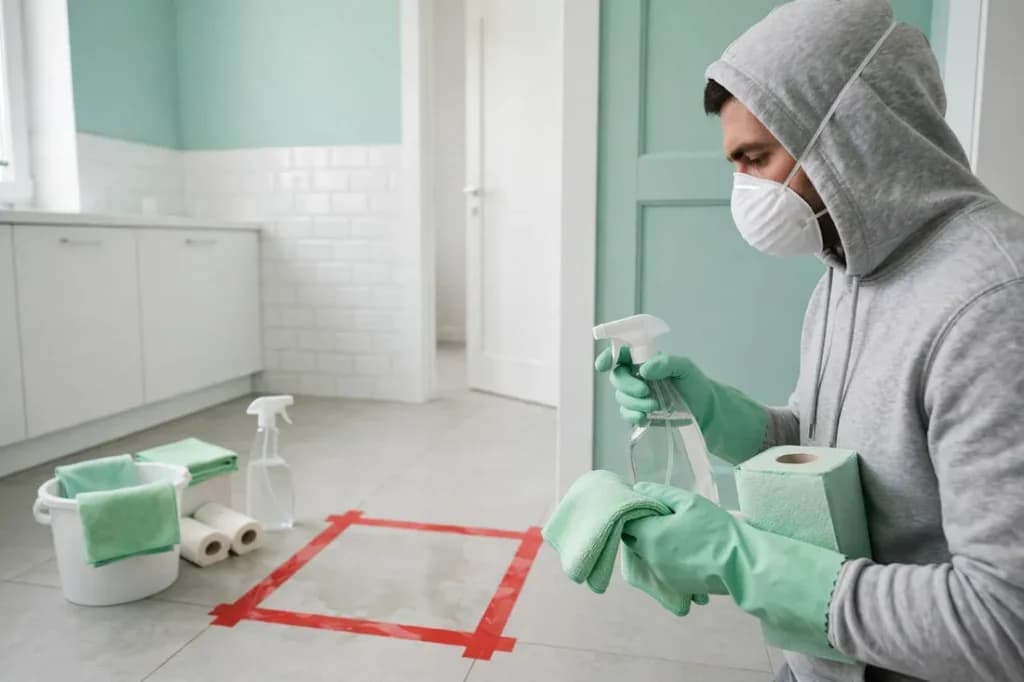
Cleaning up blood yourself is safe only for tiny, fresh spills on hard, non-porous surfaces. A nosebleed on a tile floor, wiped up properly, is fine.
Everything beyond that carries real infection and contamination risk. Blood can carry hepatitis B, hepatitis C, and HIV. Pathogens survive on surfaces longer than most people expect. And household cleaning fails in predictable ways.
The Rule of Thumb Professionals Use
I give this same guidance in every training session. If the spill is small, fresh, and on a surface you can truly disinfect, DIY is acceptable with gloves, ventilation, and a proper disinfectant.
If blood touched carpet, fabric, upholstery, a mattress, or drywall, stop. Those materials cannot be disinfected. They must be removed and replaced, and the removal itself requires containment and lawful waste disposal.
The other hard line is volume. A large spill means blood likely spread beyond what you can see. That is a professional job. For the broader first-response picture, what to do first after discovering a biohazard covers the same isolate, ventilate, document, and call sequence.
6 Real Risks of DIY Blood Cleanup
1. Infection From Bloodborne Pathogens
Blood can carry hepatitis B virus, hepatitis C virus, and HIV. Hepatitis B survives on dried surfaces for at least seven days, according to the CDC. Transmission needs only a small cut or mucous-membrane contact.
Gloves reduce the risk. They do not eliminate it when you are scrubbing an infectious spill without training. For the full science, bloodborne pathogens explained covers HBV, HCV, and HIV in depth.
2. You Cannot See the Full Extent
Blood wicks through carpet padding into subfloor. It travels along grout lines and under baseboards. Foot traffic tracks it to clean rooms.
On a Miami job last year, a homeowner had cleaned a visible bedroom spill for a week. Our detection work found contamination in the hallway and closet from shoe traffic. The visible stain was the smallest part of the problem.
Professionals map contamination the way crime labs do. Homeowners guess, and guesses miss.
3. Disinfectants Are Used Wrong Almost Every Time
Disinfection has three failure points: wrong product, wrong dilution, wrong dwell time. EPA-registered disinfectants only kill pathogens when used at label-directed dilutions with the full wet-contact time on the label, typically 3 to 10 minutes. (EPA registered disinfectants)
Bleach is the most misused. Mixed wrong, it damages surfaces and releases fumes. Used alone, it cannot remove the proteins blood leaves behind. The stain fades and the smell comes back.
4. Cross-Contamination Is Easy
The mop, the sponge, the gloves, the trash bag. Every tool that touches blood becomes contaminated. Professionals bag tools, change gloves between zones, and isolate work areas.
I have seen DIY attempts spread a contained spill to two rooms with a single mop. The cleanup created a bigger job than the original spill.
5. Waste Disposal Is Legally Regulated
Blood-soaked materials are biomedical waste. In Florida, they must be segregated, labeled, and removed through a permitted transporter under Chapter 64E-16, Florida Administrative Code. Household trash is not a legal disposal route.
Fines for improper medical-waste disposal are real. So is the liability if a sanitation worker is exposed.
6. The Emotional Toll
Blood cleanup after an injury, an accident, or a death is not neutral work. It affects the people doing it. Trained crews have protocols for this. Family members do not.
After years in this field, I can tell you this is the reason most often given by people who called us after trying it themselves.
What Small Spills You Can Handle Safely
A few situations genuinely fit DIY. Use this checklist.
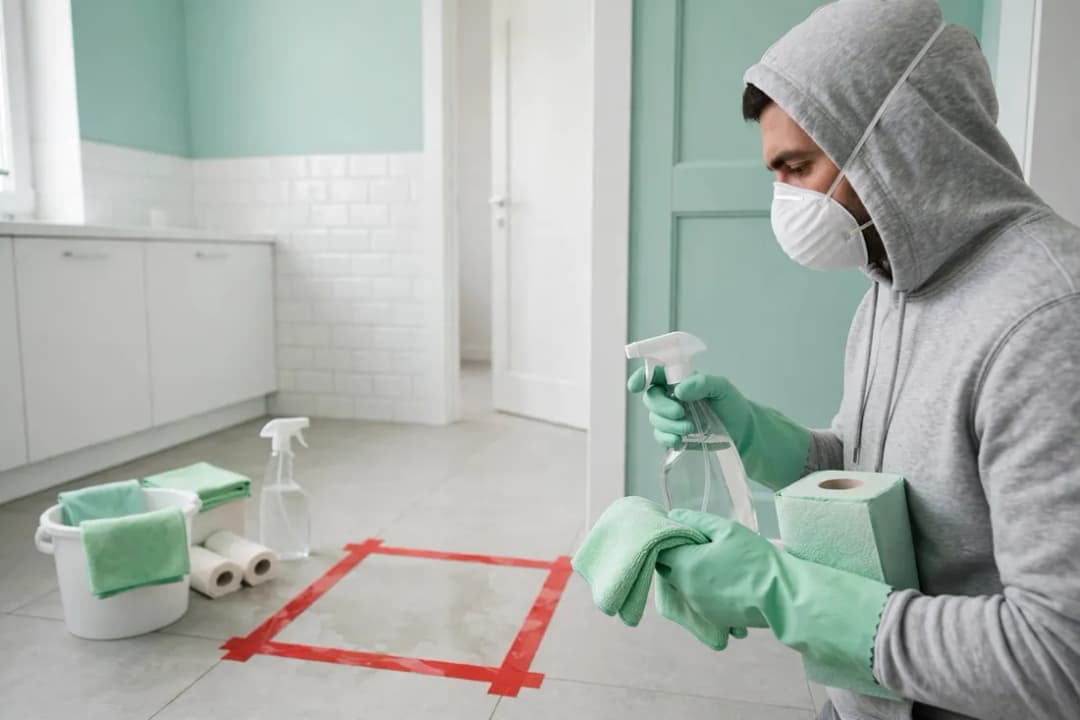
Wear disposable nitrile gloves and open the room for ventilation. Use an EPA-registered disinfectant with a bloodborne-pathogen kill claim. Pre-clean visible material first, because disinfectants cannot work through organic matter. Apply the product, keep the surface visibly wet for the full dwell time, then dispose of gloves and wipes in a sealed bag.
Wash your hands thoroughly afterward. Keep children and pets out until the surface is dry.
When to Call a Professional Crew Instead
Call a professional when any of these apply.
The spill is larger than a few tablespoons. Blood reached carpet, fabric, upholstery, or porous materials. The spill sat long enough to dry and wick. You do not know whose blood it is or whether pathogens are present. The scene involves injury, death, or a crime. You feel unsure at all.
Uncertainty is the signal. Our blood cleanup service in Miami responds around the clock, and the assessment is free.
What Professionals Do Differently
The difference is not better mops. It is a documented process built on OSHA’s Bloodborne Pathogens Standard (29 CFR 1910.1030).
Crews assess with detection logic, contain the area with barriers, remove contaminated porous materials, disinfect with proper dwell times, and verify the space is safe. Waste leaves through a licensed transporter with a manifest. Everything is documented for insurance.
That is the same process behind every job our biohazard cleanup team in Miami handles.
Summary
DIY blood cleanup is safe only for tiny, fresh spills on hard, disinfectable surfaces. Anything larger, anything on porous materials, or any spill with unknown risk belongs to trained professionals with proper PPE, EPA-registered disinfectants, and a legal disposal chain.
The infection risk, the hidden spread, and the disposal law are the three reasons professionals exist. When in doubt, let someone trained handle it.
In Miami and need help now? Contact Hazard Guard or call (888) 976-0045. Our crews are available 24/7, and the call is free.