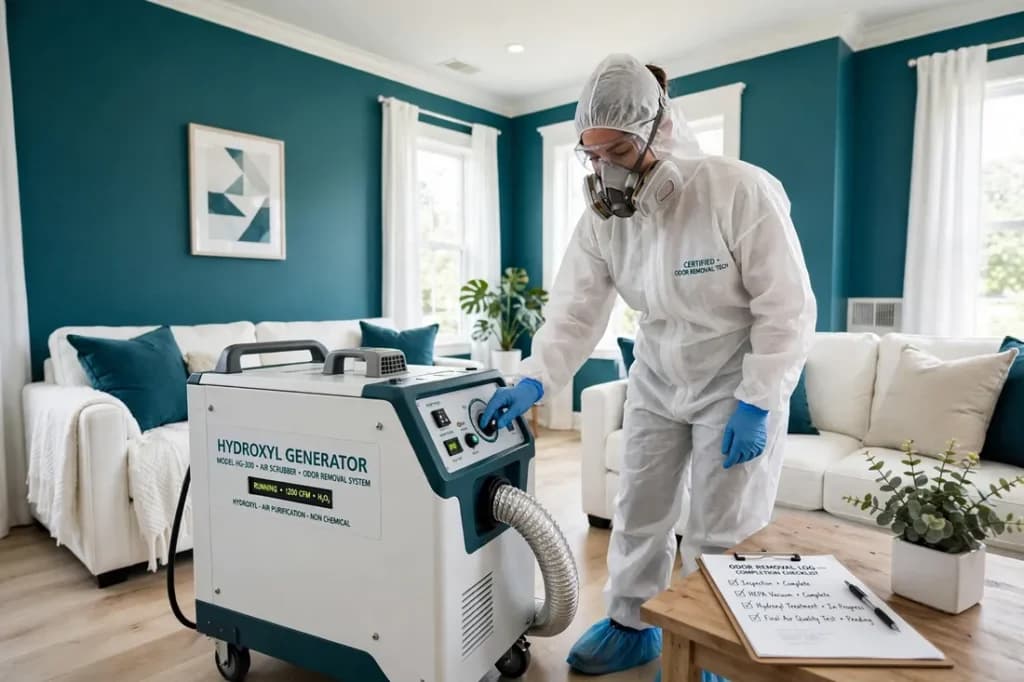
Crews remove the smell of death by removing its source first, then cleaning and disinfecting every affected surface, then treating the air and materials with enzymes and hydroxyl technology, and finally sealing what cannot be removed. The smell does not come from the air. It comes from decomposition gases trapped in porous materials.
No spray, candle, or air freshener fixes that. The source has to go before the air can clear.
Death Odor Starts With the Source, Not the Air
Decomposition releases gases as body tissues break down. In Miami heat, that process starts within hours. The gases soak into carpet padding, subfloor, drywall, upholstery, and anything porous nearby.
That is why a room can smell long after the body is gone. The odor lives in the materials, not in the air passing through them.
I have walked into homes where the family had already aired the house for days. The smell barely changed. Airing treats the symptom. The source sits in the floor.
The Odor Removal Process in 5 Steps
Professional odor removal follows the same sequence as full remediation. Skipping a step is how the smell comes back.
1. Source Removal
Everything that absorbed bodily fluids comes out. Carpet and padding, contaminated drywall sections, mattresses, upholstered furniture. These go into labeled biohazard bags for regulated disposal.
This step alone removes most of the odor. There is no chemical shortcut around it.
2. Deep Cleaning and Disinfection
Remaining hard surfaces are cleaned first, then treated with EPA-registered disinfectants at label-directed dwell times. Disinfectant cannot work through organic matter, so cleaning always comes first.
3. Enzyme Treatment
Enzyme cleaners break down the proteins that carry decomposition odor. We apply them to subfloors, framing, and concrete, wherever fluids wicked beyond the surface.
This is the step most DIY attempts miss. Bleach kills surface bacteria, but it does not digest the proteins underneath. That is why a bleached room can smell clean for a day and foul again by the weekend.
4. Hydroxyl and Ozone Treatment
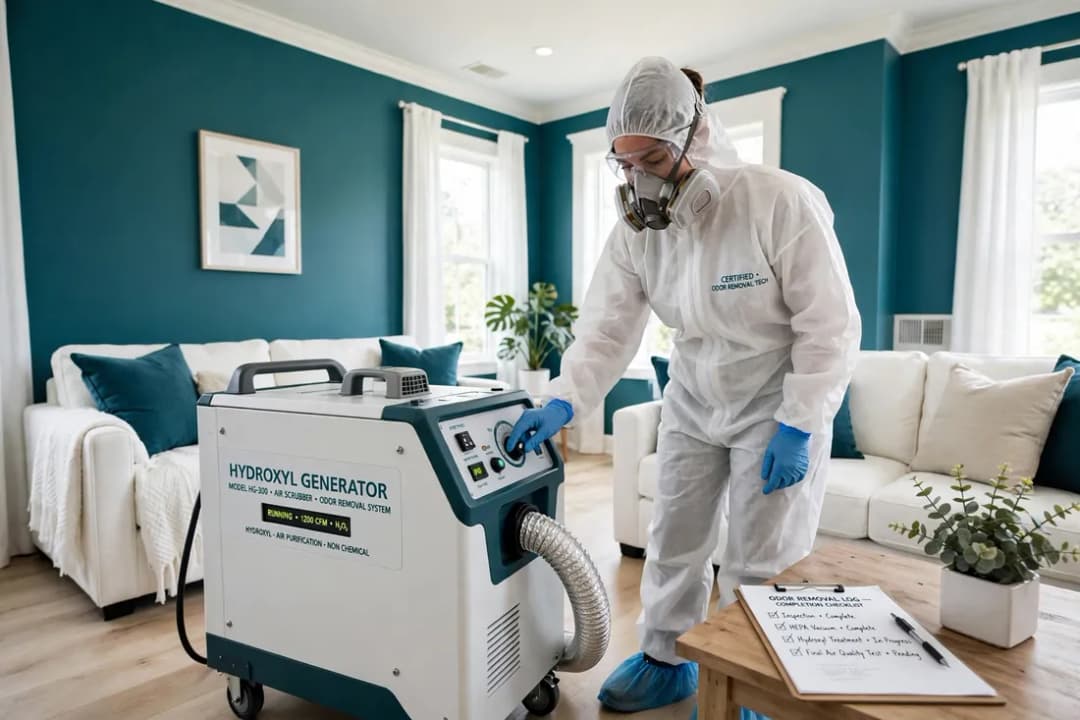
Hydroxyl generators run safely while people are nearby and break down airborne odor molecules. Ozone treatment is stronger, and it requires the home to be empty during treatment.
We choose based on severity. Hydroxyl handles most jobs. Ozone is reserved for deep, long-standing cases, and the home is ventilated thoroughly afterward.
5. Sealing and Verification
If odor persists in a subfloor or framing after treatment, we seal it with a specialized odor-blocking primer. Then we verify by smell test and, where needed, by re-inspection after the home has been closed up for a day.
Sealing without the earlier steps is a cover-up. Sealing after them is a finish.
Why Air Fresheners and DIY Fixes Fail
Air fresheners mask odor molecules. They do not remove them. Once the fragrance fades, the decomposition smell returns at full strength.
Painting over an affected wall traps odor temporarily. Humidity in a Miami summer softens the paint film, and the smell pushes through again.
Ozone machines sold for home use are another trap. They are too weak for deep odor, and running one in an occupied home irritates lungs. Professional ozone work uses commercial units in an empty house, with a clear re-entry plan.
What Affects How Long Odor Removal Takes
Four factors decide the timeline:
- Time undiscovered: days of decomposition reach deeper than hours do.
- Temperature: Miami summer heat accelerates the process and spreads odor further.
- Materials: carpet and wood absorb more than tile and concrete.
- Ventilation: a sealed, air-conditioned home holds odor in materials longer.
A small, quickly discovered case may clear in a day or two of work. A long-undiscovered case in a carpeted home can take a week of staged treatment. Honest crews say this up front after assessment, not over the phone.
What Homeowners Should Do Before Crews Arrive
Do not try to clean the area yourself. Do not remove flooring or furniture, since that spreads contamination and destroys the assessment picture.
Keep people and pets out of the affected rooms. If the smell is strong, ventilate gently by opening a window, but do not run the HVAC if contamination may be in the ducts.
Call a crew that handles unattended death cleanup specifically. Odor removal after a death is part of that service, not an add-on. Our trauma cleanup team and biohazard cleanup team in Miami follow the same documented process.
Families dealing with a loss should not also carry this work. Our guide to trauma vs crime scene cleanup explains how the two services differ. Our guide on what to do after an unattended death is discovered covers the first steps in order.
Summary
Removing the smell of death means removing the source, cleaning and disinfecting, treating with enzymes and hydroxyl or ozone technology, and sealing what remains. Air fresheners, paint, and home ozone units only mask it.
Time, heat, and materials decide how long the job takes. A professional assessment gives an honest answer before work begins.
Need help in Miami? Contact Hazard Guard or call (888) 976-0045. Our crews are available around the clock, and the call is free.