Blood remediation is the professional process of removing blood contamination from surfaces and restoring them to a safe, sanitary condition. The method hinges on one decision: whether the surface is porous or non-porous.
Porous materials that absorbed blood get cut out and disposed of as regulated waste. Hard surfaces get pre-cleaned, treated with enzymatic cleaners, then disinfected with EPA-registered products at label dwell times. Every job closes with moisture readings and verification. Here is exactly how professionals handle each surface type, and why household methods fail.
The First Decision: Porous or Non-Porous
This is the fork every blood job starts at. Non-porous surfaces like tile, glass, and sealed metal can be cleaned and disinfected in place. Porous materials like carpet padding, drywall, and raw wood absorb blood below the surface, where no wipe or spray can reach.
Blood is mostly water and protein, and it wicks. It travels through carpet fibers into padding, along drywall paper into the gypsum core, and through seams in flooring into the subfloor. The visible stain is the smallest part of the contamination.
A professional decides in minutes with a moisture meter and knowledge of the material. A homeowner guesses by looking. That gap is why so many DIY attempts end with us cutting out twice the material later.
Hard Non-Porous Surfaces: Tile, Metal, and Glass
These are the best case. Blood sits on the surface instead of soaking in.
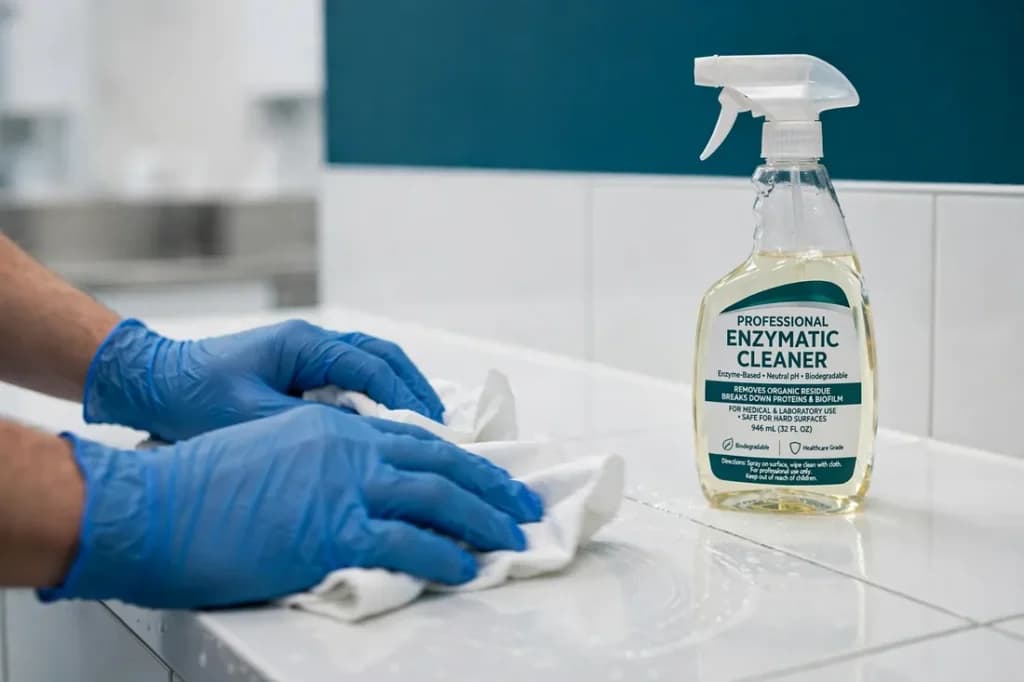
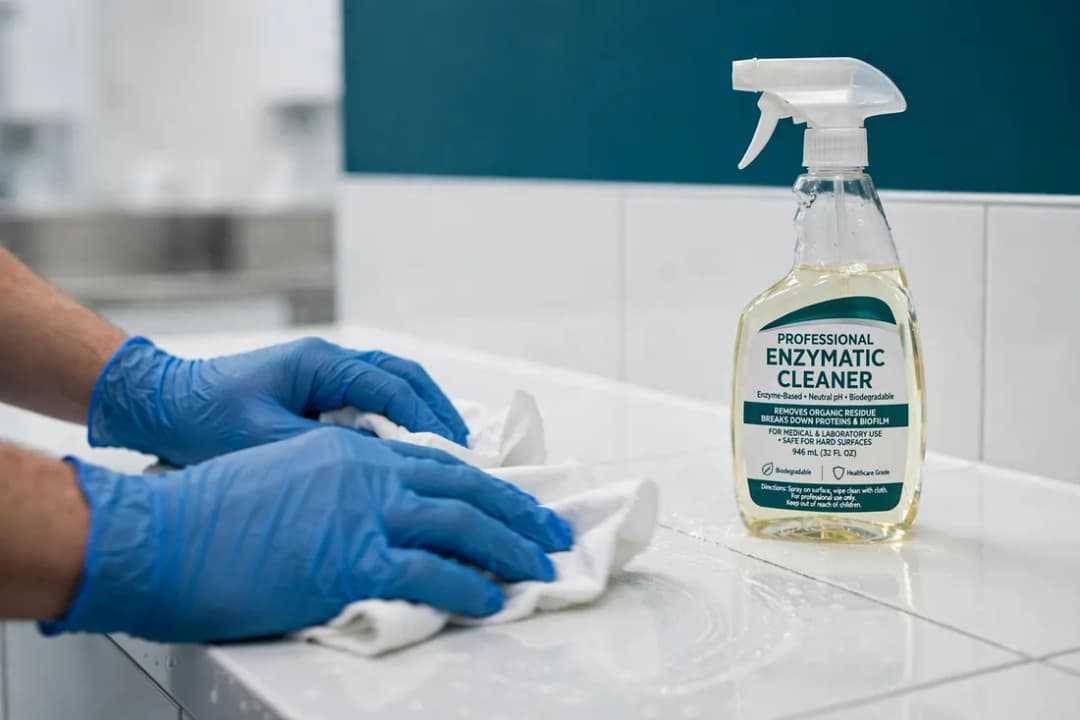
We pre-clean first. Disinfectants cannot work through dried organic matter, so the bulk material comes off with detergent and disposable materials. Then we apply an enzymatic cleaner, which breaks down the proteins blood leaves behind.
Only then comes disinfection: an EPA-registered hospital-grade disinfectant applied at label dilution, kept wet for the full dwell time on the label. Spray-and-wipe is not disinfection. The surface must stay wet for the stated contact time, usually several minutes.
Grout lines get extra attention. Grout is technically porous, and blood settles into it. We treat grout separately with longer dwell times, and we tell owners honestly when regrouting is the safer call.
Sealed Wood and Vinyl Floors
Sealed hardwood and luxury vinyl plank sit in the middle. The surface finish resists blood, but the seams do not.
On a job in Hialeah, blood had seeped through click-lock seams in vinyl plank and pooled on the underlayment. The floor looked clean from above. The moisture meter told a different story, and we pulled six planks to treat what was underneath.
We inspect every seam and edge. Baseboards come off so we can check what ran down the wall cavity. If the finish is compromised, scratched through, or the seams have wicked contamination below, the section comes out. Sealed does not mean waterproof.
Carpet, Padding, and Upholstery
Carpet is almost always a removal job, not a cleaning job. Blood passes through carpet fibers into the padding within minutes, and padding is a sponge.
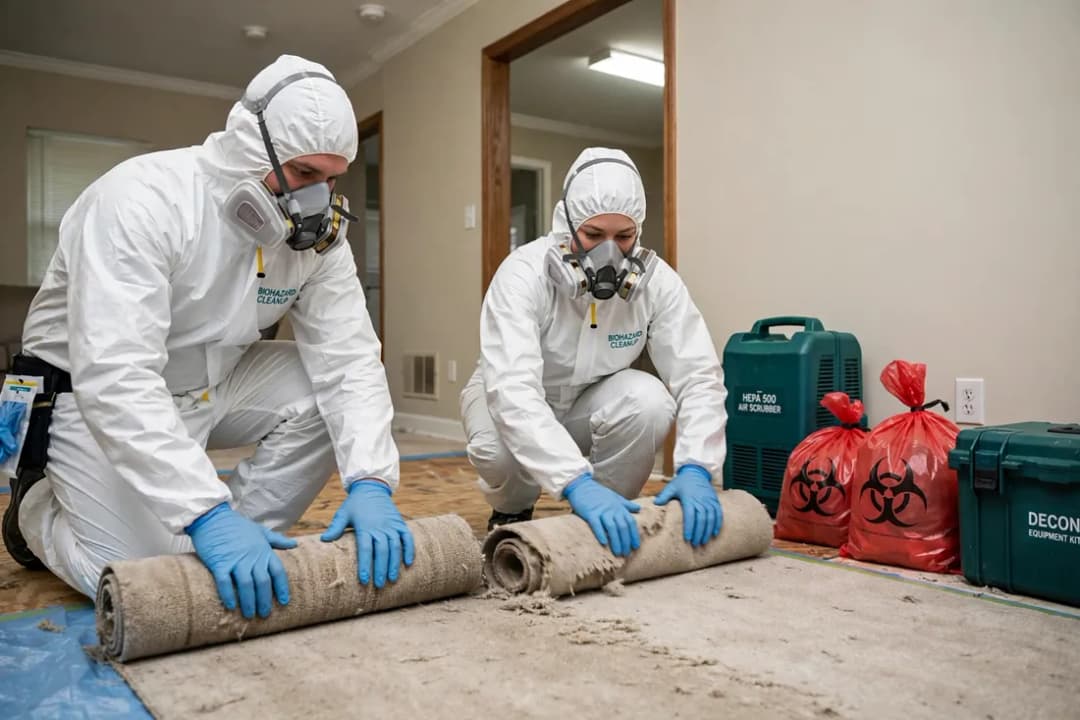
We cut out the affected carpet and padding with a margin beyond the visible stain, because wicking spreads contamination past what the eye sees. Everything goes into labeled biohazard bags for regulated disposal. The subfloor underneath gets treated as its own surface.
Upholstered furniture follows the same logic. A cushion that absorbed blood cannot be disinfected through to the foam core. It gets disposed of, and we document it photographically for the insurance claim.
This is also where bloodborne pathogen risk concentrates. HBV can survive in dried blood for up to a week, according to the CDC. Carpet padding holds dried blood perfectly.
Drywall and Subfloor: When Removal Is the Only Option
Drywall wicks blood upward from the floor line like a paper towel in a spill. We cut drywall above the highest wicking line, usually 12 to 24 inches past visible staining, and remove the section.
Subfloor gets assessed plank by plank or section by section. Plywood that absorbed blood gets sealed with an encapsulant after treatment, or replaced if saturation is deep. Concrete subfloors get enzymatic treatment and disinfection, since concrete is porous but treatable with enough dwell time.
The rule is simple: if we cannot verify it is clean with readings and inspection, it comes out. Guessing is not a remediation strategy.
The Professional Toolkit Homeowners Do Not Have
Method matters, but so does equipment. Here is what a professional crew brings that a homeowner does not.
- Enzymatic cleaners that digest blood proteins before disinfection, so pathogens have nowhere to hide.
- Moisture meters that find contamination below surfaces and confirm when materials are truly dry.
- HEPA-filtered air scrubbers that capture airborne particulates during removal work.
- Hydroxyl and ozone equipment for odor neutralization at the molecular level after cleaning.
- Full PPE under an OSHA exposure control plan, per OSHA’s Bloodborne Pathogens Standard (29 CFR 1910.1030): respirators, fluid-resistant suits, double gloves, eye protection.
No single item on this list is exotic. Together they are the difference between a surface that looks clean and one that is verifiably clean.
Why Bleach Alone Fails on Blood
Bleach is the most common DIY attempt, and it fails three ways.
First, bleach whitens without removing. It fades the color of the stain while leaving blood proteins in the material. The stain looks gone. The contamination is not.
Second, bleach has no dwell time discipline in DIY use. People spray and wipe within seconds. Even where bleach could work, the technique defeats it.
Third, bleach on carpet and upholstery destroys the material while missing the padding underneath. You get a bleached, still-contaminated carpet.
I have walked into homes where someone poured an entire bottle of bleach on a carpet stain. The fibers were white in a perfect circle. The padding underneath was still saturated. The job then cost more, because we had to cut a wider section.
Enzymatic pre-cleaning followed by an EPA-registered disinfectant at label dwell time is the professional sequence. There is no shortcut version.
Drying and Verification Close Every Job
After treatment, we verify. Moisture meters confirm porous-adjacent materials are dry. Visual inspection confirms no staining remains on treated surfaces. On larger jobs we document each area photographically.
This step is what most DIY efforts skip entirely, and it is the step that protects the property owner. Verification is your proof the job is done, and it is what your insurance adjuster wants to see.
Our blood cleanup crews in Miami follow this sequence on every biohazard remediation job, from a single bathroom to a full trauma scene. The surface decides the method. Verification decides when we leave.
Summary
Professionals remove blood by deciding first whether each surface is porous or non-porous. Porous materials that absorbed blood are cut out and disposed of as regulated waste. Hard surfaces are pre-cleaned, treated with enzymatic cleaners, and disinfected with EPA-registered products at full label dwell times.
Bleach alone fails because it whitens without removing proteins and never reaches contamination below the surface. Verification with moisture readings and inspection closes every professional job.
Dealing with blood contamination in Miami? Contact Hazard Guard or call (888) 976-0045. We assess the surfaces in person, remove what cannot be saved, and verify the rest, usually within 24 hours.