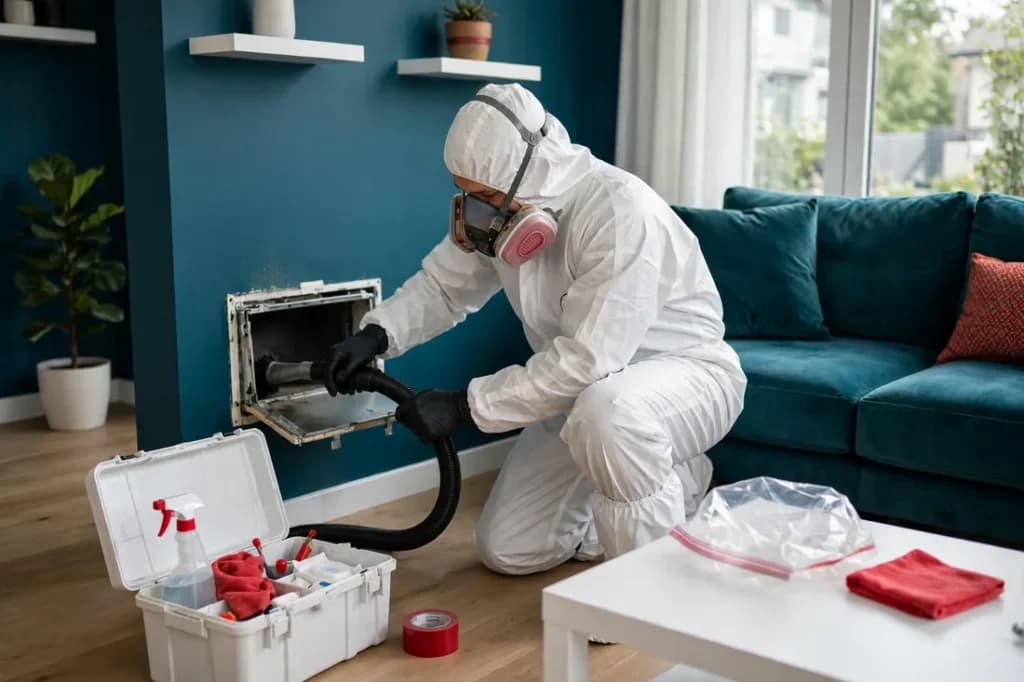
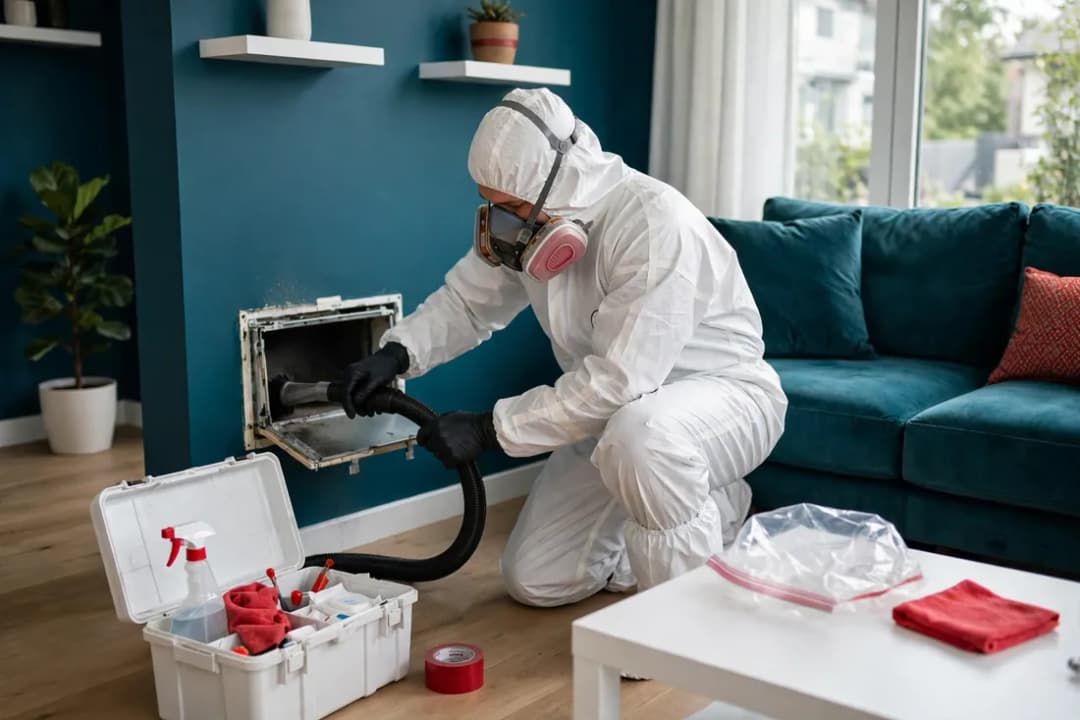
Tear gas cleanup is the professional removal and neutralization of CS or OC chemical residue from a home’s surfaces, air, and ventilation system. CS (2-chlorobenzalmalononitrile) and OC (oleoresin capsicum) are riot-control agents deployed by law enforcement during standoffs, arrests, and tactical operations. Residue settles on every exposed surface and gets pulled deep into HVAC ductwork.
It is removed through a controlled sequence: assessment, containment, HEPA dry capture, chemical neutralization, surface treatment, HVAC decontamination, and verification testing. Soap and a mop will not do it.
When police deploy tear gas inside a property in Miami, the home usually needs professional tear gas cleanup before anyone can safely move back in.
What Tear Gas Leaves Behind in a Home
CS and OC deploy as fine particulates, not just a cloud that drifts away. Those particles settle on walls, ceilings, floors, furniture, and every horizontal surface in the line of the discharge. They also penetrate porous materials like drywall, carpet padding, upholstery, and insulation.
The particles are invisible once they settle. That is what makes tear gas residue dangerous. A room can look normal and still trigger burning eyes, coughing, and skin irritation hours later.
Canisters add a second problem. They enter hot and fast. A canister that punches through drywall or shatters a window deposits concentrated residue inside wall cavities and behind baseboards. We see this on nearly every tactical deployment job.
CS is a synthetic irritant compound (Wikipedia: CS gas). OC is derived from chili peppers (Wikipedia: Pepper spray). Both cling to surfaces and reactivate with moisture, including humidity. Miami’s climate works against you here.
First Response: What to Do Before the Crew Arrives
Keep the HVAC system OFF. This is the single most important step. A running system pulls residue through the ducts and redistributes it to every room, including rooms the canisters never reached.
Open windows and doors for fresh air if it is safe to do so. Ventilation helps airborne particles dissipate. But do not run fans that push contaminated air deeper into the ductwork.
Do not start cleaning yet. Wiping surfaces without containment just smears the particulate around. And never use bleach on tear gas residue. It can react with the chemical agent and make the situation worse.
If the scene was a police operation, you may also be wondering how soon cleanup can begin after police release a scene. Once the scene is released, call a remediation crew. The longer residue sits, the deeper it migrates into porous materials.
The Professional Cleanup Process: 7 Steps
Every professional tear gas job follows the same sequence. It is the same assessment-first discipline my crews use on crime scene cleanup jobs. Here is how residue is actually removed.
1. Assessment and Testing
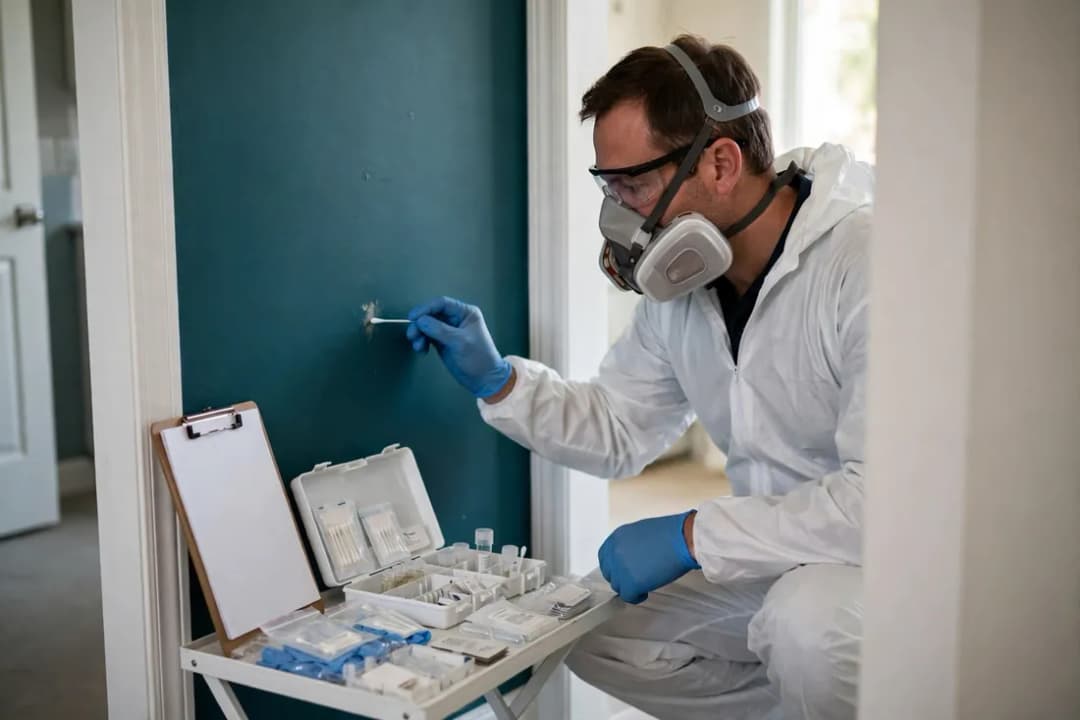
We walk the property and map where the agent was deployed, which rooms were affected, and whether the HVAC was running at the time. That last detail decides the scope of the whole job.
Surface sampling tells us how far the residue traveled. We test walls, horizontal surfaces, soft goods, and duct interiors. A job where the air handler was off might be three rooms. A job where it ran for a day can be the entire house.
2. Containment and Controlled Airflow
We seal the affected areas with plastic sheeting and set up negative air pressure. Contaminated air gets pulled through HEPA-filtered air scrubbers instead of drifting into clean rooms.
Cleaned zones get sealed off behind us as we work. Nothing migrates while we are in it.
3. Dry Capture with HEPA Filtration
Loose particulate comes off first, before any liquid touches a surface. We HEPA-vacuum walls, ceilings, floors, and contents with methodical overlapping passes.
This step matters because wet wiping CS/OC particulate directly can drive it deeper into porous surfaces. Dry capture first, always.
4. Chemical Neutralization
After dry capture, we apply neutralizing agents matched to the residue. Specialized alkaline solutions break the CS molecule down chemically, rendering it inert. This is the step that separates remediation from cleaning.
Product contact time matters. The neutralizer needs its full dwell time on the surface to work. Rush this and the residue reactivates the first humid night.
5. Surface Treatment and Porous Material Decisions
Hard, non-porous surfaces get wiped down with strong detergent solutions after neutralization. Countertops, tile, glass, and sealed wood usually come back fully.
Porous materials are a judgment call. Mild contamination on painted drywall can sometimes be treated, sealed, and repainted. Heavily contaminated carpet and pad, upholstery, and insulation usually get removed and disposed of as chemical waste. This follows the same assessment logic as chemical contamination remediation.
6. HVAC Cleaning and Filter Replacement
This is the step homeowners underestimate and the step that causes most callbacks. If the system ran during or after deployment, the ducts are contaminated. We clean and neutralize the ductwork and replace all filters before the system runs again.
Skip this and the first cooling cycle blows residue right back into the cleaned rooms. I have watched it happen.
7. Verification Testing and Documentation
We re-test surfaces and air after treatment and compare against the baseline. Clearance means the numbers are down and the symptoms are gone. No assumptions, only data.
You get written documentation of what was done and what the post-cleanup testing showed. Property managers and insurers both ask for this.
What Can Be Saved and What Gets Removed
Most homes land in the middle. Here is the honest breakdown from the field.
Usually salvageable after proper treatment: painted walls and ceilings, hard flooring, cabinets, solid wood furniture, and most appliances. These are non-porous or sealable surfaces where neutralization and sealing work.
Usually removed: carpet and pad in rooms with heavy residue, targeted drywall sections at canister entry points, and upholstered items that cannot be verified clean after treatment. Anything we cannot validate, we do not keep.
The rule is simple. Preserve what is truly safe. Remove what cannot be verified. A crew that promises to save everything is guessing.
Why DIY Tear Gas Cleanup Falls Short
The biggest mistake I see is the paint-over. A landlord in Little Havana had a tactical deployment in a rental. The property manager painted the whole unit and moved a new tenant in. Three weeks later the tenant’s kids were coughing every night. We found residue behind the fresh paint and in the ductwork. The paint job had to come off.
The second mistake is running the air conditioner. Families want the house aired out, so they crank the AC. All that does is load the evaporator coil and ducts with particulate. Then every cooling cycle re-exposes the family for months.
The third is the bleach bottle. Bleach does not neutralize CS or OC. On some agents it can create worse compounds. If your cleanup plan starts with a mop bucket, stop and call a professional crew.
Homeowners also miss the wall cavities. A canister hole gets patched and spackled, and the residue packed inside the wall keeps off-gassing every time the humidity spikes. We open and treat every penetration point. Patches alone are cosmetics.
Summary
Tear gas cleanup removes CS or OC residue from a home through assessment, containment, HEPA dry capture, chemical neutralization, surface treatment, HVAC decontamination, and verification testing. Porous materials that cannot be verified clean get removed. DIY attempts fail because residue is invisible, penetrates deep, and reactivates with humidity.
If law enforcement deployed tear gas in your Miami property, do not move back in on a visual check. Keep the HVAC off and contact Hazard Guard or call (888) 976-0045. Our crews respond 24/7, and the call is free.