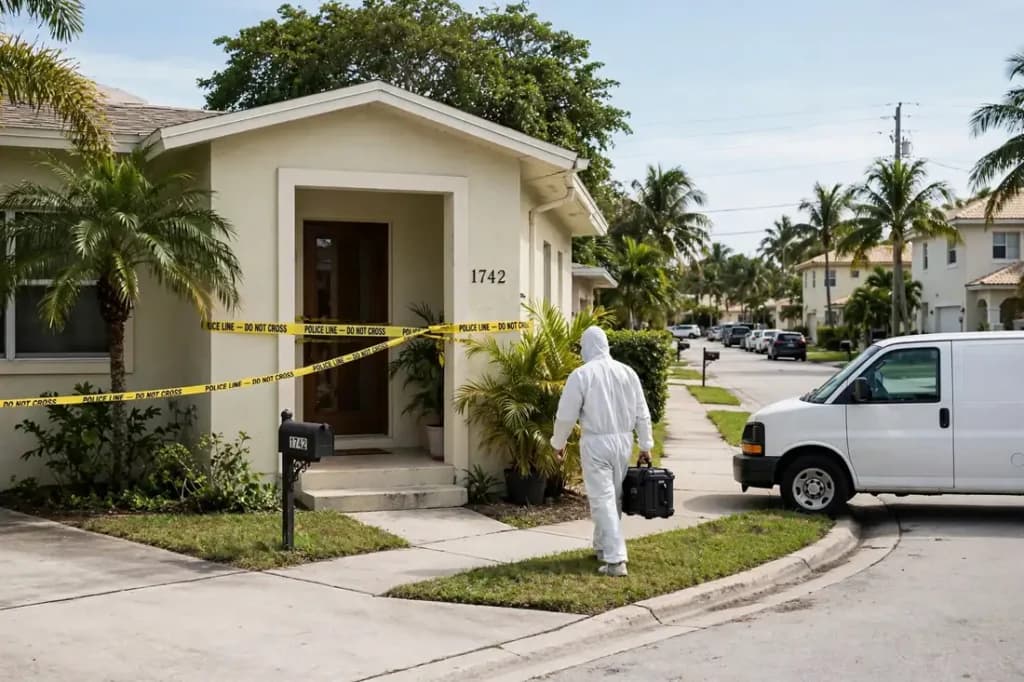
Scene release is the formal handoff when law enforcement and the medical examiner finish collecting evidence and authorize others to enter a scene. Professional cleanup can begin the moment that release is given, and not one minute before.
In practice, that means crews can often start within hours of your first call. Many families call us while investigators are still on site, so the crew is staged nearby and ready to move the instant the detective says the scene is released. Here is what release actually involves, what controls the timing, and what you should do while you wait.
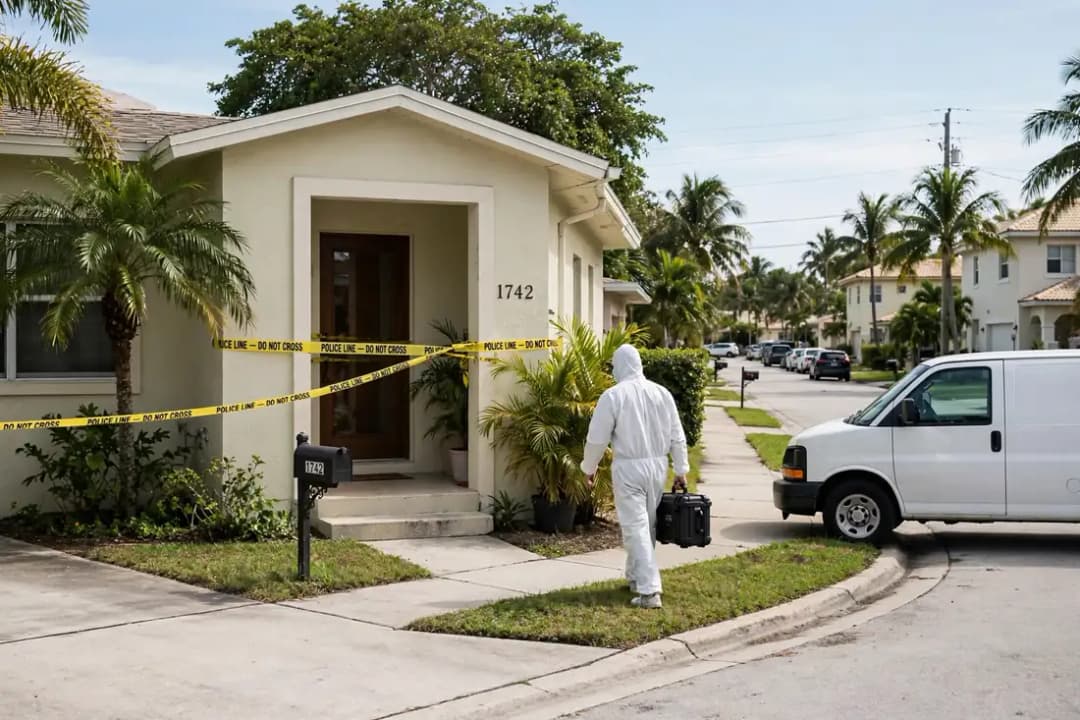
Cleanup Starts the Moment Police Release the Scene
There is no mandatory waiting period after release. Once law enforcement clears the scene, a professional crew can walk in immediately.
The delay families experience is almost never on the cleanup side. It is the investigation and the medical examiner’s process that set the clock. A straightforward scene can be released in a few hours. A complex one can take days.
Calling the cleanup company early is the single best way to shrink your total wait. We cannot enter before release, but we can be ready.
What Scene Release Actually Involves
Release is not one person saying “go ahead.” Two separate authorities have to finish their work.
Law Enforcement Evidence Collection
Detectives and crime scene investigators document, photograph, and collect physical evidence. Until they are done, the scene is legally frozen. Nobody enters except investigators, and nothing gets moved, cleaned, or thrown away.
This is also why you should never touch anything at a scene. Moving a single item can compromise evidence and create legal trouble you do not need on top of everything else.
The Medical Examiner’s Role
In Miami-Dade, the Medical Examiner Department handles deaths that fall under its jurisdiction, including homicides, suicides, accidents, and unattended deaths. The medical examiner must complete the on-scene examination and authorize removal of the deceased before the scene can be fully released.
For unattended deaths, this step often sets the timeline. If an autopsy is required, the body is transported first and the scene release follows once investigators finish.
The Typical Sequence From First Call to Cleanup Crew
Here is how it usually unfolds, in order.
- Emergency call and response. Police, fire rescue, or both secure the location. The area is taped off.
- Investigation. Detectives and crime scene investigators process the scene. The medical examiner conducts the on-scene examination.
- Removal of the deceased. The medical examiner’s transport team removes the body once authorized.
- Formal release. The lead detective releases the scene to the property owner or responsible party. This can be verbal on site or documented.
- Cleanup crew enters. Our team walks the scene, runs the assessment, and starts containment.
Steps 1 through 4 belong to the authorities. Step 5 belongs to us. Families control only one variable in this sequence: how early they call the cleanup company.
Why No Crew Can Start Before Release
Entering a scene before release is evidence tampering. A cleanup crew that starts early can destroy evidence, contaminate the investigation, and expose itself and the property owner to criminal liability.
Legitimate companies know this. If a company tells you they can “get started while the police are still there,” walk away. That is not initiative. That is a company willing to break the law on your property.
I have watched families beg us to start early because they cannot stand the thought of the scene sitting there. I understand the impulse completely. We still wait at the tape. The one time a crew jumps the line is the one time it matters.
Our crime scene cleanup process is built around the release handoff. Assessment begins the minute we are authorized to enter.
What Delays Release in Miami-Dade
A few local realities stretch the timeline beyond what families expect.
Medical examiner caseload. The Miami-Dade Medical Examiner Department handles a high volume. During busy periods, on-scene response and release take longer. This is the most common delay and nobody can expedite it.
Autopsy requirements. Homicides and suspicious deaths require fuller examination before release. The scene stays frozen until investigators are satisfied.
Search warrants and holds. If investigators need a warrant for part of the property, or the state attorney places a hold, release waits on paperwork, not on the scene itself.
Heat. Miami’s climate adds urgency families feel physically. Decomposition accelerates in heat, and odor spreads fast in warm air. The investigation still takes the time it takes, which is exactly why having the crew staged and ready matters so much here.
What To Do While You Wait for Release
You cannot clean, but you are not helpless. These steps protect you and shorten everything after release.
Secure the property. Lock doors and windows. Do not let well-meaning relatives enter the scene. Every extra person who walks through complicates the investigation and the later cleanup.
Call the cleanup company now. Call our biohazard cleanup team with the address, the detective’s name if you have it, and your contact number. We open the file, check crew availability, and stage. When release comes, often with little warning, we move.
Document for insurance. Photograph the exterior, the tape boundary, and any damage visible from outside. Do not enter to take interior photos. Your adjuster will want a timeline, so note times: when you called 911, when investigators arrived, when release was given.
Do not hire a regular cleaning service. Standard cleaners lack the training, PPE, and legal disposal chain for biohazard work. Worse, if they enter before release, they become part of the problem. Read who is responsible for cleaning up a crime scene so you know exactly where the responsibility sits.
Take care of people, not the property. Arrange somewhere for family to stay. The scene will be there when it is released. Your people should not be.
The First Hour After Release
When the detective gives the word, the sequence moves fast.
Our crew enters and runs the assessment: mapping contamination, checking how far fluids traveled, identifying what comes out and what gets treated. Containment goes up next, barriers and vent isolation, so nothing migrates while we work.
By the end of the first hour, the scene is contained, the scope is written, and remediation has started. Scenes involving serious injury then follow our trauma cleanup protocol. The full crime scene cleanup process runs its course: removal, disinfection, deodorization, and regulated disposal.
Property managers handle this differently and should read our note on pre-authorization. A written authorization on file with your cleanup company means the crew can mobilize on your call alone the instant release is given, with no paperwork chase at 2 AM.
Summary
Professional cleanup can begin the moment law enforcement releases a scene. There is no mandatory waiting period after release, and no crew may enter before it.
Release timing belongs to the investigators and the medical examiner. Caseload, autopsies, and legal holds set the clock, and Miami’s heat makes the wait feel longer. The variable you control is calling the cleanup company early, securing the property, and documenting everything for insurance.
Dealing with a scene in Miami-Dade right now? Contact Hazard Guard or call (888) 976-0045. Call us while investigators are still on site and we will be ready the minute the scene is released, day or night.