Unattended death cleanup is the professional remediation of a home after a person has died alone and the death was not discovered for days or weeks, by trained crews who remove biological hazards, treat severe odor, repair affected materials, and restore the property safely. It is one of the most demanding jobs in this field, because time changes everything about the scene.
The longer a death goes undiscovered, the deeper the contamination and the stronger the odor. That is why a professional assessment matters before anyone judges what can be saved.
Time Is the Deciding Factor
Time decides the scope of an unattended death job more than room size does. A death discovered within a day or two may need a contained, single-room remediation.
A death undiscovered for a week or more in a Miami summer is a different job entirely. Heat and humidity accelerate decomposition, and fluids migrate into flooring, subflooring, and wall cavities.
I have walked into apartments where the visible stain was the size of a dinner plate, and the subfloor beneath it was saturated across half the room. The surface never tells the full story, and time is what hides it.
The Cleanup and Restoration Process Step by Step
Unattended death cleanup follows a documented sequence, from assessment to verified handover.
Assessment and Containment
We map every affected area, including rooms that look untouched. Contamination travels through foot traffic from first responders, and odor travels through HVAC systems.
Containment barriers go up first. This keeps clean rooms clean while work proceeds, and it limits odor spread through the home.
Removal of Contaminated Materials
Porous materials that cannot be disinfected are removed: carpet, padding, affected drywall, mattresses, and upholstered furniture. Each item goes into labeled biohazard bags for regulated disposal.
In advanced cases, sections of subfloor or cabinetry must also be removed. We explain this before work begins, so families and owners are not surprised mid-job.
Cleaning and Disinfection
Surfaces are cleaned first, because disinfectants cannot work through organic matter. Then we apply EPA-registered disinfectants at label-directed dwell times.
Crews work under OSHA’s Bloodborne Pathogens Standard (29 CFR 1910.1030), with full PPE and an exposure control plan. Blood and bodily fluids can carry hepatitis B, hepatitis C, and HIV, as documented by the CDC.
Odor Treatment Is a Separate Discipline
Odor from an unattended death is not a cleaning problem alone. It is a chemistry problem, and it needs its own phase of work.
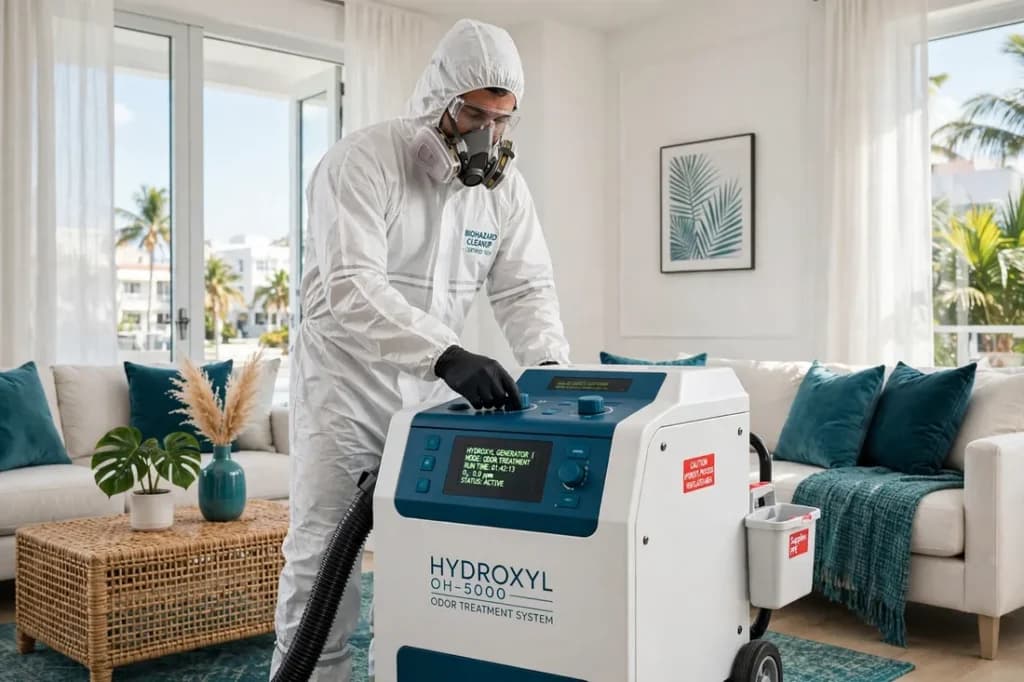
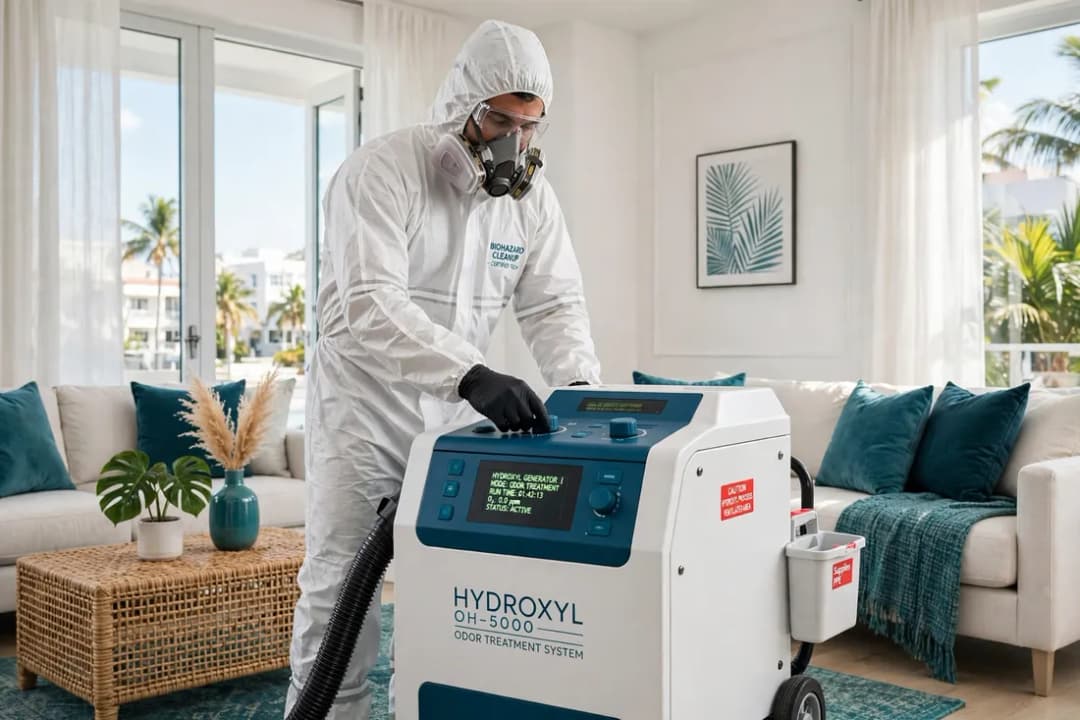
We use enzyme treatments to break down organic odor sources, followed by hydroxyl generation to neutralize airborne odor molecules. In severe cases, sealing primers are applied to subfloors and wall cavities before restoration.
Our guide on death odor removal explains the hydroxyl and sealing steps in detail. The key point is simple: if odor returns after treatment, the source was not fully removed or sealed.
Restoration and Handover
Restoration means returning the property to a safe, usable condition: replaced flooring sections, repaired drywall, and a final verification pass. We do not call a job complete until treated areas pass inspection and waste has left through a licensed transporter.
Families and owners receive a written summary of the work. That record supports insurance claims and landlord turnover files.
What Can Be Saved and What Cannot
Families often ask whether furniture or keepsakes can be saved. The honest answer depends on material and exposure.
Hard, nonporous items can usually be cleaned and disinfected. Porous items that absorbed fluids usually cannot be made safe, and keeping them risks lingering odor and pathogens.
We sort keepsakes with care, and we follow the family’s direction on anything of sentimental value. Items that must be discarded are bagged discreetly, never left in view.
One field lesson: do not decide this yourself before the assessment. I have seen families throw away salvageable items in distress, and keep contaminated items out of guilt. Let the crew assess first.
Costs, Insurance, and Timing
Cost depends on how long the death went undiscovered, how far contamination spread, and how much material must be removed and restored. A contained job and a whole-room restoration are different price ranges entirely.
Most single-room unattended death jobs finish within one to two days. Larger restorations, where flooring and drywall must be replaced, take longer.
Homeowners insurance may cover part of the cost, depending on the policy and the cause. Document everything: photos, the written scope, invoices, and the completion summary. Early notification to the insurer helps, because late claims invite questions.
For landlords, the rule is firm: do not relet until the unit is cleaned and verified. Our guide on what to do after an unattended death is discovered covers the coroner, notification, and cleanup sequence for families and owners alike.
The same documented process applies across our biohazard cleanup service and our trauma cleanup service in Miami.
Who Handles the Scene Before Cleanup
Several parties touch an unattended death scene before a cleanup crew does. The coroner or medical examiner determines the cause and releases the body. Law enforcement may investigate, depending on the circumstances.
Neither the coroner nor the police cleans the property. That responsibility falls to the property owner, the family, or the estate, and it is usually carried out by hiring a professional company.
Our unattended death cleanup service in Miami works with families, landlords, and property managers on exactly this handover, from the first call to the verified completion note.
Common Mistakes After an Unattended Death
Three mistakes make these jobs harder than they need to be.
First, entering the scene without protection. Odor is not the only hazard, and airborne particles and surface contamination pose real health risks.
Second, running the HVAC system. Air conditioning spreads odor and particles through the whole home, turning a one-room job into a whole-house job.
Third, hiring a general cleaner first. General cleaning spreads contamination, destroys documentation, and often has to be redone by a professional crew at higher cost.
If you discover an unattended death, step back, keep people and pets out, ventilate only if it is safe to do so without spreading contamination, and call a professional crew.
Summary
Unattended death cleanup is professional remediation after a death discovered late: assessment, containment, removal, disinfection, dedicated odor treatment, restoration, and verified handover. Time decides the scope, odor needs its own phase of work, and no family or owner should attempt it alone.
If you need help in Miami, Contact Hazard Guard or call (888) 976-0045. Our crews respond around the clock, arrive discreetly, and the call is free.