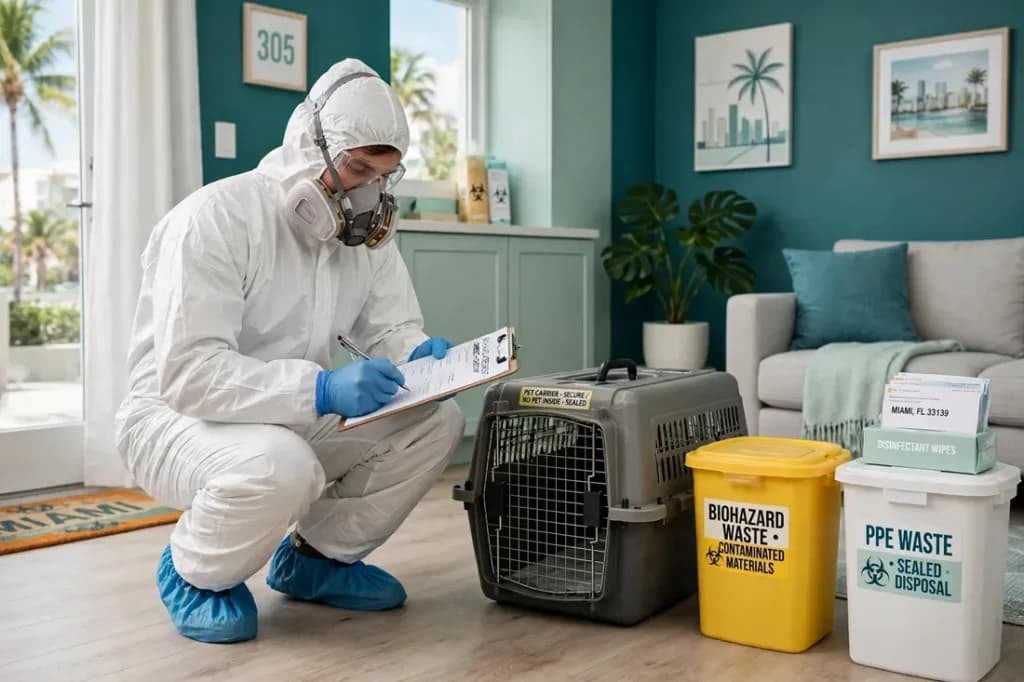
Animal hoarding cleanup is the professional remediation of a home where a large number of animals have been kept in unsafe, unsanitary conditions. It combines animal welfare rescue, biohazard removal, and structural decontamination in one coordinated job.
The animals come first. The home comes second. Both need trained people, not a rushed cleanout.
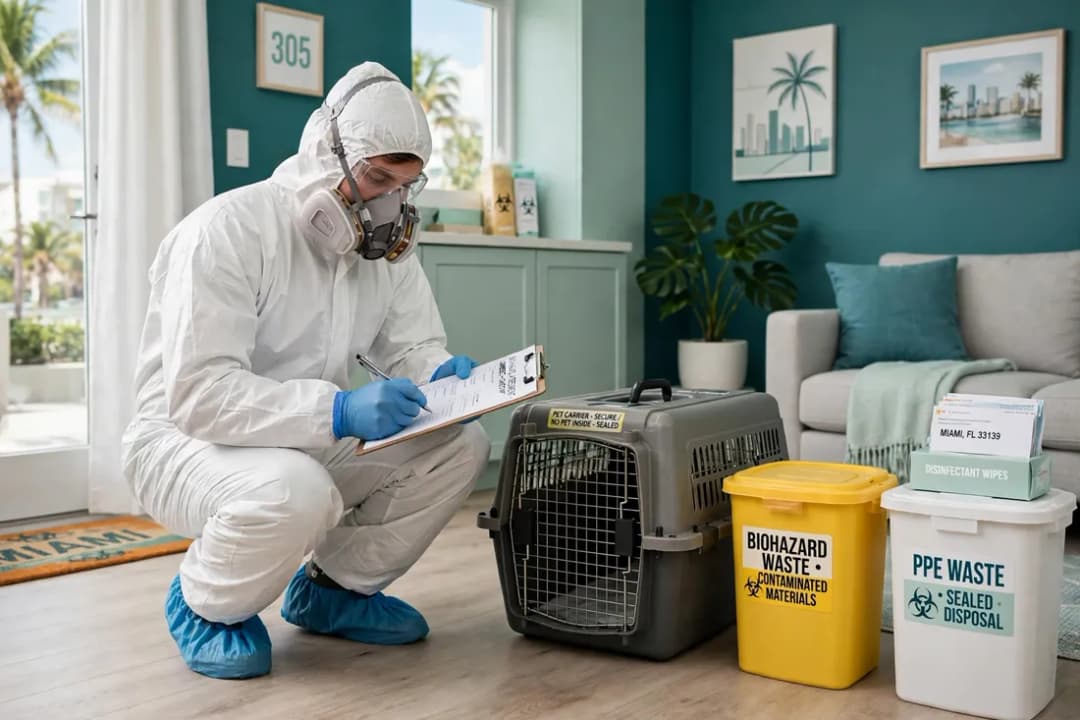
Animal Hoarding Differs From Ordinary Hoarding
Ordinary hoarding centers on objects. Animal hoarding centers on living animals, waste, and ammonia.
The health risks stack faster. Waste accumulates daily. Ventilation fails. Floors and walls absorb contamination that object hoarding rarely produces.
A home can look passable from the doorway and still be unsafe inside. Odor, ammonia, and hidden waste tell the real story.
The Unique Health Risks in Animal Hoarding Homes
Animal waste carries pathogens that object clutter does not. That is why crews treat these jobs as biohazard work from the first walkthrough.
Ammonia and Air Quality
Urine breaks down into ammonia. In a closed Miami home, ammonia builds fast.
It irritates eyes, lungs, and skin. Long exposure can trigger asthma attacks and respiratory illness. Crews wear respirators before they enter, not after they smell it.
I have walked into homes where the ammonia hit before the front door fully opened. That home needed ventilation and respirators, not a mop.
Zoonotic Disease and Parasites
Some diseases pass from animals to people. Ringworm, toxoplasmosis, and bacterial infections from waste are real examples.
Fleas, mites, and roaches travel with the animals. They hide in bedding, carpet, and wall voids. A surface clean leaves them behind.
The Centers for Disease Control and Prevention notes that healthy pet practices reduce zoonotic risk, and that risk rises sharply when animals live in crowded, unsanitary conditions.
Structural Damage From Waste
Urine soaks through carpet into padding and subfloor. It wicks up drywall. It corrodes fixtures and wiring covers.
In one Kendall case, a bathroom floor looked intact. Under it, the subfloor had softened across three joists. The visible floor was the least damaged part.
That is a pattern in animal hoarding work. What you see understates what the waste has done.
How Animal Hoarding Cleanup Is Handled Step by Step
A professional job follows a sequence. Skipping steps creates recontamination and legal trouble.
Animal Rescue Comes First
Licensed animal control or a rescue partner removes the animals before cleanup starts. Crews do not chase, trap, or rehome animals themselves.
Veterinary triage decides which animals need urgent care. Counts, conditions, and intake records are documented at this stage.
Families sometimes resist this step. It feels like loss on top of shame. A calm, nonjudgmental explanation helps: the animals need medical care that a home cleanup cannot provide.
Assessment and Containment
After the animals leave, crews assess every room. They map waste zones, ammonia levels, and structural damage.
Containment barriers go up. HVAC vents are sealed so airborne particles do not spread to clean rooms. Miami humidity makes this step urgent, because moisture carries odor and mold through ductwork fast.
Removal of Contaminated Material
Soiled carpet, padding, bedding, and damaged drywall are cut out and bagged. Waste goes into labeled biohazard bags for regulated disposal.
Hard surfaces are treated, not discarded, when they can be fully decontaminated. That judgment comes from testing and experience, not guesswork.
Disinfection and Odor Treatment
Crews clean first, then disinfect. Disinfectants cannot work through organic matter, so pre-cleaning is mandatory.
EPA-registered disinfectants are applied at label dwell times. Enzyme treatments and hydroxyl treatment then address odor at the source, rather than masking it. That work follows the same regulated process as our biohazard cleanup service in Miami.
Verification Before Handover
A finished job is verified, not assumed. Crews check moisture levels, odor, and surface condition room by room.
Documentation matters here. Photos, waste manifests, and a written scope support insurance claims and landlord records. For the full process in general hoarding work, see our guide to hoarding cleanup in Miami.
Who Is Involved in an Animal Hoarding Case
No single crew handles everything. Coordination is part of the job.
Animal control or rescue handles the animals. A veterinarian triages health. The cleanup crew handles the biohazard. A property owner, family member, or social worker often coordinates access and decisions.
When the home is a rental, the landlord needs the documentation, not just a clean room. Our guide to what hoarding cleanup involves covers the process, sorting, and recordkeeping side of that work.
Mental health support matters too. Animal hoarding often involves grief, isolation, or a compulsion to rescue. Shaming the resident slows everything down and can stop cooperation entirely.
Common Mistakes Families Make in Animal Hoarding Cases
The most common mistake is starting with a dumpster and good intentions. Waste without containment spreads contamination to clean rooms.
Another mistake is rehoming animals informally before authorities document conditions. That can destroy the record a landlord, court, or insurer needs.
A third mistake is bleaching everything and calling it done. Bleach fades stains and smell for a day. It does not remove soaked-in waste from padding or subfloor, and the odor returns with Miami humidity.
If you are unsure where to start, start with a professional assessment. It costs less than redoing a bad cleanup.
When Animal Hoarding Cleanup Becomes Urgent
Some cases can be staged over days. Others cannot wait.
Call for urgent help when animals are still inside and suffering, when ammonia makes breathing hard, when sewage or standing waste is present, or when a child, elder, or immunocompromised person lives in the home.
Fire and code officials may also intervene. Blocked exits, overloaded wiring, and waste near heat sources turn a health problem into a fire problem.
For the compassionate side of helping a resident accept help, read our guide on helping someone who hoards without conflict. The trust-building steps there apply directly here.
Summary
Animal hoarding cleanup is a coordinated job: rescue the animals, remove biohazard waste, decontaminate the structure, and verify the home is safe. Ammonia, zoonotic disease, parasites, and soaked-in waste make it riskier than ordinary hoarding cleanup.
Do not start with a dumpster. Get the animals to care first, contain the contamination, and let a trained crew handle removal and disinfection.
Need help in Miami? Contact Hazard Guard or call (888) 976-0045. Our crews respond 24/7, and the call is free.