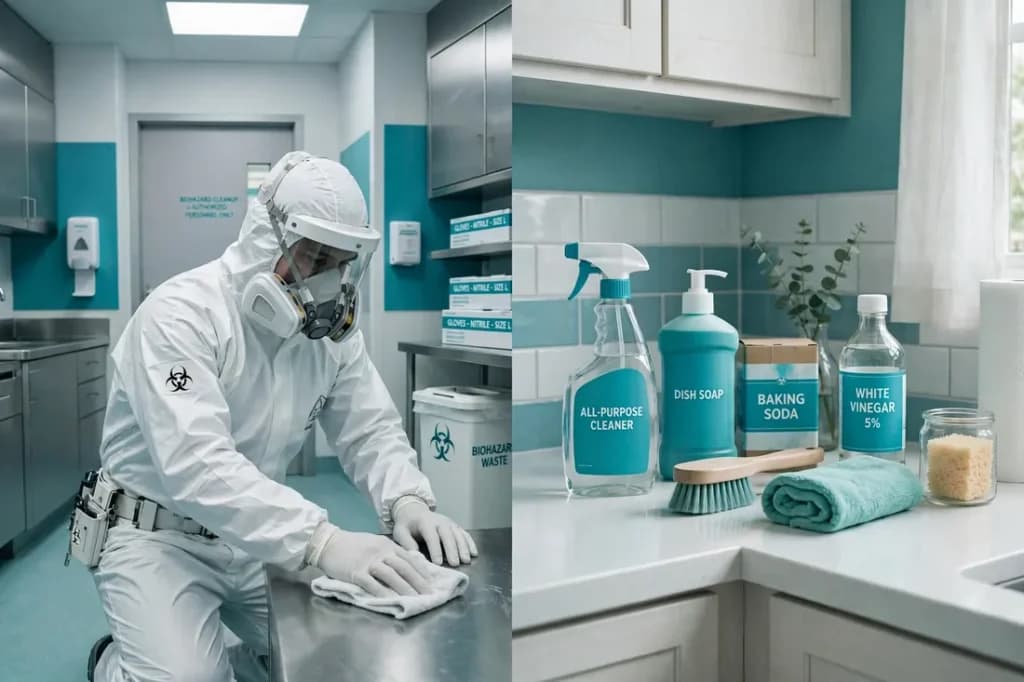
Biohazard cleaning is the professional elimination of infectious biological hazards from a space. It uses regulated disinfectants, protective equipment, and a documented process to make blood, bodily fluids, and tissue safe.
Regular cleaning removes visible dirt and improves appearance. Biohazard cleaning removes pathogens you cannot see, under rules you cannot skip.
People confuse the two because both involve wiping surfaces. The differences run much deeper. Here are the six that actually matter.
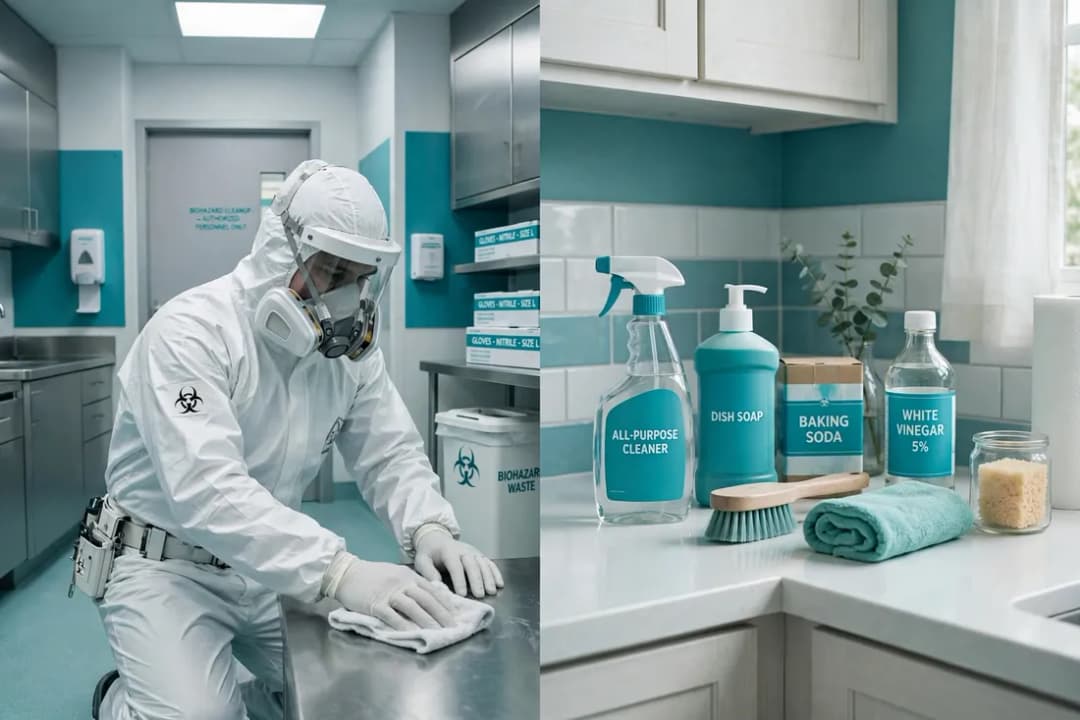
The Goal Is Different: Appearance vs Safety
Regular cleaning aims for a space that looks and smells clean. Dust, grime, and stains are the enemy.
Biohazard cleaning aims for a space that is microbiologically safe. The enemy is bloodborne pathogens: hepatitis B, hepatitis C, and HIV, as documented by the CDC.
A surface can look spotless and still be infectious. That single fact is why the two jobs are not interchangeable.
The Products Are Different: Household Cleaners vs EPA-Registered Disinfectants
Regular cleaning uses detergents and all-purpose sprays. They lift dirt. Most do not kill pathogens, and they are not required to prove it.
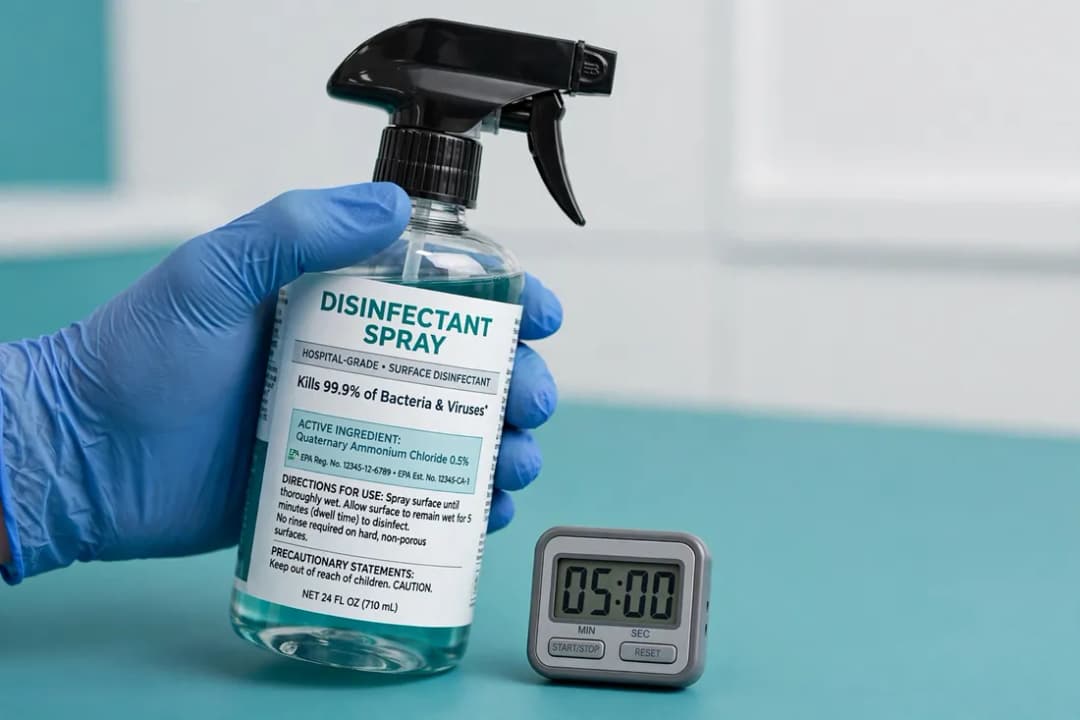
Biohazard crews use EPA-registered disinfectants proven effective against specific pathogens. Each product carries label directions for dilution and dwell time, the wet contact time needed to actually kill what it claims to kill.
Dwell time is usually 3 to 10 minutes. I have watched homeowners spray a disinfectant and wipe it off in ten seconds. That is regular cleaning behavior applied to a biohazard problem. The pathogens survive.
Our biohazard cleanup crews in Miami work to the label, not to the clock. That discipline is the whole difference.
The Protection Is Different: Gloves vs Full PPE and an Exposure Plan
Regular cleaning needs basic gloves at most. Nobody writes a safety plan for mopping a kitchen.
Biohazard cleanup requires full personal protective equipment: respirators, fluid-resistant suits, double nitrile gloves, and eye protection. OSHA mandates it under an exposure control plan in the Bloodborne Pathogens Standard (29 CFR 1910.1030).
The plan also covers hepatitis B vaccination for workers and training before anyone touches a scene.
Blood and bodily fluids carry real infection risk. Our guide to bloodborne pathogens and what OSHA says about blood exposure explains why the protection level is non-negotiable.
The Disposal Is Different: Trash Bags vs Regulated Medical Waste
Regular cleaning waste goes in household trash. Nobody tracks it.
Biohazard waste goes through a regulated chain: segregation, labeled red bags or sharps containers, a licensed transporter, and a treatment facility. Every step is documented with a manifest.
Bagging bloody materials in kitchen bags and setting them at the curb violates biomedical waste rules. It endangers sanitation workers and creates liability for the property owner.
I have seen families do exactly this in Kendall, trying to help. Good intentions, real legal exposure. Our blood cleanup service handles the full disposal chain so you never touch it.
The Verification Is Different: Looks Clean vs Proven Clean
Regular cleaning is verified by eye. If it looks clean, the job is done.
Biohazard cleanup is verified by process. Crews document each step, photograph the work, and confirm decontamination before calling the job complete.
Detection matters here. Blood wicks through carpet padding into subfloors. It hides in grout lines and porous wood. Professionals find contamination the eye misses, using the same detection logic crime labs use.
That documentation also protects you. Insurers and adjusters expect proof of professional remediation, not a mop and a hope.
The Training Is Different: Common Sense vs OSHA-Required Certification
Anyone can learn regular cleaning in an afternoon. There is no regulatory bar.
Biohazard technicians train under OSHA requirements, carry bloodborne pathogen certification, and work under IICRC-aligned procedures. Our trauma cleanup teams bring that training to scenes most people should never enter.
Training shows up in judgment calls. A trained tech knows which materials must be removed and which can be treated. An untrained person guesses, and guessing with pathogens is expensive.
When Regular Cleaning Is Enough
Regular cleaning is fine for ordinary life. Dust, cooking mess, everyday spills, and general tidying need nothing more.
The line is contamination. If blood, bodily fluids, tissue, sewage, or drug residue are involved, you have crossed from cleaning into remediation.
When in doubt, review the first steps to take after discovering a biohazard. Isolate the area, do not touch it, and call a professional crew.
A Field Note From Twelve Years on Scenes
The most expensive jobs I work start as DIY attempts. Someone bleaches a blood spill, the stain fades, and everyone assumes it is clean.
Meanwhile pathogens stay viable in carpet padding for days. The proteins blood leaves behind keep producing odor. The family has now paid twice: once in effort, once for us to redo it properly.
Household bleach is a regular cleaning product doing a biohazard job. That mismatch is the entire article in one sentence.
Summary
Biohazard cleaning and regular cleaning differ in six ways: goal (safety, not appearance), products (EPA-registered disinfectants with dwell time), protection (full PPE under an OSHA exposure plan), disposal (regulated medical waste, not trash), verification (documented process, not a visual check), and training (certified technicians).
Regular cleaning handles everyday dirt. Blood, bodily fluids, tissue, sewage, and drug residue belong to professional remediation.
Need help in Miami? Contact Hazard Guard or call (888) 976-0045. Our crews are available around the clock, and the call is free.