Biohazard cleanup timelines depend on the size and severity of the contamination, not the name of the service. Most residential jobs take 1 to 2 days. Small contained cleanups can finish in 3 to 6 hours, while large or complex scenes can run a week or more.
The timeline is the sum of six phases: assessment, containment, removal, disinfection, deodorization, and regulated disposal. That sequence is the backbone of every professional biohazard cleanup job. Each phase takes the time it takes. Rushing one creates callbacks, and callbacks cost everyone more. Here is how the phases work, realistic ranges by situation, and what stretches or shortens a job.
The Six Phases That Set Every Timeline
Every professional job follows the same sequence. The phases below are why a reputable crew cannot quote you a firm timeline over the phone.
1. Assessment
We walk the scene and map how far contamination spread. This takes 30 minutes on a small job and half a day on a large one.
Blood seeps. On a job in Hialeah last year, a spill the owner described as “one room” had wicked under the baseboards into the hallway carpet. The assessment doubled the scope before we lifted a single bag.
You cannot set a timeline until you know the true footprint.
2. Containment
Barriers go up and the work area gets isolated from the rest of the property. Usually 30 minutes to an hour.
Miami’s humidity pushes airborne particles through HVAC systems fast. We isolate vents early so contamination does not migrate while we work.
3. Removal
Contaminated porous materials come out: carpet, padding, drywall sections, mattresses. Everything goes into labeled biohazard bags.
This is the most variable phase. A single carpet section takes an hour. A hoarding cleanout takes days.
4. Cleaning and Disinfection
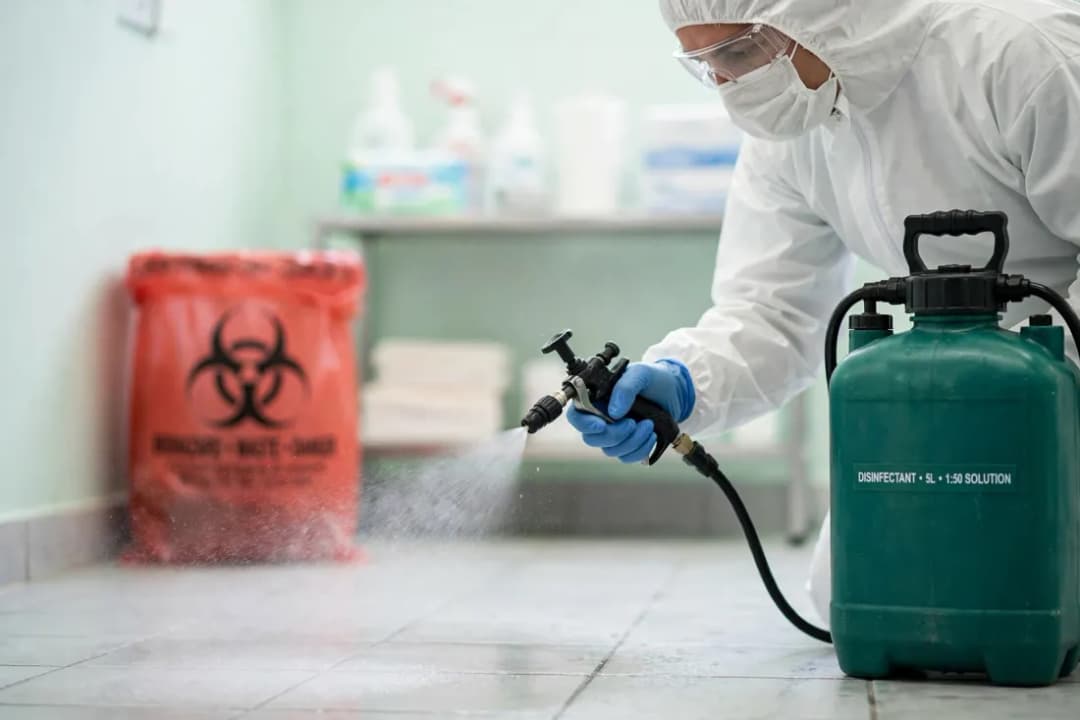
Surfaces get cleaned first, because disinfectants cannot work through organic matter. Then we apply EPA-registered hospital-grade disinfectants at label-directed dilutions.
Dwell time is the wet contact time on the product label, usually 3 to 10 minutes per application. Larger areas need multiple passes. This phase cannot be hurried without breaking the disinfection itself.
5. Deodorization
Enzyme treatments plus hydroxyl or ozone equipment neutralize odor at the source. Ozone and hydroxyl cycles run for hours, sometimes overnight.
Odor work is where impatient crews cut corners. Masking a smell with fragrance takes ten minutes. Removing it takes a full cycle.
6. Regulated Disposal and Verification
All biohazardous waste leaves through a licensed medical-waste transporter with a manifest trail, following OSHA’s Bloodborne Pathogens Standard (29 CFR 1910.1030) and Florida biomedical waste rules.
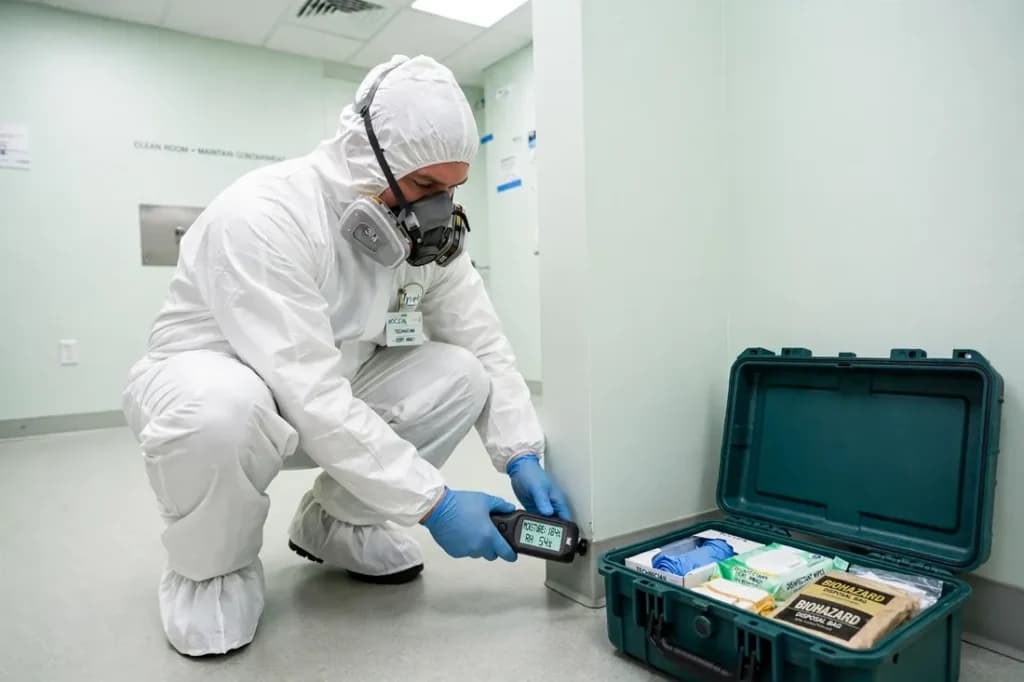
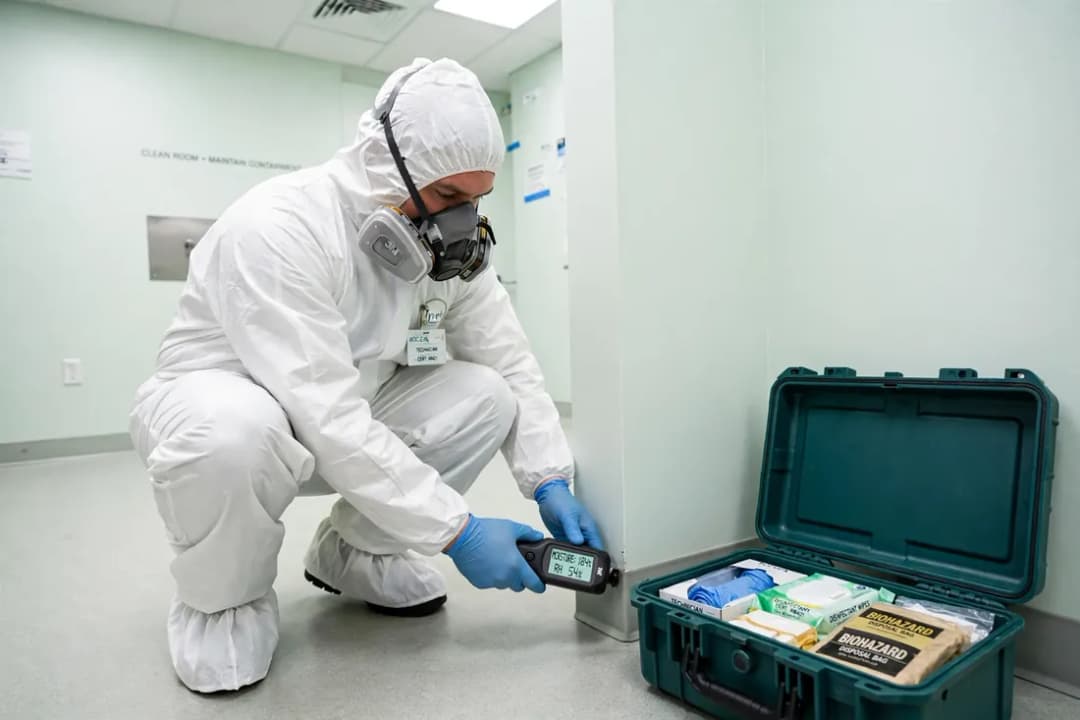
We verify with moisture readings and visual inspection before calling the job complete. Verification is a separate trip on multi-day jobs.
Realistic Timelines by Situation
These are field ranges from Miami-Dade jobs, not marketing numbers. Your situation lands inside one of them.
- Small blood spill, one hard-surface room: 3 to 6 hours. Our blood cleanup crews pre-clean, disinfect with dwell time, bag waste, and finish in a single visit.
- Single-room trauma scene: 1 full day. Trauma cleanup at this scale means containment, removal of soft materials, disinfection passes, and a deodorization cycle.
- Unattended death with decomposition: 2 to 4 days. Fluid migration into subfloor and the odor cycle drive the timeline. A Coral Gables job last spring needed an extra day because odor had soaked into the HVAC ducts.
- Sewage backup, one to two rooms: 1 to 2 days. Category 3 water means all porous materials come out, then drying and disinfection.
- Meth lab or fentanyl contamination: 3 to 5 days. Surface wipe testing, remediation, then clearance testing with lab turnaround in the middle.
- Hoarding with biohazards: 3 to 7 days, sometimes longer. Sorting alone can take days before remediation even starts. Our hoarding cleanup work always starts with a written plan for this reason.
Five Factors That Stretch or Shorten the Timeline
Same service name, different timeline. These five explain why.
- How far contamination traveled. Wicking through carpet padding and subfloor is the most common surprise. The visible stain is never the full picture.
- How much porous material must come out. Cutting out drywall and flooring takes longer than treating hard surfaces. Removed materials also have to be classified and staged as regulated biohazard waste, which adds handling time.
- Drying and verification. Moisture readings decide when a job is done, not the clock. Miami humidity slows drying. A job that looks finished can need another day of dehumidification.
- Access and staging. High-rise condos in Brickell with freight elevator windows move slower than a single-family home in Kendall. Waste has to leave through the same doors.
- Waiting on release or clearance. If law enforcement has not released a scene, or a lab has not returned clearance results, the crew waits. That time is not remediation time, but it is calendar time for the property owner.
Why Miami’s Climate Adds Time to Some Jobs
Heat and humidity change the work. Warm air accelerates decomposition, which means odor penetrates deeper and faster than it would in a cooler climate.
Humidity also slows every drying step. Dehumidifiers run longer. Moisture readings take longer to clear. And mold can start within 24 to 48 hours on damp drywall, which turns a biohazard job into a biohazard plus mold job if the timeline slips.
This is also why we check HVAC systems on decomposition jobs. Ducts carry odor and particulates to rooms that were never part of the original scene.
What a Fast Crew Should Never Skip
Speed is fine. Skipping is not. After twelve years in this field, here is what separates a fast professional crew from a rushed one.
A rushed crew skips the assessment and quotes from the doorway. They spray disinfectant without pre-cleaning, which means the product never reaches the pathogen. They run one short deodorization cycle and leave fragrance behind. They never take a moisture reading.
None of that shows up on day one. It shows up three weeks later as returning odor, a stained subfloor, or a failed clearance test. Then the job gets done twice.
Ask any company these three questions before you hire: do you take moisture readings, what dwell time do your disinfectants require, and who is your licensed waste transporter. Hesitation on any of them tells you everything.
What You Can Do While the Crew Works
Stay out of the work area. That is the main job for the property owner.
Document everything for your claim. Photos of each phase help your adjuster, and professional crews photograph their own work as standard practice. If you have not reviewed your coverage yet, read our guide on what to do first after discovering a biohazard at home.
Do not try to “help” by moving items out of the containment zone. Cross-contamination usually happens through good intentions. Let the crew control the boundary.
Summary
Most biohazard cleanup jobs take 1 to 2 days. Small contained cleanups finish in hours. Large contamination, hoarding, and meth remediation run several days to a week.
The timeline comes from six phases: assessment, containment, removal, disinfection, deodorization, and regulated disposal. Contamination spread, porous materials, drying time, access, and Miami’s humidity decide where your job lands in the range. A crew that skips steps to finish faster is selling you a second cleanup later.
Need a realistic timeline for your situation in Miami? Contact Hazard Guard or call (888) 976-0045. We assess in person, give you a written scope, and tell you the truth about how long it takes.