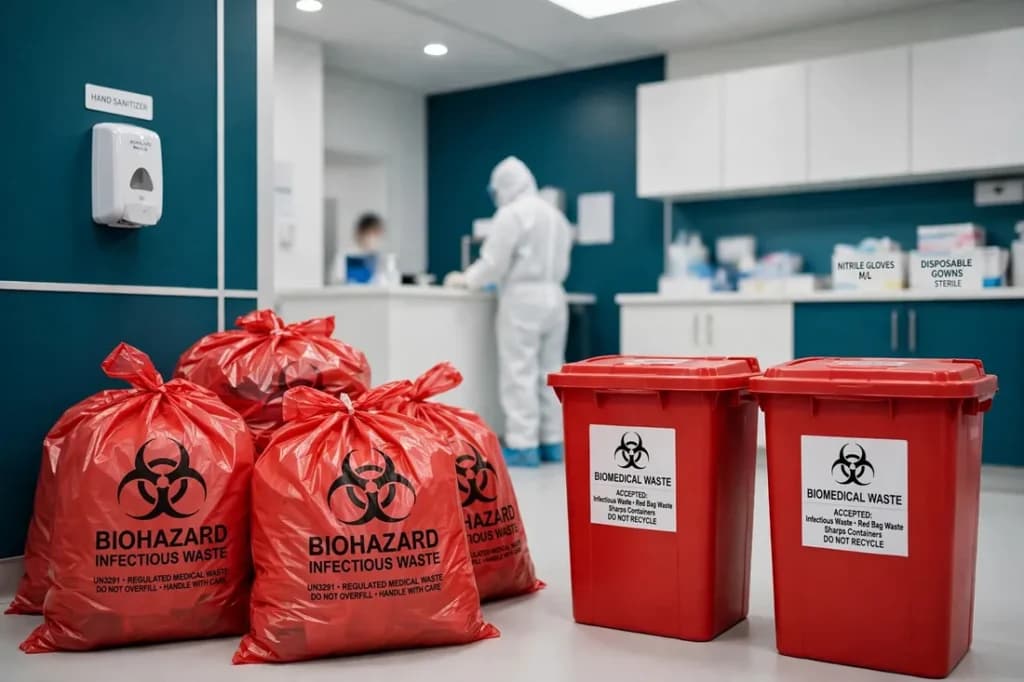
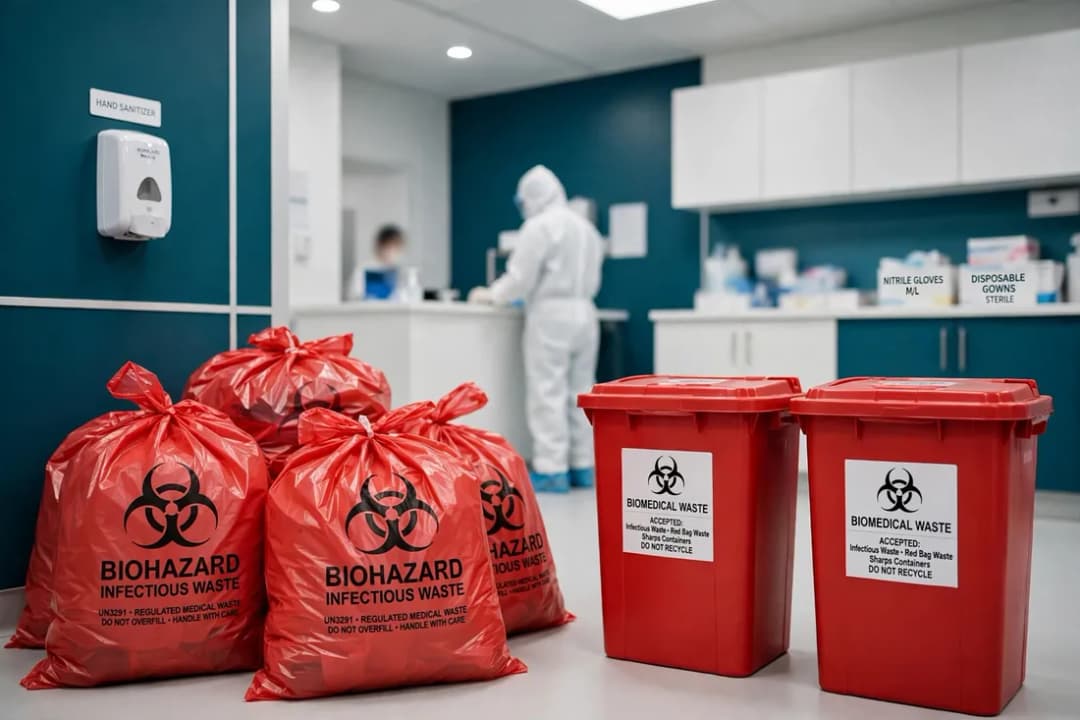
Biohazard waste is any discarded material contaminated with blood, bodily fluids, or other potentially infectious substances. That includes blood-soaked materials, used sharps, human tissue, and laboratory cultures.
It is regulated separately from household trash because it can transmit disease. Handling and disposal follow OSHA and Florida biomedical waste rules, not your curbside pickup.
The four categories are infectious waste, sharps waste, pathological waste, and microbiological waste. Here is how field crews actually use them, and what each one means for you.
The Four Categories Used by Cleanup Crews
Regulators and remediation crews sort biohazard waste into four categories. Each one has its own packaging, handling, and disposal requirements.
Mixing categories is one of the most common mistakes I see on scenes. It raises disposal costs and can violate transport rules.
Here is the breakdown, in the order we encounter them most.
1. Infectious Waste: Blood and Bodily Fluids
Infectious waste is the category most people picture. It covers blood, bodily fluids, and anything visibly contaminated with them.
On a job this means blood-soaked carpet, bedding, clothing, gauze, and bandages. If a fluid wicked into it, it counts.
Blood and bodily fluids can carry bloodborne pathogens such as hepatitis B, hepatitis C, and HIV. Our explainer on bloodborne pathogens and what OSHA says about blood exposure covers the health risks in detail.
OSHA treats all human blood and certain body fluids as potentially infectious under the Bloodborne Pathogens Standard (29 CFR 1910.1030). The rule assumes infection until proven otherwise.
That assumption is why we never eyeball it. If blood reached it, it goes in the red bag. Our blood cleanup crews in Miami handle this category daily.
2. Sharps Waste: Needles, Blades, and Broken Glass
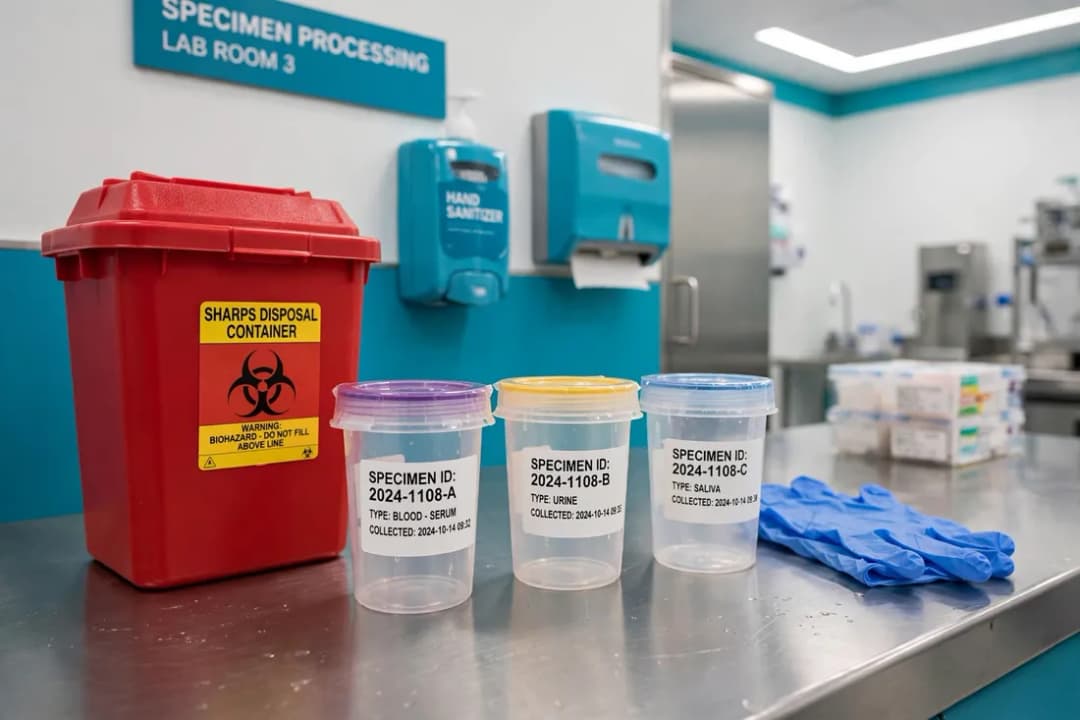
Sharps are anything that can puncture skin. Needles, syringes, lancets, scalpel blades, and contaminated broken glass all qualify.
Sharps go into rigid, puncture-resistant containers. They never go into bags, red or otherwise.
This is the category that injures people most. A needle poking through a trash bag is how exposures happen, in homes and in clinics alike.
I have pulled loose syringes out of household trash on hoarding jobs in Hialeah. The homeowner had no idea they were there. That is the danger of this category: it hides.
3. Pathological Waste: Tissue and Body Parts
Pathological waste is human tissue, organs, and body parts. It also covers animal carcasses and tissue from veterinary or research settings.
This category shows up in unattended death and trauma scenes. It needs the most careful handling and documentation of the four.
Our trauma cleanup teams treat pathological waste as the highest-priority removal on scene. It drives decomposition odor and pathogen load faster than anything else in the room.
4. Microbiological Waste: Cultures and Laboratory Stocks
Microbiological waste comes from labs and medical settings. Cultures, stocks, and specimens of infectious agents fall into this category.
Homeowners rarely generate it. But Miami has plenty of clinics and labs, and their waste follows the same regulated chain.
It is typically sterilized by autoclave or incinerated. The EPA sets treatment standards for regulated medical waste.
Materials That Do Not Count as Biohazard Waste
Not everything from a cleanup scene is biohazardous. Uncontaminated packaging, food waste, and ordinary trash are not.
Sorting matters because regulated disposal is priced by weight and category. Every bag of ordinary trash that rides along in the red-bag stream costs the customer money.
On scene, we segregate as we go. It is one of the quiet cost controls most companies never mention.
How Each Category Gets Packaged for Disposal
Packaging follows the waste, not the job. Red bags for infectious waste, rigid containers for sharps, sealed and labeled containers for pathological material.
Every container gets labeled at the point of generation. That label travels with the waste all the way to the treatment facility.
The manifest trail matters. If a regulator or an insurer ever asks what left your property and where it went, the paperwork answers.
The full legal chain is explained in our guide to how biohazardous waste is disposed of. Our biohazard cleanup process in Miami builds that documentation into every job.
A Field Note on Getting Categories Wrong
Twelve years on scenes teaches you patterns. The most common: a family double-bags bloody materials in kitchen trash bags and sets them at the curb.
That violates biomedical waste rules and puts sanitation workers at risk. It also creates liability for the property owner.
The fix is simple. If it is contaminated, it goes to a professional crew. We sort it correctly and the chain of custody stays clean.
If you are dealing with a biohazard situation in Miami, review the first steps to take after discovering a biohazard while you wait. Or reach out through our contact page.
Summary
Biohazard waste falls into four categories: infectious waste (blood and bodily fluids), sharps waste (needles and blades), pathological waste (tissue), and microbiological waste (lab cultures).
Each category has its own packaging and disposal rules. Sorting them correctly keeps costs down and keeps you compliant with OSHA and Florida law.
If blood, sharps, or tissue are involved, do not put them in household trash. Contact Hazard Guard or call (888) 976-0045. Our Miami crews are available around the clock, and the call is free.