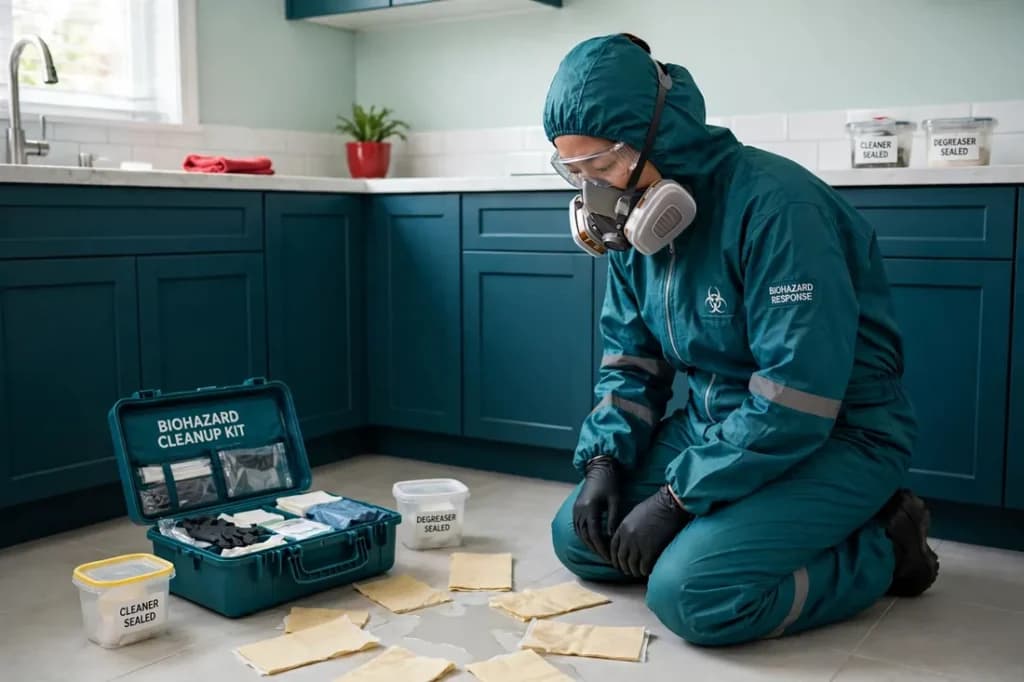
A household chemical spill is any unintended release of a cleaning product, solvent, pesticide, or other reactive substance inside a home. Small, contained spills of ordinary household cleaners are usually safe for a careful adult to handle. Large spills, unknown substances, strong fumes, or spills mixed with blood or bodily fluids need a professional crew.
That boundary is the whole point of this guide. It keeps you safe without turning every knocked-over bottle into an emergency call.
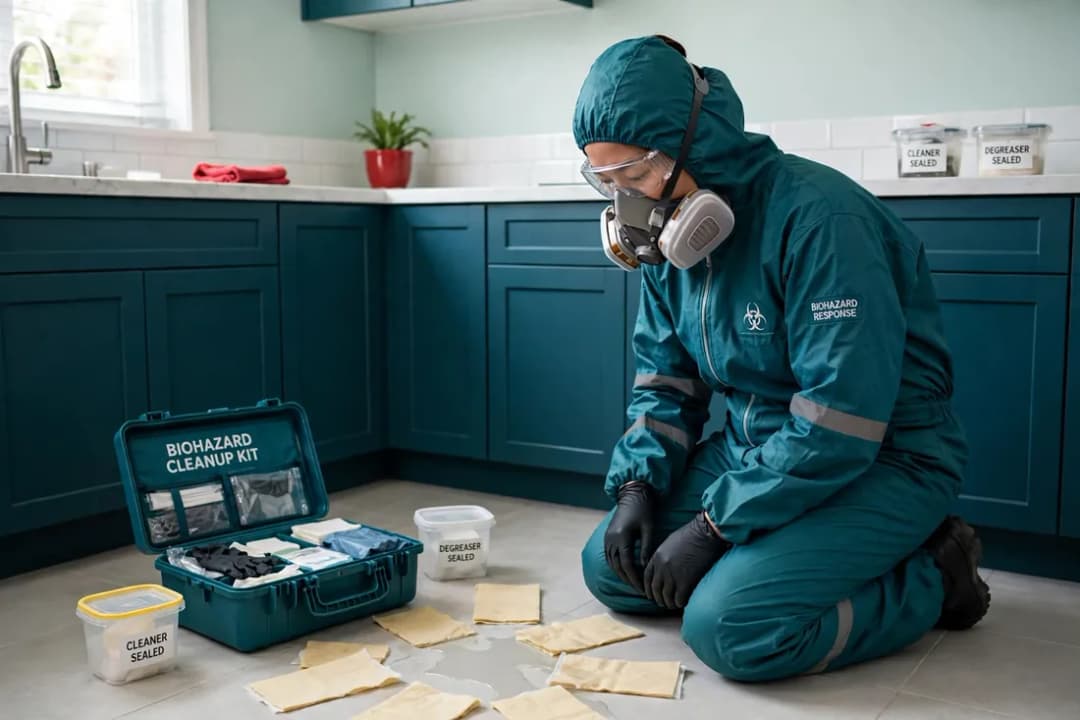
Small Household Spills You Can Usually Handle Yourself
A small spill of a single, labeled household product is usually manageable. Think a splash of all-purpose cleaner, a knocked-over bottle of bleach solution, or a small amount of laundry detergent on a hard floor.
You know exactly what spilled. The label is readable. The area is small, the room ventilates well, and nobody feels dizzy, nauseous, or short of breath.
Work slowly and keep children and pets out of the room. Open a window, wear household gloves, and wipe toward the center of the spill so it does not spread.
One product at a time is the rule. Never mix cleaners to speed things up.
The One Mistake That Turns a Small Spill Dangerous
Mixing bleach with an ammonia-based cleaner or an acid-based cleaner creates toxic gas. I have walked into Miami homes where a well-meaning resident did exactly that while trying to clean faster.
The room filled with fumes within minutes. Everyone had to leave, and we ventilated the space before any cleanup began.
If you have already mixed products, stop immediately. Leave the room, get fresh air, and call for help rather than trying to mop it up.
This is also why labels matter. If you cannot read the label, treat the substance as unknown and do not handle it.
Spills That Always Need a Professional Crew
Some spills are never DIY jobs. Call a professional crew when any of these apply.
- The substance is unknown, unlabeled, or came from an old container with no readable label
- The spill involves pesticides, solvents, paint thinners, pool chemicals, or industrial-strength products
- Fumes are strong, spreading, or causing coughing, eye irritation, dizziness, or nausea
- The spill soaked into carpet, padding, drywall, or upholstery
- The spill mixed with blood, bodily fluids, sewage, or drug residue
- The spill happened near a heating vent, air handler, or HVAC intake
Porous materials are the deciding factor in the field. A solvent that soaks into carpet padding cannot be wiped clean. It keeps releasing vapor long after the surface looks dry.
That is why our meth lab cleanup crews test surfaces rather than trusting their eyes. Chemical residue hides below the surface, and only testing shows how far it traveled.
How Professionals Handle a Chemical Spill at Home
Professional chemical cleanup follows a set sequence. It starts with identification, not mopping.
Identification and Ventilation First
Crews identify the substance from labels, containers, and odor characteristics. They ventilate the space and isolate the HVAC system if fumes could spread through ducts.
Miami humidity complicates this step. Warm, damp air carries vapors further and faster than dry air does. We isolate vents early on every chemical job in South Florida.
Containment and Removal
Contaminated porous materials are cut out and bagged for lawful disposal. Hard surfaces are cleaned with the right neutralizing agent for that specific chemical.
There is no universal chemical cleaner. The wrong agent can make a reaction worse. This is one of the most common mistakes I see from experienced DIYers who assume a strong disinfectant fixes everything.
Verification Before Re-entry
After cleaning, crews verify the space with air checks or surface testing where the substance requires it. Only then is the room cleared for normal use.
Our biohazard cleanup team in Miami follows the same verification discipline on every chemical job. A room that smells clean is not automatically a room that is safe.
Safe Storage Prevents Most Household Chemical Spills
Most spills I see are preventable. Store chemicals in their original labeled containers, upright, with caps tight. Keep them off the floor in garages and laundry rooms where a leak spreads unnoticed.
Never pour a chemical into a food or drink container. That single habit causes some of the worst misidentification calls we receive.
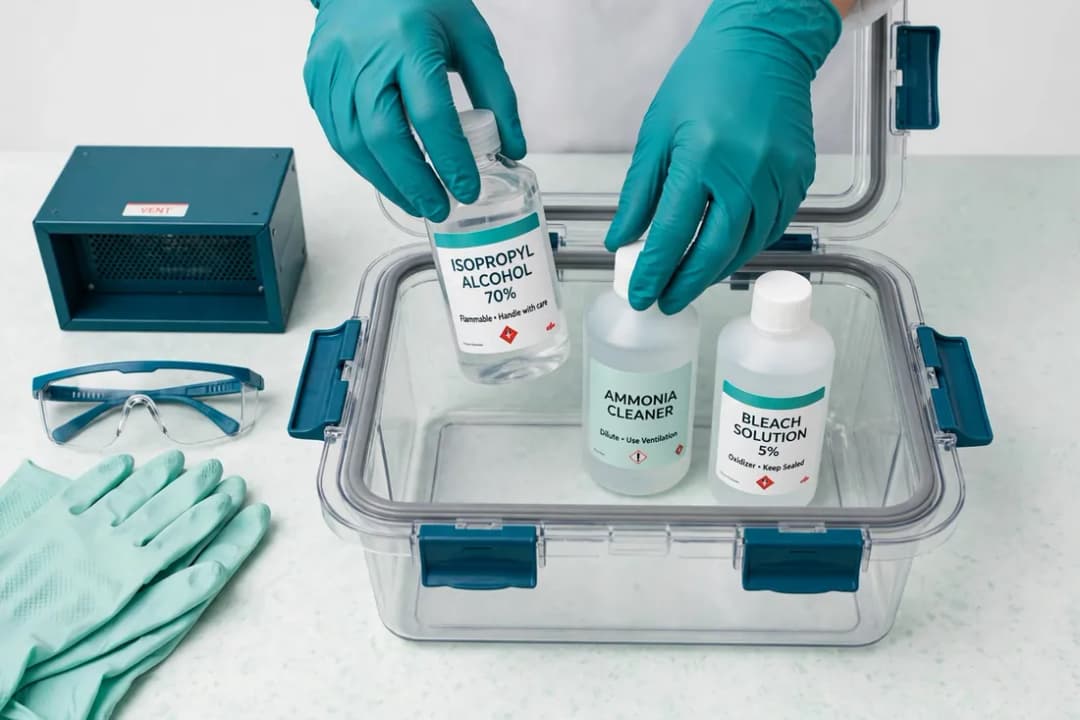
Keep incompatible products apart. Bleach stays away from ammonia cleaners, and acids stay away from bleach. A locked cabinet keeps children and pets out of the equation entirely.
What to Do in the First Minutes After a Spill
Stay calm and act in this order. First, move people and pets away from the spill. Second, open windows if you can do so without walking through fumes.
Third, do not touch the substance with bare hands. Fourth, read the label if it is safe to approach. Fifth, call a professional if anything about the spill is unknown, strong-smelling, or spreading.
If anyone has trouble breathing, eye pain, or skin burns, call emergency services first. Cleanup comes after medical safety, never before it.
For guidance on the first steps after any hazardous discovery, see our guide on what to do first after discovering a biohazard. The same isolate, ventilate, and do-not-touch logic applies.
Chemical contamination from drug production is a separate category entirely. If you suspect a property was used to make drugs, read our guide on signs a property was used as a meth lab before touching anything inside it.
Summary
A small, labeled spill of an ordinary household cleaner on a hard surface is usually safe for a careful adult to handle alone. Unknown substances, strong fumes, soaked-in spills, and spills mixed with blood or sewage always need professionals.
The deciding factors are identification, ventilation, and whether the material soaked into something porous. When any of those is uncertain, stop and call for help.
Need help in Miami? Contact Hazard Guard or call (888) 976-0045. Our crews respond around the clock, and the call is free.