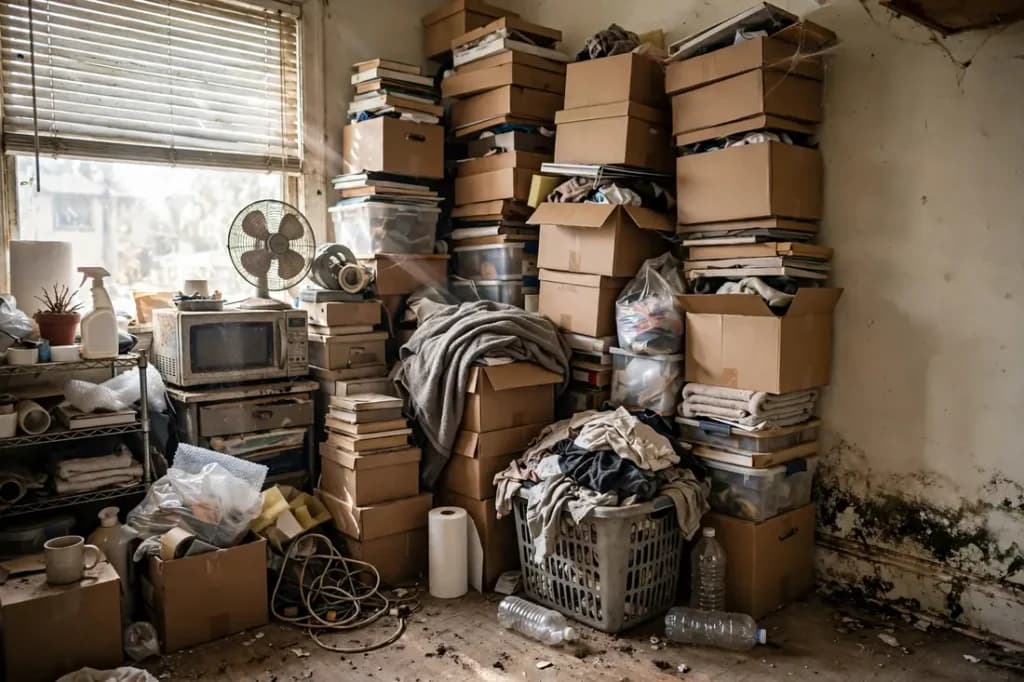
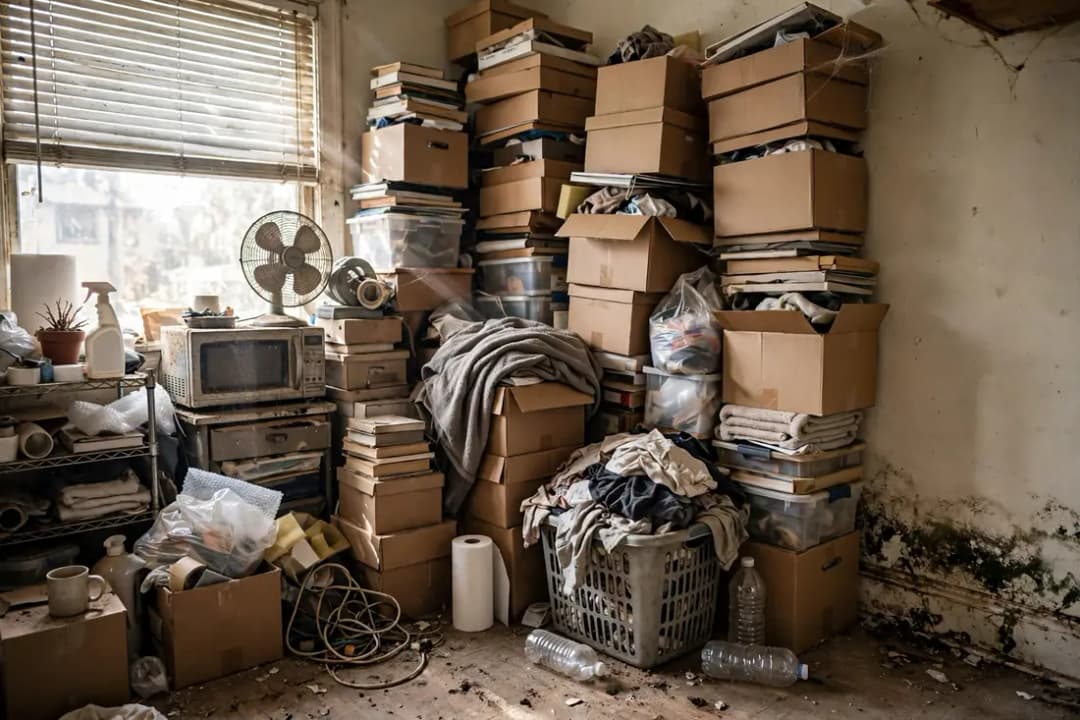
The difference between hoarding and clutter comes down to function and safety. Clutter is disorganization.
You can still use your rooms. Hoarding disorder is a recognized condition where accumulated possessions make living spaces unusable and create health and safety hazards.
A messy home becomes a health hazard when clutter blocks exits or ventilation, when food waste or animal waste accumulates, when mold grows in trapped moisture, or when structural load and fire risk enter the picture. At that point, it is no longer a housekeeping problem.
It is a health matter.
Hoarding Is a Disorder. Clutter Is Not.
The DSM-5 lists hoarding disorder as persistent difficulty discarding possessions, regardless of their value, leading to clutter that congests living areas and compromises their intended use. That clinical definition draws the line.
Clutter carries no distress. A busy person with a messy spare room feels no anguish about a donation bag.
A person with hoarding disorder feels intense distress at the thought of discarding. That distress is the engine of the disorder.
It is what separates a lifestyle from a condition.
Clutter also responds to effort. Give it a free weekend and it shrinks.
Hoarding resists every attempt, even when the person wants the change. When repeated efforts keep failing, the disorder is driving the behavior.
6 Signs a Messy Home Has Crossed the Line
Families ask me to look at photos and tell them which side of the line they are on. I give them this checklist instead.
1. Rooms lose their function. A bedroom you cannot sleep in or a kitchen you cannot cook in has crossed from clutter to hazard. Usability is the first test.
2. Exits and pathways are blocked. Firefighters check this first on every call. A home you cannot evacuate quickly is a life-safety problem, not a style choice.
3. Food waste or animal waste accumulates. Rotting food and concentrated animal waste breed bacteria and carry zoonotic disease risk, documented by the CDC. This is a biohazard. It is not a mess.
4. Mold is growing behind the clutter. Clutter traps moisture against walls, so mold colonies grow unseen for years in dark, damp, blocked spaces. Long exposure triggers real respiratory problems.
5. Utilities and safety systems are compromised. Blocked breakers, covered smoke detectors, inaccessible plumbing shutoffs. Clutter becomes dangerous when it disables the systems that protect the home.
6. The person cannot stop, even when they want to. Clutter responds to a free weekend. Hoarding resists every attempt. When the same rooms keep refilling, professional help is overdue.
Why Miami Homes Cross the Line Faster
Miami’s climate shortens the distance between clutter and hazard. Humidity feeds mold in weeks, not seasons.
Warm air speeds food decay and insect activity.
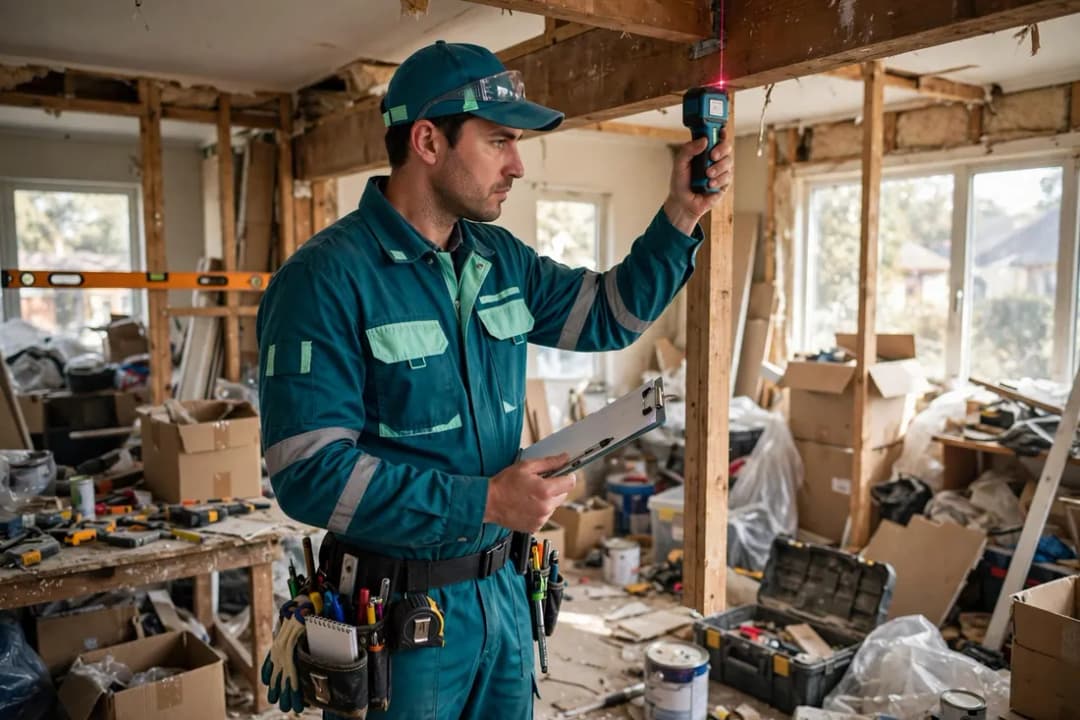
Older wood-frame and concrete-block homes in neighborhoods like Little Havana and Hialeah develop structural strain under heavy stored loads that nobody questions. Stacks of paper and books weigh far more than people expect.
I have walked into homes that looked like ordinary clutter from the doorway. Behind stacked boxes, we found rodent nesting, water damage, and mold the resident never saw.
The doorway view is never the full story.
What to Do at Each Stage
When It Is Still Clutter
A weekend, three labeled bins (keep, donate, discard), and a haul to donation covers most clutter. Start with one room.
Finish it before opening another. No professional needed.
When It Has Crossed the Line
Do not attempt a full DIY cleanout of a hazardous hoard. Staged, consent-led sorting with the resident works, and our hoarding cleanup guide walks through the professional process step by step.
Surprise dumpster cleanouts backfire, and the clutter returns. Learn how to help without conflict before you start.
When Biohazards Are Present
Animal waste, human waste, rotting food, and heavy mold are biohazards. They leave through licensed biohazard cleanup channels with full protective equipment.
Households cleaning these without protection risk serious exposure. This is the point where the home needs a professional crew, not a family effort.
Summary
Clutter is disorganization. Hoarding disorder is a recognized condition where possessions make rooms unusable and create hazards.
The line is crossed when rooms stop functioning, exits are blocked, waste accumulates, mold grows, safety systems fail, or the person cannot stop despite wanting to. Miami’s humidity makes that line arrive faster.
At the clutter stage, a weekend of sorting works. Past the line, staged professional hoarding cleanup with the resident’s consent is the safe path.
When biohazards are involved, licensed crews with protective equipment are the only answer.
Concerned about a home in Miami? Contact Hazard Guard or call (888) 976-0045.
Consultations are confidential, and the call is free.