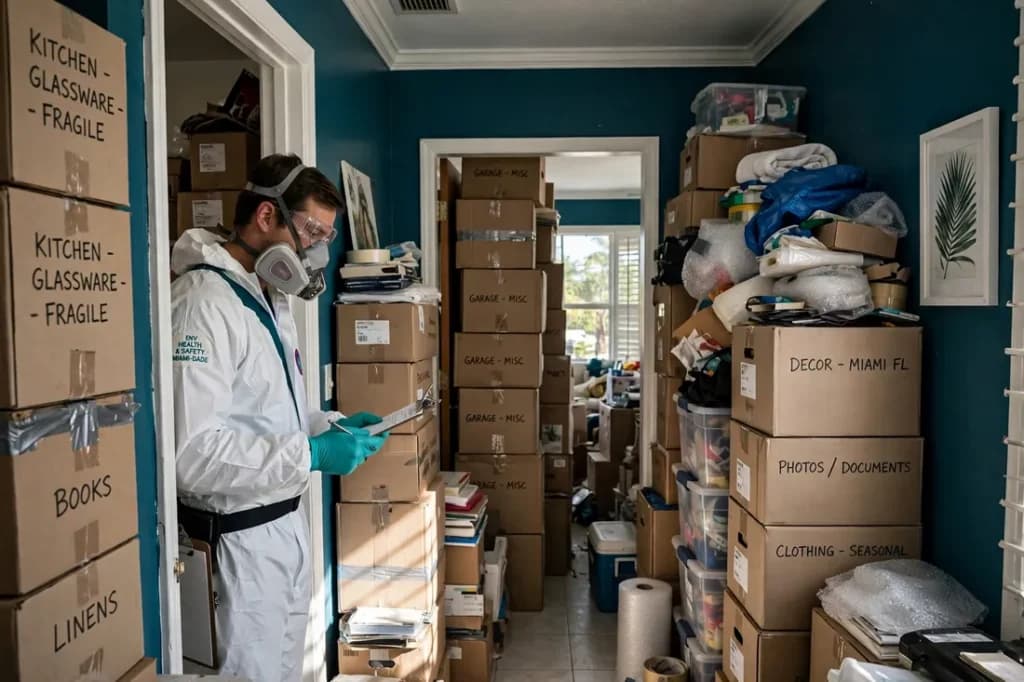
Hoarding cleanup becomes an emergency when clutter creates an immediate danger to life, health, or the home itself. Blocked exits, fire hazards, sewage or animal waste, no running water or working plumbing, structural damage, and an eviction or condemnation notice all turn a slow problem into an urgent one. In those cases, the goal shifts from gentle sorting to making the home safe enough to live in, starting with exits, hazards, and sanitation.
That distinction matters. Most hoarding homes are not emergencies, and they should not be treated like one. An emergency is defined by risk, not by how full the rooms look.
The Line Between a Cluttered Home and an Emergency
Clutter becomes a hazard gradually, then crosses a line. The line is crossed when someone cannot get out safely, cannot get help in, or is living with contamination that causes illness.
I use a simple test on assessments in Miami. Can every occupant leave the home quickly in a fire, including at night? Can paramedics reach a person in any room with a stretcher? Is there a working toilet, clean water, and a safe place to sleep? If the answer to any of those is no, the home needs urgent action.
A home can look overwhelming and still pass that test. A home can look tidy from the doorway and fail it, when a bedroom exit is blocked behind a wall of boxes.
Emergency Triggers That Cannot Wait
Any one of these triggers justifies urgent cleanup, even when the resident is not ready for a full clear out.
- Blocked exits: doors, windows, or hallways blocked so occupants cannot escape a fire
- Fire hazards: stacks near stoves, heaters, or electrical panels, or piles blocking smoke alarms
- Sewage or plumbing failure: backed up toilets, leaking pipes, or no running water
- Animal waste and infestation: accumulated animal waste, ammonia odor, rodents, or insects spreading disease
- Mold and rotting matter: decaying food, mold growth, or dead animals inside the home
- Structural risk: floors sagging under weight, water damaged ceilings, or overloaded storage
- Access failure: paramedics, home health aides, or caregivers cannot enter or reach the resident
- Legal deadlines: an eviction notice, a fire marshal order, or a condemnation notice with a fixed date
In a Kendall condo last year, a resident called us about odor. The real emergency was the front door: it opened only a few inches because of boxes stacked behind it. If a fire had started in the kitchen that week, the resident could not have left quickly. We cleared the exit path the same day, and the rest of the work followed at a calmer pace.
What an Emergency Cleanup Looks Like
Emergency cleanup is triage, not a full home transformation. The crew makes the home safe first, and sorts the rest later.
Safety Comes Before Sorting
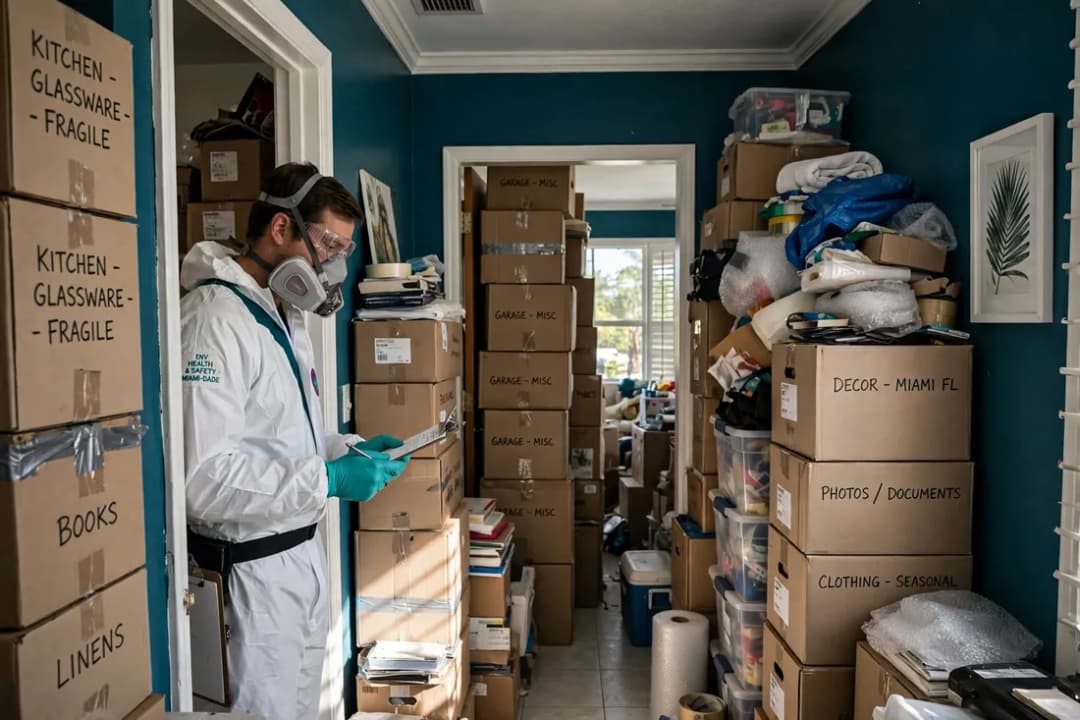
Crews start with a walkthrough in PPE, checking exits, electrical hazards, structural concerns, and sanitation. They photograph hazards for documentation before anything moves.
This assessment also protects the resident. Moving heavy stacks without a plan can cause a collapse or an injury. Professionals clear from the outside of a pile inward, keeping an exit path open at all times.
Clear Exits, Hazards, and Sanitation First
The first phase clears exit routes, removes fire hazards from around stoves and panels, and addresses sewage, animal waste, and rotting matter. Kitchens and bathrooms are restored to working order before living rooms are sorted.
Only after the home is safe does the crew move to sorting belongings into keep, donate, and dispose groups, with the resident or a trusted family member involved in decisions wherever possible.
Documentation Protects Everyone
Emergency jobs generate paperwork that matters later. Keep the scope of work, before and after photos, waste manifests for biohazardous material, and any letters to a landlord, fire marshal, or housing authority.
That file shows a housing authority or a court that action was taken promptly. It also helps insurers and property managers understand what was done and why.
Our guide to hoarding cleanup in general explains the full compassionate process that follows once the emergency phase is complete.
How Families Should Act in the First 24 Hours
Families often find out about an emergency suddenly, through a neighbor, a landlord, or a hospital call. Calm, practical steps help more than urgent arguments.
- Confirm the immediate risk: is anyone inside unsafe right now, and can they leave?
- Call emergency services first if someone is trapped, ill, or in danger. Cleanup comes second.
- Do not enter a home alone if floors feel soft, the odor is overwhelming, or animal waste is widespread. Wait for a professional assessment.
- Contact the resident’s support network: family, a case manager, a clinician, or a trusted friend.
- Photograph the situation from doorways only, without moving stacks, for documentation.
- Call a hoarding cleanup team in Miami for a same day safety assessment when exits or sanitation are involved.
The most common mistake I see families make is turning the first visit into a confrontation about the hoarding itself. In an emergency, the only conversation that matters is safety: exits, water, and sanitation. The deeper work, and the support behind it, comes after the home is safe.
What Not to Do in an Emergency
Urgency tempts people into shortcuts that cause harm or legal trouble.
- Do not dumpster everything while the resident is away. Removing belongings without consent can destroy keepsakes, documents, and trust, and it can create legal exposure.
- Do not force a resident to watch a rapid clear out. Distress during an emergency cleanup can cause lasting harm and makes future cooperation harder.
- Do not light candles or use open flames in a cluttered home, and do not overload circuits to run extra fans or heaters.
- Do not ignore a fire marshal or condemnation notice while hoping the problem resolves. Deadlines in those notices are real, and missing them can mean forced removal.
- Do not send an untrained volunteer into a home with sewage, animal waste, or mold. Those are biohazard cleanup conditions that need PPE and regulated disposal.
If the home also shows signs that clutter has crossed into a health hazard more broadly, our guide on hoarding versus clutter explains how professionals judge that threshold.
After the Emergency Passes
Once exits are clear and sanitation is restored, the pace should slow down. That is when lasting change becomes possible.
Agree on a staged plan: one room at a time, with regular sessions and a named support person. Address the underlying drivers, whether those are grief, depression, anxiety, mobility limits, or simply years of accumulation without help.
Schedule a follow up visit after two to four weeks. Emergency clearances tend to refill when no follow up exists, especially if the resident lives alone. A short check in catches that early, while it is still manageable.
If a landlord or housing authority is involved, share the completion documentation promptly and keep a copy. Closing that loop protects the resident’s tenancy.
Summary
Hoarding cleanup is an emergency when clutter creates immediate danger: blocked exits, fire hazards, sewage or animal waste, no running water or plumbing, structural risk, blocked access for caregivers, or a legal deadline such as eviction or condemnation. Emergency work is triage: clear exits, remove hazards, and restore sanitation first, with sorting and support following at a calmer pace.
Families should confirm immediate safety first, avoid confrontations and unsupervised clear outs, and document everything. Once the home is safe, a staged plan with follow up gives the resident the best chance of staying safe.
Facing a hoarding emergency in Miami? Contact Hazard Guard or call (888) 976-0045 for a same day safety assessment.