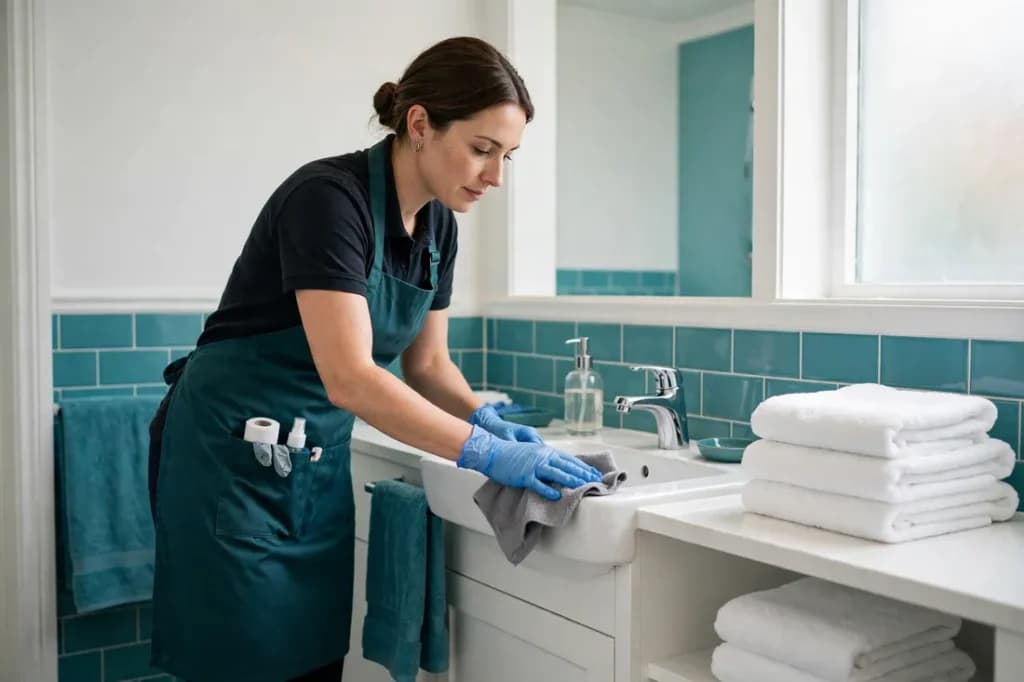
Hotel biohazard response is the set of safety steps a hotel follows when blood, bodily fluids, sharps, or a death are found in a room. Housekeeping stops, the room is isolated, and a trained crew handles the cleanup before the room returns to service.
No guest should ever sleep in a room that was only wiped down after a biohazard event. Proper response protects guests, staff, and the hotel from health risks and liability.
In Miami, where hotels turn rooms daily and occupancy runs high, the response has to be fast and documented. Speed without safety is a lawsuit waiting to happen.
What Counts as a Biohazard in a Hotel Room
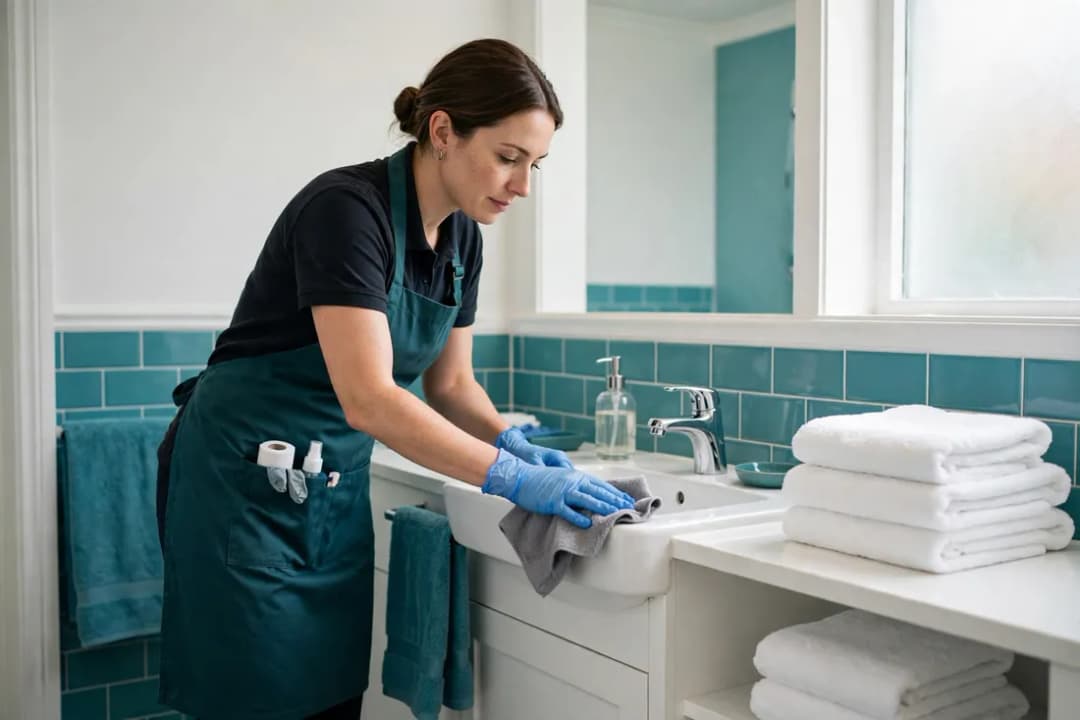
A hotel room biohazard is any blood, bodily fluid, human waste, sharps, or decomposition present in a guest room or shared space. That includes blood on bedding, vomit in a bathroom, a used needle in a drawer, or an unattended death discovered at checkout.
Minor situations are routine. A small blood stain from a shaving cut is manageable with proper gloves and disinfectant.
Major situations are not housekeeping work. Large blood volumes, drug paraphernalia with residue, or a death in the room all require a professional biohazard cleanup crew. Blood on bedding or carpet needs a blood cleanup crew, not a housekeeping cart.
The line is risk. If bloodborne pathogens may be present, or the contamination has spread beyond a wipeable surface, housekeeping stops and specialists take over.
The First 10 Minutes: What Housekeeping Must Do
The first minutes decide whether the situation stays contained or spreads through the hotel.
Stop and Isolate the Room
The housekeeper stops work immediately. The room door closes. A do-not-disturb sign or out-of-order tag goes up.
Nobody else enters. Not the next housekeeper, not maintenance, not a curious manager without PPE.
Protect Staff and Guests
Staff put on gloves before touching anything. If blood is present, eye protection goes on too.
Guests on the floor are moved away from the room. Hallway traffic is rerouted if the spill is near the door.
Call the Right People
The housekeeping supervisor calls the general manager and the hotel’s biohazard response provider. In Miami, a 24/7 crew should be on site within the hour.
Housekeeping never tries to clean a major biohazard to save time. That decision is how staff get exposed and rooms get contaminated.
Document Everything
Photos of the room as found, times, and names of everyone who entered. This record supports insurance, protects the hotel, and helps the cleanup crew scope the job.
I have seen hotels skip documentation to get the room back faster. Then a guest claims an illness weeks later and the hotel has no record of what was done.
Housekeeping Safety Rules During a Biohazard Event
Safety rules for hotel staff follow the OSHA Bloodborne Pathogens Standard (29 CFR 1910.1030). Hotels with housekeeping staff who may encounter blood must have an exposure control plan.
PPE Is Not Optional
Gloves are the minimum. For blood or bodily fluids, staff add eye protection and a fluid-resistant apron or gown.
A housekeeper in street clothes with bare hands has no business touching a bloodied sheet. The hotel is liable the moment that happens.
Never Recap or Handle Sharps by Hand
Needles found in rooms go into a sharps container with tongs or a dustpan. Never by hand. Never recapped.
Hotels should keep a sharps container on every housekeeping cart. Miami properties see needles more often than managers admit, especially in high-turnover tourist areas.
Bag and Label Contaminated Linens Separately
Bloodied linens go into labeled biohazard bags, not the regular laundry cart. Mixing them contaminates the whole cart and the laundry room.
Laundry staff must be told the bags contain biohazard material. They need the same PPE and training as housekeeping.
Hand Hygiene After Every Exposure
Gloves come off correctly, hands are washed with soap and water, and any skin contact with blood is reported immediately.
The CDC documents hepatitis B, hepatitis C, and HIV as the bloodborne pathogens of concern. Exposure reporting is not paperwork. It starts the clock on post-exposure care.
Room Turnover After a Biohazard: The Full Process
A room returns to service only after a documented process. Shortcuts here are how hotels end up in the news.
1. Professional Assessment
The cleanup crew walks the room and maps contamination. Blood seeps through mattresses into bed frames and through carpet into subfloor. What looks like a small stain is often a bigger job.
2. Removal of Contaminated Materials
Mattresses, carpet sections, pillows, and upholstered items that absorbed fluids are removed and bagged as biomedical waste. They are not laundered and reused.
3. Cleaning and Disinfection
Hard surfaces are cleaned first, then treated with EPA-registered disinfectants at label dwell times, usually 3 to 10 minutes.
High-touch points get special attention. Light switches, remotes, door handles, faucets, and thermostats are all treated.
4. Odor Treatment
Enzyme treatments and hydroxyl generators neutralize odor at the source. Masking sprays are not a substitute.
A room that still smells after treatment has not been fully remediated. That is a signal, not a housekeeping problem.
5. Verification and Documentation
The crew verifies the room is safe and hands the hotel a written record. Products used, areas treated, waste manifests, and clearance notes.
That document goes into the hotel’s file. It is the proof the room was handled properly if a guest or inspector ever asks.

Special Situations Hotels Face
Unattended Death Discovered at Checkout
When a guest is found deceased, housekeeping leaves immediately and calls management and law enforcement. Nobody cleans anything.
After the coroner releases the room, a professional unattended death cleanup crew handles the cleanup. Our guide on what to do after an unattended death is discovered covers the full sequence for families and property managers.
Drug Paraphernalia and Fentanyl Residue
Needles, pipes, and powder residue are a growing problem in Miami hotels. Fentanyl residue is dangerous in tiny amounts and requires trained handling.
Housekeeping never sweeps or vacuums drug residue. That spreads it into the air. A professional crew with respirators and proper containment handles it.
Our guide on fentanyl contamination for property owners explains the exposure risks and the remediation standard.
Vomit and Illness Outbreaks
Norovirus spreads fast in hotels. One sick guest can seed a whole floor through shared surfaces and HVAC.
Rooms are isolated, common areas are disinfected, and ill guests are moved to a single wing where possible. Staff who cleaned the first room change gloves and PPE before touching the next.
Training Every Hotel Should Give Housekeeping Staff
Training is the difference between a safe response and a dangerous one. Four topics cover the essentials.
- Bloodborne pathogen awareness: what the risks are and how exposure happens.
- PPE use: how to put it on, take it off, and dispose of it without contaminating yourself.
- Sharps handling: tongs, sharps containers, and the no-recap rule.
- Reporting: who to call, what to document, and why speed matters.
Training should be annual at minimum, and part of onboarding for every new housekeeper. The OSHA standard requires it for staff with occupational exposure.
I have trained hotel teams where nobody knew where the sharps containers were kept. The containers existed. The knowledge did not.
What Guests Should Know
Guests have a right to a safe room. If a room smells of chemicals, has visible stains, or looks hastily turned over, ask the front desk for a different room.
Hotels are not required to disclose a prior biohazard event in a room. But a reputable property will have documentation that the room was professionally remediated.
If you are a hotel guest who found blood or sharps in a room, leave the room, tell the front desk, and document what you saw. Do not touch it.
Legal and Liability Risks for Miami Hotels
A hotel that returns a biohazard room to service without proper remediation faces serious exposure. Guest illness claims, staff workers compensation claims, and health department action are all real risks.
Florida has no single biohazard cleanup license. So the hotel’s protection is documentation. A written record from a certified crew shows the hotel acted properly.
Our guide on Florida biohazard cleanup licensing explains what to look for when vetting a cleanup company.
Businesses reopening after any biohazard incident should also read our guide on business reopening after a biohazard incident. It covers verification, documentation, and safe re-entry for offices, shops, and restaurants.
Summary
Hotel biohazard response starts with isolation: stop work, close the room, protect staff with PPE, and call a professional crew. Housekeeping handles minor stains. Major events, blood volumes, sharps, drug residue, and deaths belong to trained specialists.
Room turnover after a biohazard follows five steps: professional assessment, removal of contaminated materials, cleaning and EPA-registered disinfection, odor treatment, and verification with documentation. A room returns to service only when that record exists.
If your Miami hotel faces a biohazard event, do not risk your guests or your staff. Contact Hazard Guard or call (888) 976-0045. Our crews respond 24/7, and the call is free.