Meth contamination in a rental is methamphetamine residue left on walls, floors, HVAC surfaces, and belongings after a property was used to make, smoke, or store meth, and it can only be cleared by professional testing, remediation, and clearance testing before the unit is safely relet. It is invisible, it survives ordinary cleaning, and it is a landlord problem the moment the next tenant moves in.
A rental turnover is where this risk usually surfaces. A tenant leaves, the unit looks clean, and the residue is still on the walls.
Why Meth Residue Is a Rental Problem
Meth residue settles on hard surfaces and absorbs into porous materials. Paint, drywall, carpet, and HVAC ductwork can all hold it, and a standard turnover clean does not remove it.
Tenants, especially children, touch those surfaces daily. That is why landlords cannot treat meth residue like ordinary dirt, and why a fresh coat of paint is not a fix.
I have tested units in Miami where the walls looked freshly painted and the wipe results still came back high. The paint sealed the residue in, it did not remove it, and the next tenant would have lived with it.
How Meth Contamination Is Found in a Rental
Contamination is usually found in one of four ways.
First, a neighbor, police report, or maintenance worker flags drug activity at the unit. Second, a new tenant reports chemical odors, headaches, or skin irritation that no cleaner can explain.
Third, a landlord orders testing during turnover, either routinely after a problem tenancy or before a new lease. Fourth, a buyer or inspector orders testing, as covered in our guide on meth residue testing before buying.
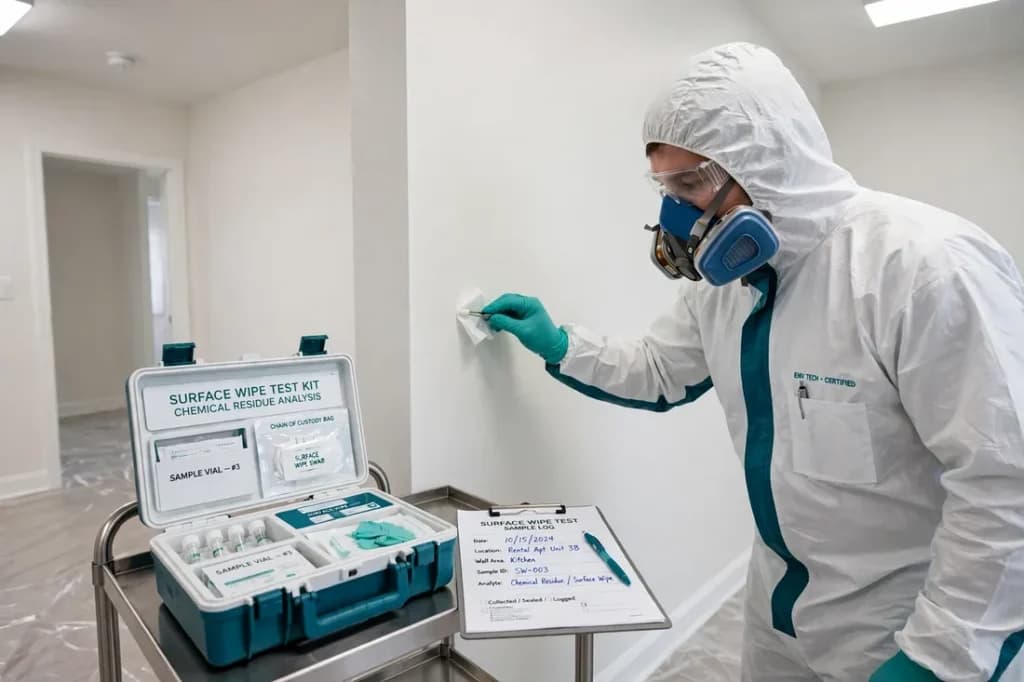
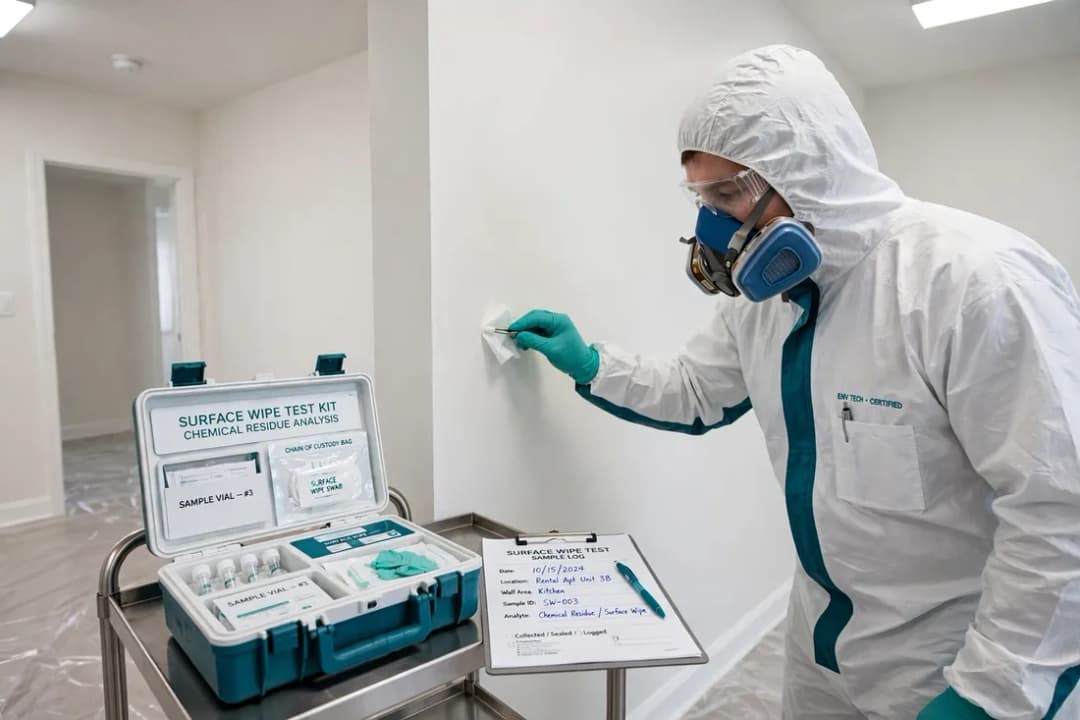
Testing means surface wipe sampling, sent to a laboratory, compared against a clearance standard. Visual inspection alone cannot clear a unit, and a smell test cannot either.
The Rental Meth Cleanup Process Step by Step
Professional meth remediation follows a documented sequence, through our meth lab cleanup service in Miami.
Assessment and Testing
We start with a property history review and a walkthrough, then wipe-test walls, floors, ceilings, and HVAC surfaces. The results map where contamination is, and how severe it is.
That map decides the scope. A low-level, single-room case and a whole-unit manufacturing case are different jobs entirely.
Containment and Removal
Containment barriers go up, and HVAC is isolated so residue does not spread through ductwork while work proceeds. Porous materials that cannot be decontaminated are removed: carpet, padding, affected drywall, and contaminated furnishings left behind.
Each item is bagged and disposed of through the proper waste route. Nothing contaminated goes into ordinary rental trash.
Cleaning, Treatment, and Clearance Testing
Surfaces are cleaned with methods suited to meth residue, then treated and retested. Clearance testing is the step that matters most for a landlord, because it is the proof the unit is safe to relet.
Do not relet on a cleaning invoice alone. Relet on a clearance result, plus a written summary of the work. That file protects the next tenant, and it protects the landlord if questions arise later.
Our biohazard cleanup service covers the same documented process for other contamination types, and our guide on landlord documentation after a tenant death covers the turnover file discipline that applies here too.
Landlord Duties and Turnover Standards
A landlord has a practical duty to deliver a safe unit, and a legal exposure if a known hazard is passed to the next tenant. That exposure grows if contamination was known, or should have been known, and the unit was relet anyway.
The safe turnover standard is simple: test when there is a reason to suspect drug activity, remediate to a clearance standard, and keep the file.
The file should include the initial test results, the written scope, the clearance results, invoices, and photos. Keep it with the unit file, not in a personal inbox, so a future manager or owner can find it.
Turnover timing also matters. Meth remediation takes days, not hours, and clearance laboratory results add time on top of the cleaning. Build that into the vacancy plan, rather than rushing a relet to fill a gap month.
Costs, Liability, and Insurance
Cost depends on the area affected, the severity, and how much material must be removed. A single-room, low-level job and a whole-unit remediation are different price ranges entirely.
Landlords often ask who pays. The answer depends on the lease, the evidence, and Florida law, and it is worth a legal conversation before deducting from a deposit or pursuing a former tenant. Do not assume a deposit covers a full remediation.
Insurance may help, depending on the policy and the cause, and early notification matters. Document everything from the first suspicion: dates, reports, test results, and all communications.
Reputable companies give a written scope and price before work begins. If someone promises clearance without testing, keep calling around.
Common Mistakes Landlords Make With Meth Rentals
Three mistakes repeat across rental cases.
First, repainting over residue and reletting. Paint hides the problem, it does not clear it, and it can make later remediation harder.
Second, using a general cleaner instead of a remediation crew. General cleaning spreads residue, destroys the testing baseline, and often has to be redone at higher cost.
Third, skipping clearance testing to save time. Without a clearance result, the landlord has no proof the unit was safe, and the next tenant has no protection.
If you suspect meth contamination in a rental, keep people out of the unit, do not run the HVAC, order wipe testing, and call a professional crew before any turnover work begins.
Summary
Meth contamination in a rental is invisible residue that survives ordinary cleaning, and it is cleared only by testing, professional remediation, and clearance testing before relet. Landlords should test when drug activity is suspected, remediate to a clearance standard, keep a complete turnover file, and never relet on a cleaning invoice alone.
If you need help in Miami, Contact Hazard Guard or call (888) 976-0045. Our crews respond around the clock, work discreetly, and the call is free.