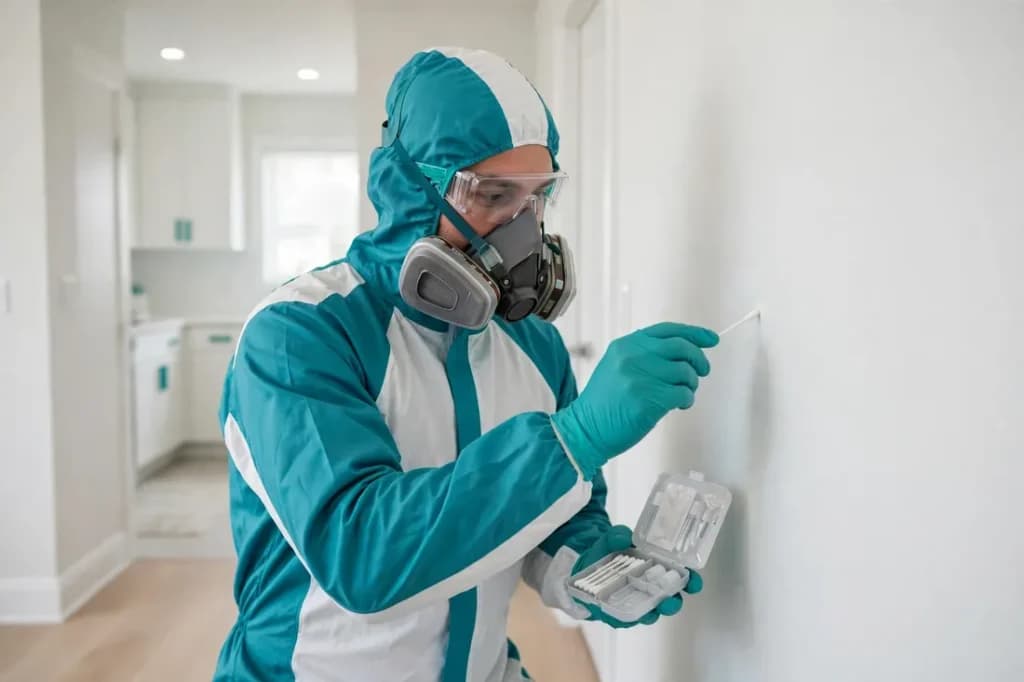
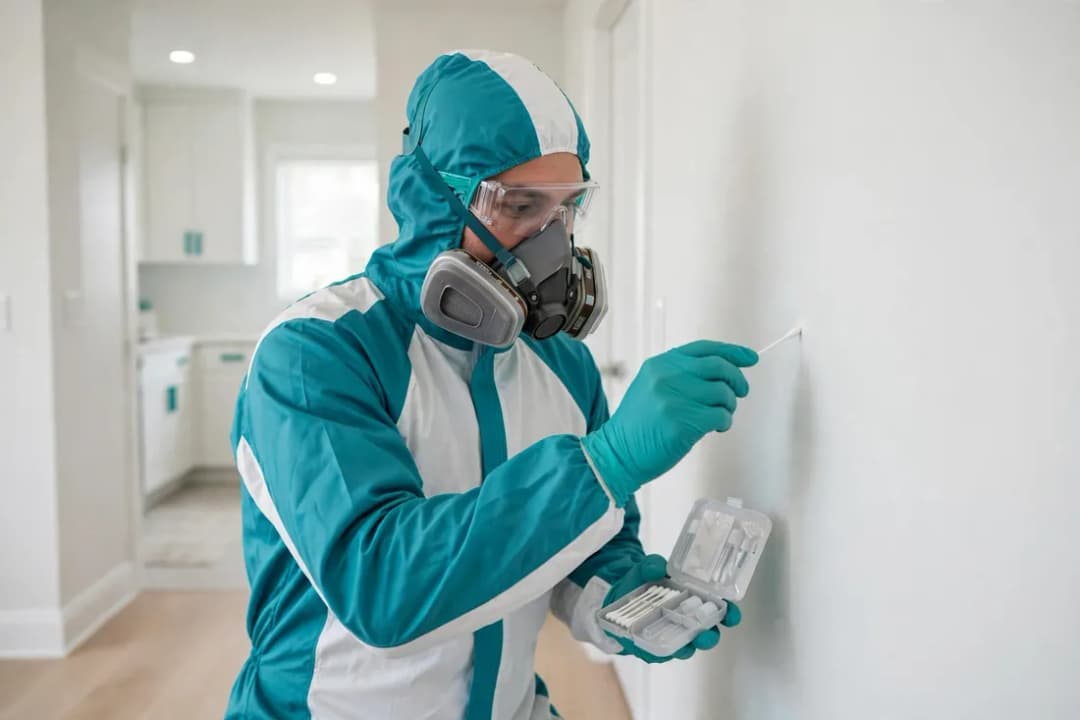
Meth residue testing is a surface wipe sampling process that measures methamphetamine contamination on walls, floors, and fixtures before a home purchase closes. A trained technician wipes defined areas, seals each sample, and sends it to a laboratory for analysis. Results are compared against a clearance standard to decide whether the home is safe or needs remediation.
That test matters because meth residue is invisible. A freshly painted room can look clean while residue sits on walls, in HVAC dust, and on kitchen surfaces. A buyer who skips testing inherits the cleanup cost and the health questions that come with it.
Why Meth Residue Testing Matters for Buyers
Residue testing protects the buyer before money changes hands. It turns a suspicion into a number.
Methamphetamine production leaves residue on porous and non-porous surfaces. Smoking meth in a home can also leave measurable residue, though usually at lower levels. Neither situation is visible to the naked eye.
I have walked pre-purchase jobs in Coral Gables where the home looked move-in ready. Fresh paint, new carpet, and a clean kitchen hid residue on the original drywall behind a vanity. Only wipe sampling found it.
A standard home inspection does not cover this. Inspectors check structure, roof, and systems. They do not swab walls for drug residue.
Signs That Justify Testing Before Closing
Testing makes sense when the property history raises a flag. It is not needed for every purchase, but it is cheap insurance in the right cases.
Watch for these signals:
- A police record, news report, or neighbor account linking the property to drug activity
- Chemical staining, unusual ventilation holes, or stripped fixtures that suggest a former lab
- A sudden remodel that covers walls and floors without permits or explanation
- A very low price for the neighborhood with a rushed or cash-only sale push
- Strong chemical odors that return after cleaning, especially in kitchens and bathrooms
If any of these apply, ask for testing before you waive contingencies. Our guide to signs a property was used as a meth lab explains what to look for during a walkthrough.
How Professional Meth Residue Testing Works
Professional testing follows a repeatable method. That repeatability is what makes the results useful to buyers, sellers, and insurers.
Surface Wipe Sampling
The technician selects sampling points across rooms, not just one spot. Walls, counters, vents, and light switches are common points. Each wipe covers a measured area, usually 100 square centimeters, so results can be compared.
Samples go into sealed, labeled containers. Chain of custody documentation tracks each sample from the home to the lab.
Laboratory Analysis
An accredited laboratory analyzes the samples and reports residue levels, usually in micrograms per 100 square centimeters. Field test kits exist, but lab results carry more weight in a negotiation or a dispute.
Turnaround is typically a few business days. Rush analysis is available in some cases.
Comparing Results to a Clearance Standard
Florida has no single statewide residential meth clearance number that every buyer can point to. That surprises many buyers. Other states publish numeric standards, and remediation firms commonly use those benchmarks plus laboratory guidance to judge a result.
This is where a written report matters more than a verbal opinion. The report should state the sampling method, the lab, the result for each point, and the benchmark used. Without that, a number means very little.
For the full remediation picture, see what meth lab cleanup involves, from testing through clearance.
What the Results Mean for Your Purchase
Results fall into three practical buckets. Each one points to a different next step.
A clean result across all sampling points means no further action on residue. Keep the report with your closing documents. It protects resale value later.
A low-level result may call for targeted cleaning and retesting. This is common in homes where meth was smoked but never manufactured. Cleaning plus a clearance retest often resolves it.
A high result means professional remediation before move-in. That can include removing porous materials, treating surfaces, and retesting until clearance is met. Our meth lab cleanup service in Miami handles testing, remediation, and clearance documentation as one documented job.
Never accept a seller promise to clean it themselves. Without pre-cleaning and post-cleaning samples, nobody can prove the home is clear.
Common Buyer Mistakes I See in the Field
Buyers make the same three mistakes on meth-suspect homes. All three are avoidable.
First, they trust a fresh coat of paint. Paint seals residue under a new surface. It does not remove it. Residue can still migrate through paint over time, and a later buyer test can still come back positive.
Second, they order a single-room test to save money. Contamination rarely stays in one room. HVAC systems, shared walls, and foot traffic spread residue. A whole-home sampling plan costs more up front and saves a failed retest later.
Third, they skip the written report. A phone call saying “it looks fine” is worthless at closing. Get the lab report, the sampling map, and the benchmark in writing before you sign.
Testing Costs and Timing in a Purchase
Testing cost depends on the number of samples and the lab turnaround. A typical pre-purchase job runs in the hundreds of dollars, not thousands. That is small against a home price and tiny against a remediation bill.
Order testing early in the contingency period. Sampling takes an hour or two on site. Lab results take days, and a positive result may need a remediation quote before you can renegotiate. Starting late leaves no room to act. If results come back positive, our biohazard cleanup team in Miami can scope remediation and clearance testing as a single documented job.
Ask your agent to keep a testing contingency in the contract where the history justifies it. If the seller refuses access for testing, treat that refusal as information.
What to Ask the Testing Company
Not every firm that offers testing follows the same method. Ask these questions before booking:
- Do you use an accredited laboratory, and will I receive the full lab report?
- Will you provide a sampling map showing exactly where each wipe was taken?
- What clearance benchmark are you comparing results against?
- Is retesting after cleaning included, or priced separately?
- Will the report be written so a lender, insurer, or future buyer can rely on it?
A firm that hesitates on the lab report or the sampling map is not the firm to use. Documentation is the product, not just the swab.
Summary
Meth residue testing before buying a home means professional surface wipe sampling, accredited lab analysis, and comparison against a clearance benchmark. It matters because residue is invisible, paint hides it, and a standard inspection does not check for it.
Test when the property history raises a flag. Get a whole-home sampling plan and a written report. Act on the results before closing, not after move-in.
Buying in Miami and concerned about a property history? Contact Hazard Guard or call (888) 976-0045 to arrange pre-purchase meth residue testing.