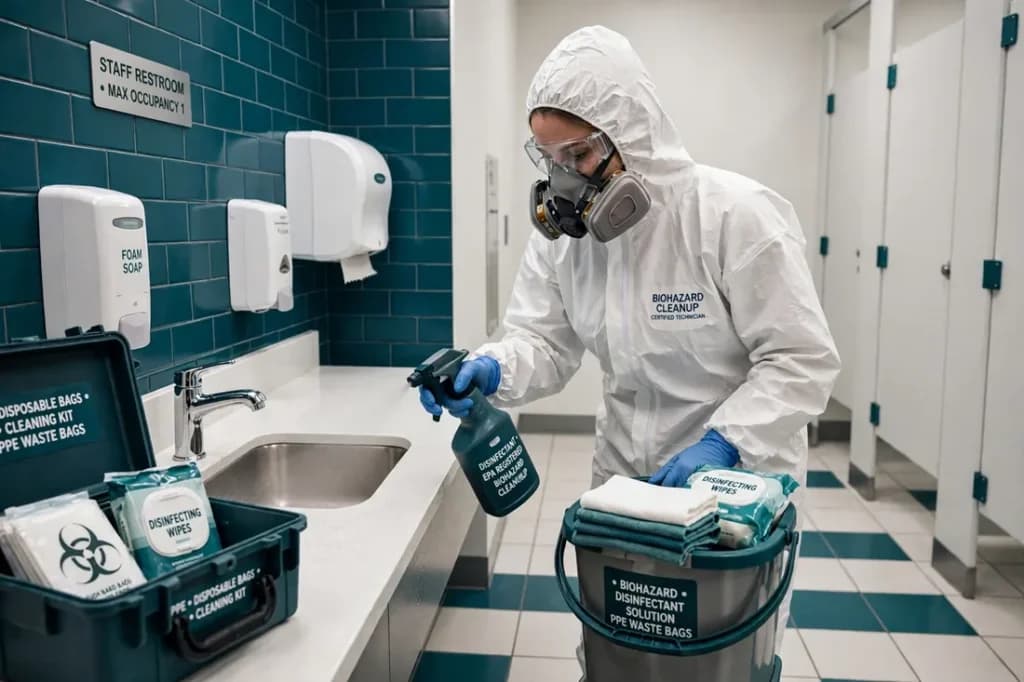
A workplace biohazard is any biological material that can carry disease and needs professional handling. That includes blood, bodily fluids, human tissue, used sharps, and sewage. It also includes mold colonies, animal waste, and decomposition after a death on site.
If it came from a body, or if it can make people sick through contact or airborne spread, treat it as a biohazard. Regular office cleaning does not cover it.
What Makes Something a Biohazard at Work
A material counts as a biohazard when it carries, or may carry, infectious agents. Blood is the classic example. So are vomit, urine, feces, saliva mixed with blood, and unfixed tissue.
The test is risk, not appearance. A small amount of blood can still carry hepatitis B, hepatitis C, or HIV, as documented by the CDC.
Sewage counts too. It carries bacteria, viruses, and parasites. So does a large mold colony, which releases spores that trigger asthma and allergic reactions.
Common Workplace Biohazards by Category
Most office and workplace incidents fall into five groups. Knowing the group decides the response.
Blood and Bodily Fluids
Blood from an injury, a nosebleed that soaks into carpet, or vomit in a restroom. Any of these can carry bloodborne pathogens.
Our blood cleanup crews treat every blood incident as infectious until proven otherwise. That is the only safe assumption.
Sharps and Medical Waste
Used needles, lancets, broken glass contaminated with blood, and discarded medical items. These show up in office parking lots, restrooms, and warehouse floors more often than managers expect.
A needle found near a loading dock in Doral last year had been stepped on and snapped. The worker who found it did the right thing. He left it alone and called us.
Never pick up a sharp with bare hands. Never recap a needle. A puncture-proof container and trained hands are the only safe combination.
Sewage and Water Damage
A backed-up toilet or a burst sewer line floods a workspace with Category 3 water. The IICRC classifies this as grossly contaminated water.
It is not a mop job. Porous materials soaked in sewage usually have to be removed, not dried.
Mold, Pests, and Animal Waste
A roof leak left over a Miami summer grows mold inside ceiling tiles and drywall. Rodent droppings in a storage room carry their own pathogens. Bird waste on a rooftop HVAC intake spreads into the whole office.
These are biohazards when the contamination is widespread or the material is disturbed. A small patch of surface mold is a maintenance issue. A colony inside a wall is a remediation job.
Decomposition After a Death on Site
If someone dies undiscovered in an office, a warehouse, or a company vehicle, decomposition begins within hours in Miami heat. Bodily fluids seep into flooring and furniture.
This is the most serious workplace biohazard category. It needs full professional remediation and odor treatment, the same process described in our guide to unattended death cleanup.
Employer Duties Under OSHA Rules
Employers have a legal duty to protect workers from bloodborne pathogen exposure. The OSHA Bloodborne Pathogens Standard (29 CFR 1910.1030) requires an exposure control plan wherever employees may reasonably contact blood or other infectious materials.
That plan covers training, free hepatitis B vaccination, proper PPE, and a written procedure for exposure incidents. It applies to healthcare settings first, but it also reaches janitorial staff, first responders, and anyone assigned to clean up an incident.
The common mistake I see in offices is informal cleanup. A manager hands a janitor gloves and bleach and calls it handled. That is not a plan, and it does not protect anyone.
Florida adds its own layer. Biomedical waste must be segregated, labeled, and removed by a permitted transporter. Office waste that qualifies cannot go in the regular dumpster.
What Office Staff Should and Should Not Do
When a biohazard incident happens at work, the first minutes matter. Keep it simple.
- Do not touch the material. Keep staff and visitors out of the area.
- Close the door or block the area off if you can do it safely.
- Do not run the HVAC if contamination may be in the ducts or the air.
- Do not use a regular vacuum, mop, or household cleaner on blood or sewage.
- Report it to management and document the scene with photos from a safe distance.
- Call a professional crew for anything beyond a tiny, fresh spill on a hard surface.
Bleach on a blood spill is the mistake I see most. The stain fades, so people assume the risk is gone. Blood proteins stay in carpet padding, and pathogens can survive there for days. The room looks clean and is not.
When to Call a Professional Crew
Call professionals when blood or bodily fluids reach porous materials, when sharps are involved, when sewage has spread, or when a death has occurred on site. Call also when you are unsure. Uncertainty is itself a reason.
Our biohazard cleanup team in Miami responds around the clock. We assess, contain, remediate, and document, so your exposure control plan has a paper trail.
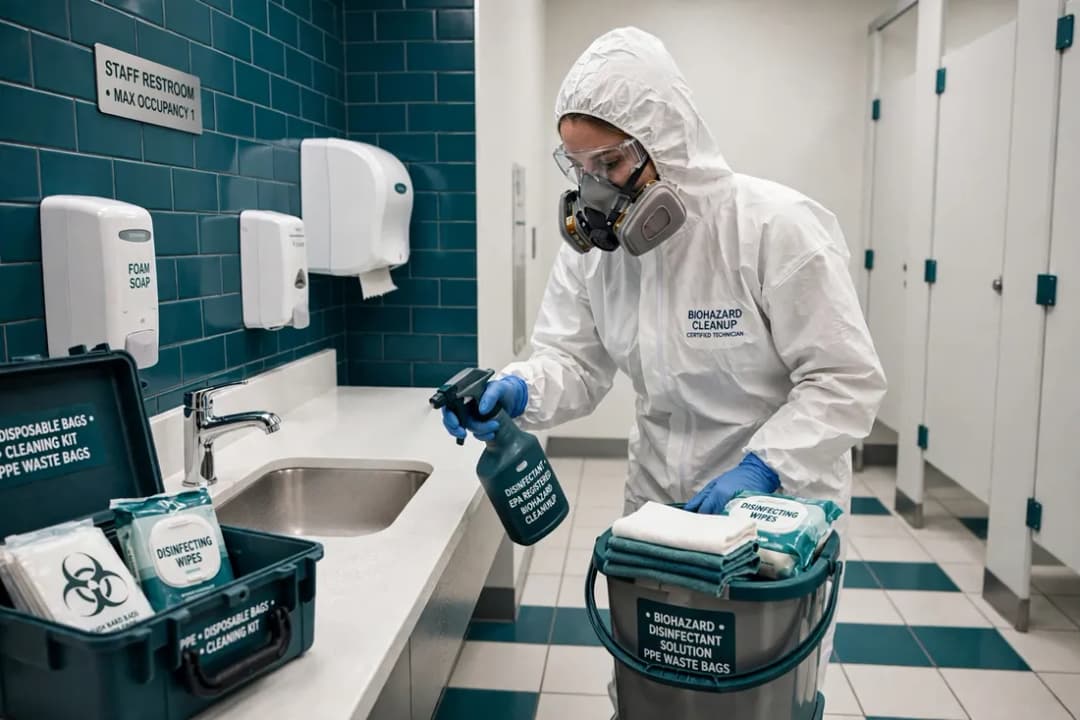
The right PPE matters as much as the right chemicals. Our guide to what professional biohazard crews wear explains the full kit. The comparison in biohazard cleaning vs regular cleaning shows why household methods fall short.
Summary
A workplace biohazard is any biological material that can carry disease: blood, bodily fluids, sharps, sewage, widespread mold, animal waste, and decomposition. OSHA requires employers to have a plan for it, and Florida requires lawful disposal.
Staff should isolate the area, avoid contact, and report it. Everything beyond a tiny spill on a hard surface belongs to trained, equipped professionals.
Need help at your Miami workplace? Contact Hazard Guard or call (888) 976-0045. Our crews are available around the clock, and the call is free.