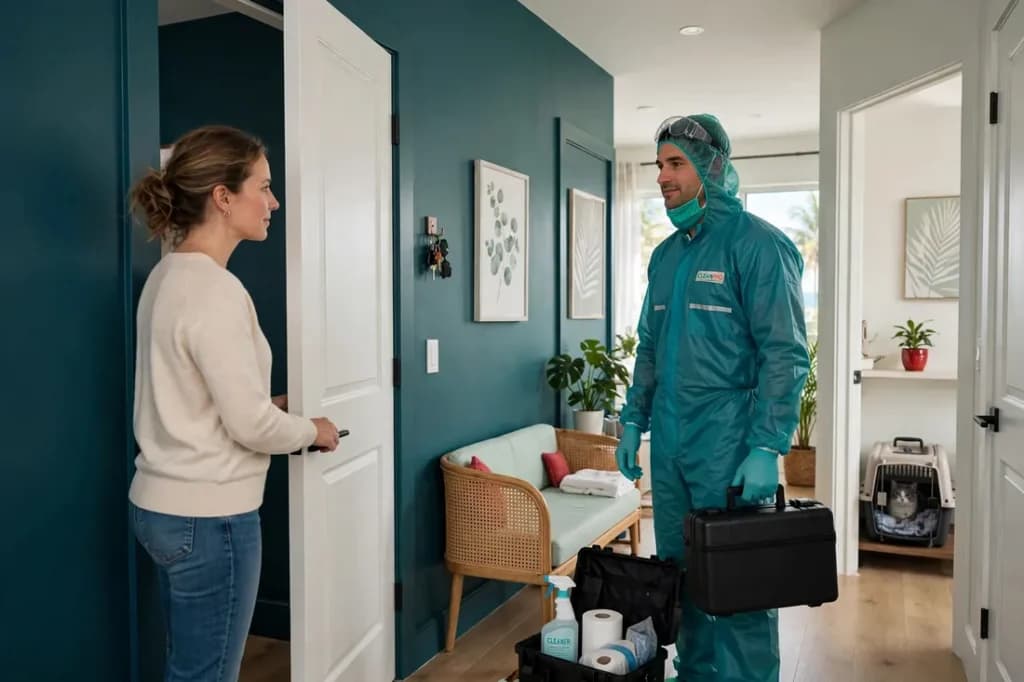
Protecting your family from a biohazard means isolating the affected area, keeping people and pets away from it, and avoiding contact until a professional crew arrives. Do not clean it, do not walk through it, and do not run the HVAC system if contamination may be in the ducts.
Those four actions buy safety in the minutes that matter most. Everything else can wait for trained crews with proper equipment.
Isolate the Area Immediately
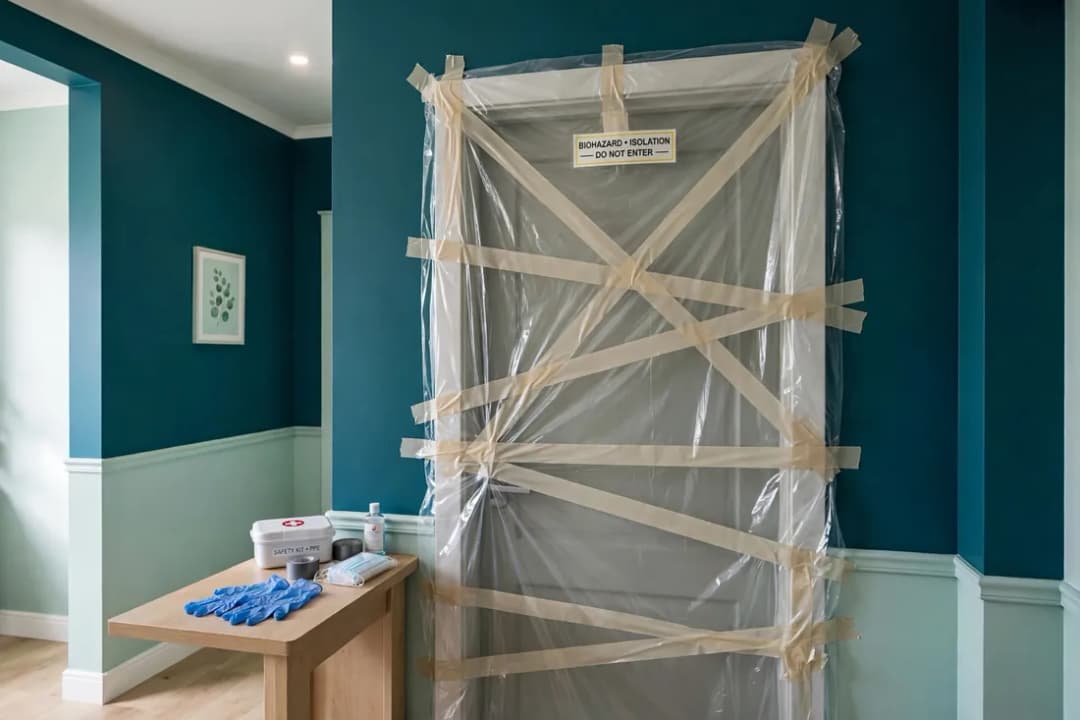
Close the door to the affected room. If there is no door, block the opening with plastic sheeting or a towel at the threshold.
This single step limits exposure more than any other action you can take. Contamination spreads through foot traffic, airflow, and curious hands.
In Miami homes, I see this step skipped most often in open-plan layouts. Families walk through a hallway spill to reach the kitchen, then track it into clean rooms. One closed door prevents that entire chain.
Keep the room closed until professionals arrive. Do not re-enter to grab belongings, take photos from inside, or check whether the smell has faded.
Keep Children and Pets Out of the Room
Children touch surfaces and then touch their faces. Pets walk through contamination and carry it through the house on their paws and fur.
Move both to a clean room, ideally on another floor or at the far end of the home. Wash hands thoroughly if anyone already touched the area.
If a pet walked through the affected space, do not bathe it in the same tub the family uses until you have professional guidance. Confine the pet, keep it comfortable, and tell the cleanup crew what happened when they arrive.
This is a detail laypeople rarely think about. Professionals always ask about it, because pet traffic is a common secondary spread route.
Do Not Touch, Clean, or Disturb the Area
The instinct to clean up immediately is strong. Resist it. Household cleaners do not disinfect biohazards properly, and wiping spreads contamination to new surfaces.
Bleach on blood is a particular trap. It fades the stain, so the area looks clean, while pathogens remain viable in porous materials underneath. The family relaxes, and the risk stays.
Do not move furniture, roll up carpet, or bag materials yourself. Disturbing the area releases particles into the air and onto your hands, clothes, and shoes.
If you already touched the area, wash your hands with soap and water, change out of the clothes you were wearing, and bag those clothes separately. Tell the crew when they arrive.
Ventilation Done the Right Way
Ventilation helps, but only when done correctly. Open a window in the affected room if you can do so without entering it or walking through contamination.
Do not run the HVAC system, fans, or air purifiers that pull air from the affected room into the rest of the house. Miami central air systems move air fast, and a contaminated return vent spreads particles to every room.
If the contamination is near a vent or an air handler, leave the system off entirely. Tell the crew, so they can isolate the ducts first.
For the full first-response sequence, see our guide on what to do first after discovering a biohazard. It covers the same steps in the order crews recommend them.
Protecting Vulnerable Family Members First
Pregnant family members, infants, elderly relatives, and anyone with a weakened immune system need extra distance from the area. Move them to the cleanest room available, even if that means rearranging sleeping arrangements for one night.
Anyone with a cut, scrape, or open wound should stay completely away. Broken skin is an entry point for bloodborne pathogens, as documented by the CDC.
Keep medications, food, and drinking water away from the affected area. Do not store anything in the room, and do not eat or drink near it.
If anyone feels ill after possible exposure, seek medical advice promptly. Note the time of exposure and what they touched, so a clinician has clear information.
What to Tell the Cleanup Crew When They Arrive
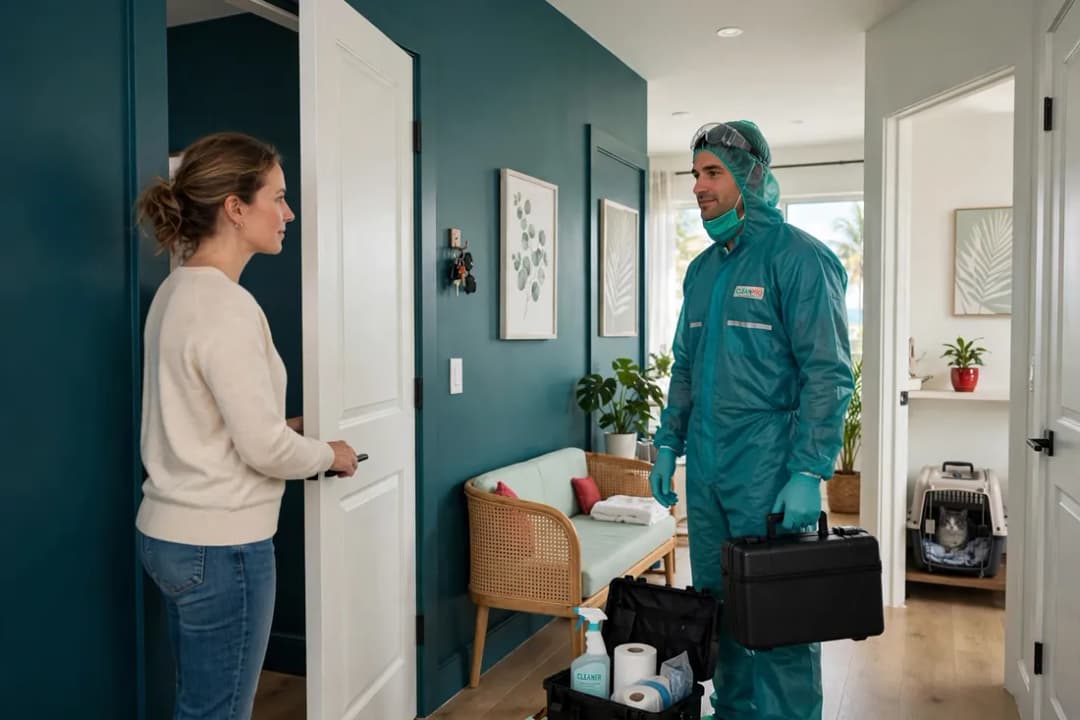
A short briefing saves time and keeps everyone safer. Tell the crew what happened, when it happened, and which rooms or surfaces are affected.
Mention any cleaning already attempted, any pets or children who entered the area, and any HVAC use since the discovery. Mention medical conditions in the household only as far as they affect safety on site.
Our biohazard cleanup team in Miami asks these questions on every call. Clear answers mean faster containment and a more accurate scope.
If blood is involved, our blood cleanup service crews follow the same containment-first approach, with testing for how far contamination traveled below visible surfaces.
Common Mistakes Families Make Before Help Arrives
The most common mistake is cleaning first and calling second. The second is letting children or pets roam through the area while adults decide what to do.
The third is running the air conditioning to clear the smell. Odor control is a professional step, not a fan setting, and spreading air through contaminated ducts makes the job larger.
The fourth is waiting too long to call. Families worry about cost or embarrassment, so hours pass while contamination spreads and dries into porous materials.
Calling early costs nothing. A professional assessment tells you the true scope, and most crews respond within the hour in Miami-Dade County.
For the risks of handling blood yourself, read our guide on whether it is safe to clean up blood yourself. It explains why professional disinfection differs from household cleaning in ways that matter.
Summary
Protecting your family before professionals arrive comes down to four actions: isolate the room, keep children and pets out, do not touch or clean the area, and keep the HVAC system off if ducts may be affected.
Move vulnerable family members to a clean room, note any exposure, and give the crew a clear briefing when they arrive. Early, calm action prevents a contained problem from becoming a house-wide one.
Need help in Miami? Contact Hazard Guard or call (888) 976-0045. Our crews are available around the clock, and the call is free.