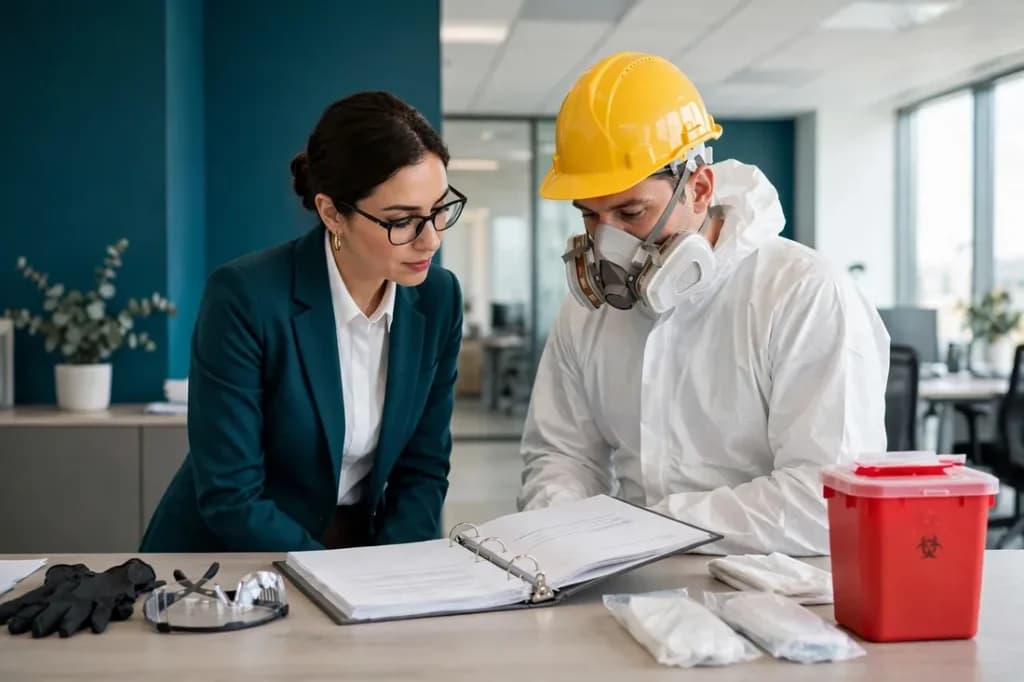
The OSHA Bloodborne Pathogens Standard is the federal rule that protects workers from exposure to blood and other potentially infectious materials. Its official citation is 29 CFR 1910.1030, first issued in 1991 and updated in 2001 under the Needlestick Safety and Prevention Act.
It applies to any employer whose workers may reasonably anticipate contact with blood or other potentially infectious materials, called OPIM. That includes biohazard cleanup crews, first responders, and custodial staff in healthcare settings.
The standard has five core requirements. Every legitimate cleanup company must meet all of them.
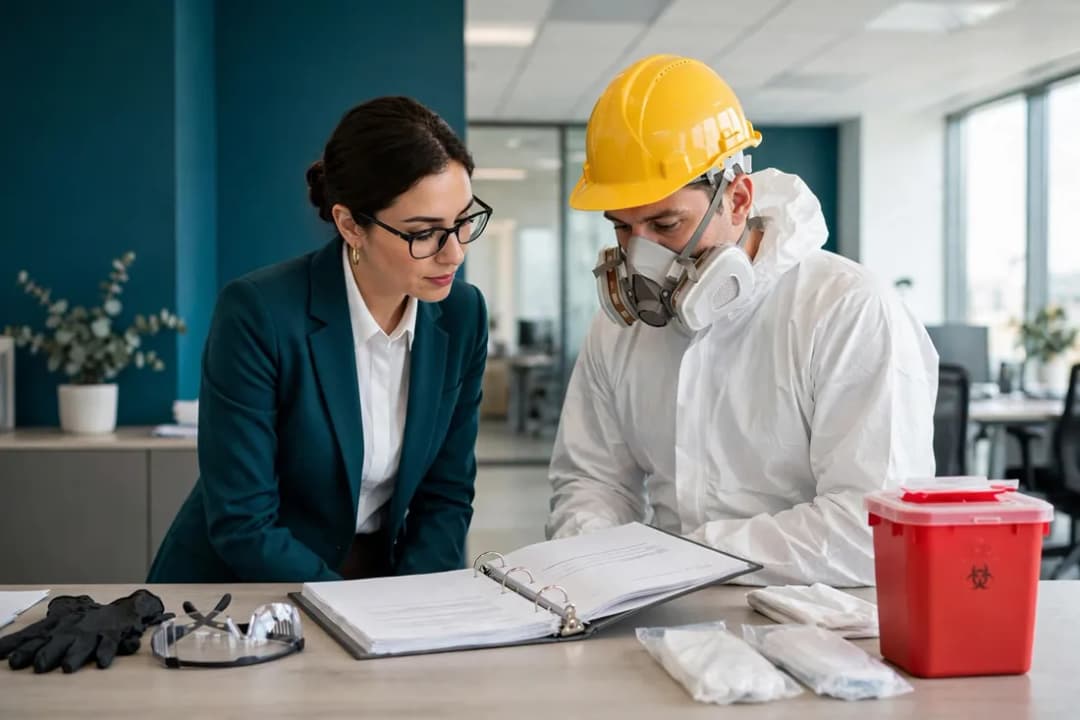
Who the Bloodborne Pathogens Standard Applies To
The standard covers any worker with “occupational exposure.” That means reasonably anticipated skin, eye, mucous membrane, or parenteral contact with blood or OPIM during the performance of duties.
For our industry, that is every field technician. Blood cleanup, trauma scenes, unattended deaths, and sewage backups all involve OPIM. If a company sends crews into those environments without an OSHA-compliant program, it is violating federal law.
OSHA also extends coverage beyond healthcare. Tattoo studios, body art shops, first responders, and custodial staff in medical facilities fall under the same rule. The trigger is the exposure risk, not the industry label.
The 5 Core Requirements of 29 CFR 1910.1030
These are the pillars. I audit against them whenever I review a company’s safety program.
1. Written Exposure Control Plan
Every covered employer must maintain a written exposure control plan. It must identify which job classifications and tasks carry exposure risk, list the PPE required for each task, and spell out exposure control procedures.
The plan must be reviewed and updated at least once a year. It must also be updated whenever new tasks, procedures, or technologies change the exposure picture. A copy must be accessible to all covered employees.
This is where I see the first red flag. I have reviewed safety programs where the “plan” was a generic template downloaded years ago. It listed none of the company’s actual services and had not been updated since the company opened. That fails the standard on its face.
2. Engineering and Work Practice Controls
Employers must use controls that eliminate or minimize exposure at the source. Sharps disposal containers must be available, accessible, and routinely replaced. Contaminated work areas must be cleaned following documented procedures.
Needles must never be recapped by hand. That sounds obvious, but in older cleanup practices it happened routinely. The standard ended it.
Work practice controls also cover hygiene basics. Eating, drinking, smoking, and applying cosmetics are prohibited in areas where occupational exposure may occur.
3. PPE Provision and Enforcement
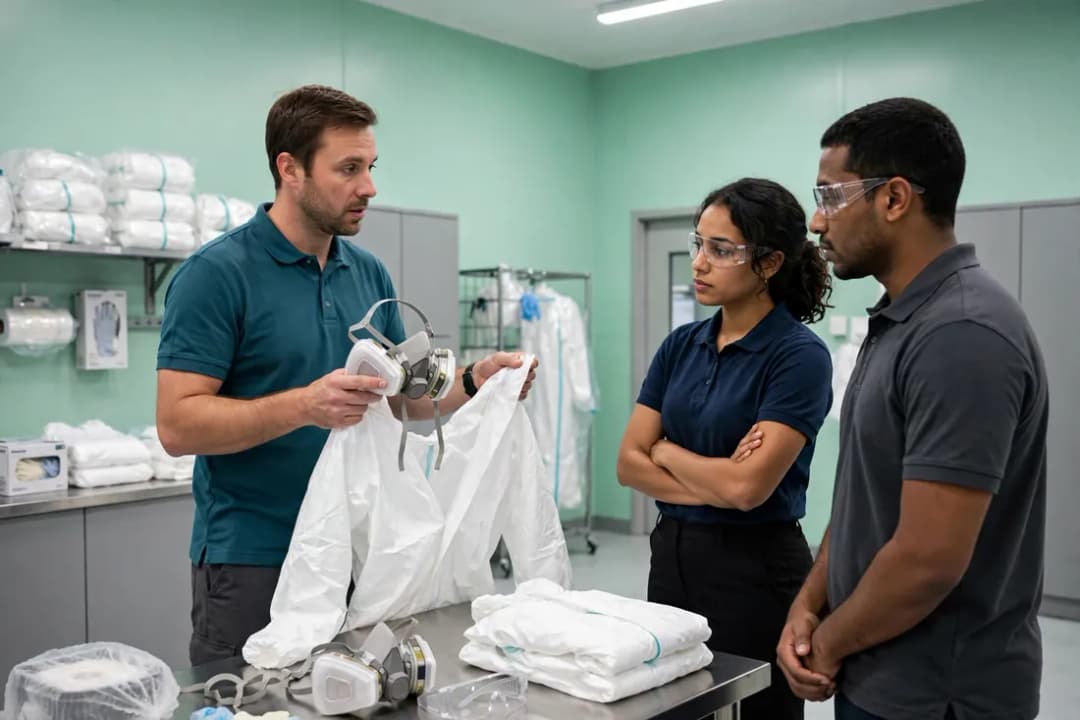
Employers must provide appropriate personal protective equipment at no cost to employees. For biohazard work, that means gloves, fluid-resistant gowns or suits, eye protection, and face shields or masks as the task requires.
Providing PPE is only half the obligation. Employers must also enforce its use. A company that hands out respirators but lets technicians work without them is not compliant.
The PPE must be appropriate for the specific task. Latex exam gloves at a trauma scene with heavy contamination do not meet the bar. Double nitrile gloves, respirators, and full suits are the professional standard.
4. Hepatitis B Vaccination Offer
Employers must offer the hepatitis B vaccine to all employees with occupational exposure, at no cost, within 10 working days of initial assignment. This is a firm deadline, not a suggestion.
Employees may decline, but only by signing a specific OSHA-required declination statement. If they later change their minds, the employer must still provide the vaccine.
This is the requirement cleanup companies fudge most often. I have audited firms where technicians worked for months with no vaccination offer on file. Some owners treat the vaccine as optional. It is not optional for the employer to offer it. That is a citation waiting to happen.
5. Training, Post-Exposure Follow-Up, and Recordkeeping
All covered employees must receive training at the time of initial assignment and annually thereafter. Training must cover the regulation itself, the epidemiology of bloodborne diseases, exposure routes, PPE use, post-exposure procedures, and regulated waste handling.
If an exposure incident occurs, the employer must provide a confidential medical evaluation and follow-up. The employer must also document the incident and maintain records of training sessions.
The full text of the standard is published on the OSHA website (29 CFR 1910.1030). Any safety professional or company owner should read it directly, not rely on summaries.
What This Standard Means for Property Owners Hiring a Cleanup Company
You are not regulated by this standard. Your cleanup company is. But the standard gives you a powerful vetting tool.
Ask these questions before hiring:
- Do you maintain a written exposure control plan, and can I see the current version?
- When did your technicians last complete bloodborne pathogens training?
- Do you document hepatitis B vaccination offers for every field worker?
- What PPE do your crews wear on a typical blood cleanup job?
A legitimate company answers immediately and shows documentation. A company that hesitates or waves the question away has told you everything you need to know.
This is the same lens I use when reviewing our own programs. The standard does not reward companies that cut corners. It protects the workers who walk into the worst situations in your property.
Common Compliance Gaps We See on the Ground
Across this industry, the same gaps repeat:
- Generic exposure control plans never tailored to the company’s actual work
- Annual plan updates that never happen, year after year
- Training certificates that cannot be found when an incident occurs
- PPE inventories that look right on paper but run out mid-job
- No documented post-exposure procedure, so a needlestick becomes chaos instead of a protocol
These gaps are not abstract. They determine whether a crew handles your property safely or creates a second hazard while trying to fix the first one.
The broader regulatory landscape is covered in our guide to who regulates biohazard cleanup, and our biomedical waste disposal chain explains what happens to waste after it leaves your property.
Summary
The OSHA Bloodborne Pathogens Standard (29 CFR 1910.1030) requires covered employers to maintain an exposure control plan, use engineering and work practice controls, provide and enforce PPE, offer hepatitis B vaccination, and deliver training plus post-exposure follow-up.
It is the backbone of safe biohazard work. When you hire a cleanup company, their compliance with this standard is the single best indicator of how seriously they take safety.
Need help in Miami? Contact Hazard Guard or call (888) 976-0045. Our crews are available around the clock, and the call is free.