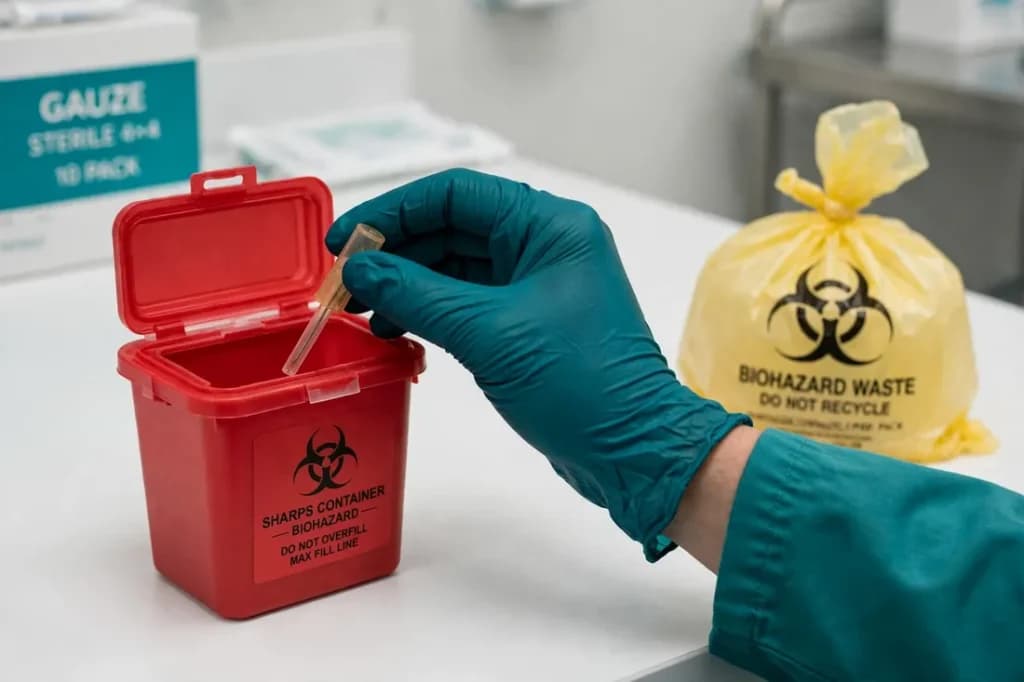
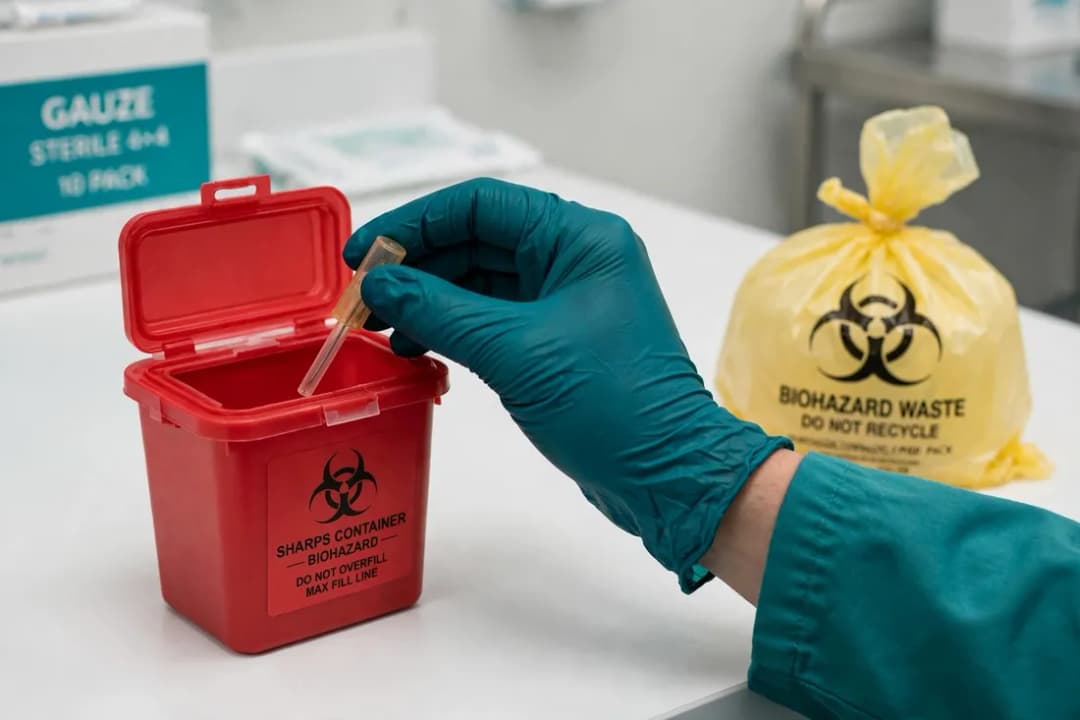
A sharp found at home is any needle, syringe, lancet, or broken glass item that can puncture skin and may carry bloodborne pathogens. Handle it safely by never touching it with bare hands, picking it up with tongs or a gloved hand, placing it point first into a rigid puncture proof container, sealing that container, and disposing of it through a proper sharps program. Never recap a needle, never bend it, and never put it in household trash.
That short sequence protects you from the two real risks: a puncture injury and exposure to bloodborne pathogens such as hepatitis B, hepatitis C, or HIV. Most home needle injuries I investigate happen in the first ten seconds, when someone grabs the item out of surprise instead of stopping to get a container.
The Safe Rule for Any Needle Found at Home
Treat every found needle as if it were used. You cannot tell from looking whether it carries blood or infectious material.
That single rule drives every step below. It also explains why household trash is never an option. A loose needle in a trash bag can injure a family member, a housekeeper, or a waste worker hours later.
If children or pets are nearby, clear them from the area first. Then get your container and protection before you touch anything.
What Counts as a Sharp
Sharps are not only medical syringes. In Miami homes, I have found all of these in drawers, yards, and rental cleanouts.
- Hypodermic needles and syringes, with or without a cap
- Insulin pens, lancets, and auto injectors
- Broken glass vials and ampoules that held medication
- Razors and scalpel blades left loose in a bathroom or bedroom
- Tattoo needles and piercing needles found in a rental unit
If an object can puncture skin and may have contacted blood or body fluid, treat it as a sharp. When in doubt, use the same safe pickup method.
Our guide to the types of biohazard waste explains where sharps sit in the regulated waste stream, and why they are segregated from ordinary trash.
The Safe Pickup Method, Step by Step
Work slowly. Speed is how punctures happen.
Stop and Assess the Area
Look before you reach. Check whether there are more sharps nearby, broken glass, or spilled liquid.
On a Hialeah rental cleanout, a crew found one syringe on a nightstand and four more tucked inside a shoebox in the same closet. One visible needle often means more are nearby.
If the area also has blood, bodily fluids, or drug residue, stop and call a professional crew. That is a biohazard cleanup job, not a single sharp pickup.
Gather Protection and a Rigid Container
Put on sturdy gloves. Thick work gloves or nitrile gloves over work gloves are better than thin latex alone.
Use a rigid, puncture proof container with a lid. A commercial sharps container is best. A sturdy laundry detergent bottle or a thick plastic bottle with a screw cap works as a backup. Never use a plastic bag, a paper cup, or a thin food container.
Keep the container beside the sharp, not across the room. You want the shortest possible carry distance.
Pick It Up Without Touching the Point
Use tongs, pliers, or a dustpan and brush to lift the sharp. If you must use a gloved hand, grip the barrel or the capped end only, never the needle end.
Place it point first into the container. Do not force it in, and do not push it down with your fingers.
Never recap a used needle. The Occupational Safety and Health Administration prohibits recapping in workplace settings for exactly this reason: recapping is a leading cause of needlestick injuries. The same logic applies at home.
Seal, Label, and Store the Container
Close the lid tightly and tape it shut if the container is a household bottle. Label it clearly with the words “SHARPS, DO NOT RECYCLE.”
Store it upright, out of reach of children, until disposal. Do not overfill it. When a sharps container reaches about three quarters full, seal it and start a new one.
Mistakes That Cause Most Needle Injuries
The errors I see most often are small, fast, and avoidable.
- Grabbing the needle bare handed out of surprise or embarrassment
- Recapping a needle before disposal, which puts fingers directly in the path of the point
- Dropping a loose needle into a trash bag or a pocket “for now”
- Letting children or pets stay in the room while an adult searches for more sharps
- Using a thin bag or cup that a needle can puncture on the way to the trash
If you have already made one of these mistakes and suffered a puncture, move to the next section immediately. Do not wait to see whether symptoms appear.
What to Do After a Needle Stick Injury
A needle stick needs same day medical attention, even when the wound looks minor. The risk is infection, not the size of the puncture.
Immediate First Aid
Wash the wound right away with soap and running water for several minutes. Let it bleed briefly on its own, then cover it with a clean bandage.
Do not squeeze the wound hard, do not apply bleach or harsh disinfectants, and do not try to suck out blood. Those actions damage tissue and do not reduce infection risk.
Get Medical Care the Same Day
Go to urgent care, an emergency department, or your doctor the same day. Tell them exactly what happened: the type of sharp, whether it was used, and how long ago the exposure occurred.
Clinicians assess the need for hepatitis B post exposure treatment, HIV post exposure prophylaxis, and tetanus updating. Timing matters. HIV post exposure prophylaxis works best when started within hours, not days, according to the Centers for Disease Control and Prevention.
If the sharp came from a known person, medical staff may ask about testing that person, with consent. If the source is unknown, clinicians base decisions on the exposure type and local risk.
Watch, Document, and Follow Up
Keep the sealed container if you can do so safely. Do not reopen it. Note the date, time, location, and what the sharp looked like.
Attend every follow up appointment, even if you feel fine. Bloodborne infections often show no early symptoms. Follow up testing is how clinicians confirm you are clear.
Disposal Options in Miami
A sealed sharps container does not go in your household trash or recycling bin. Florida biomedical waste rules require sharps to be segregated and handled through a permitted route, and loose sharps in trash create liability for whoever handles the bag next.
Start with these options in Miami-Dade County.
- Pharmacy and clinic take back programs: many pharmacies and clinics accept sealed sharps containers from households. Call ahead to confirm acceptance and hours.
- Household hazardous waste and community collection events: Miami-Dade County runs collection programs that accept household sharps. Check the county schedule before you go.
- Mail back sharps programs: licensed mail back kits let you ship a sealed container to a permitted treatment facility. Follow the kit instructions exactly.
- Professional pickup: if you found many sharps, a crime scene, or drug related waste, a professional crew can remove and manifest the waste lawfully.
Never flush sharps down a toilet, never burn them, and never leave a sealed container on a curb or in a public bin. If you are unsure which route fits your situation, our blood cleanup team in Miami can advise you by phone before you transport anything.
For the broader first response picture, our guide on first steps after discovering a biohazard at home covers isolation, documentation, and when to call for help.
When to Call a Professional Crew
Handle a single, clearly visible sharp yourself using the method above. Call a professional crew when the situation goes beyond that.
- Multiple sharps scattered through a room, a yard, or a rental unit
- Sharps mixed with blood, bodily fluids, or drug residue
- A needle found after a death, an overdose, or a crime scene investigation
- Sharps in a hoarding home, where more hazards are hidden under clutter
- A child or pet may already have been exposed
In those cases, crews work in full PPE, search systematically for additional sharps, decontaminate surfaces, and remove waste through a licensed transporter with a manifest trail. That documentation also matters for landlords and insurers.
Summary
A needle or sharp found at home is handled safely by treating it as used, never touching it bare handed, picking it up with tongs or a gloved hand, placing it point first into a rigid puncture proof container, and disposing of that container through a proper sharps program. Never recap a needle, never use a bag or thin container, and never put sharps in household trash.
After any needle stick, wash the wound, get same day medical care, and attend follow up testing. For multiple sharps, blood, or drug related waste, call a professional crew rather than handling it alone.
Found a sharp in a Miami home and unsure whether it is safe to handle? Contact Hazard Guard or call (888) 976-0045 for guidance around the clock.