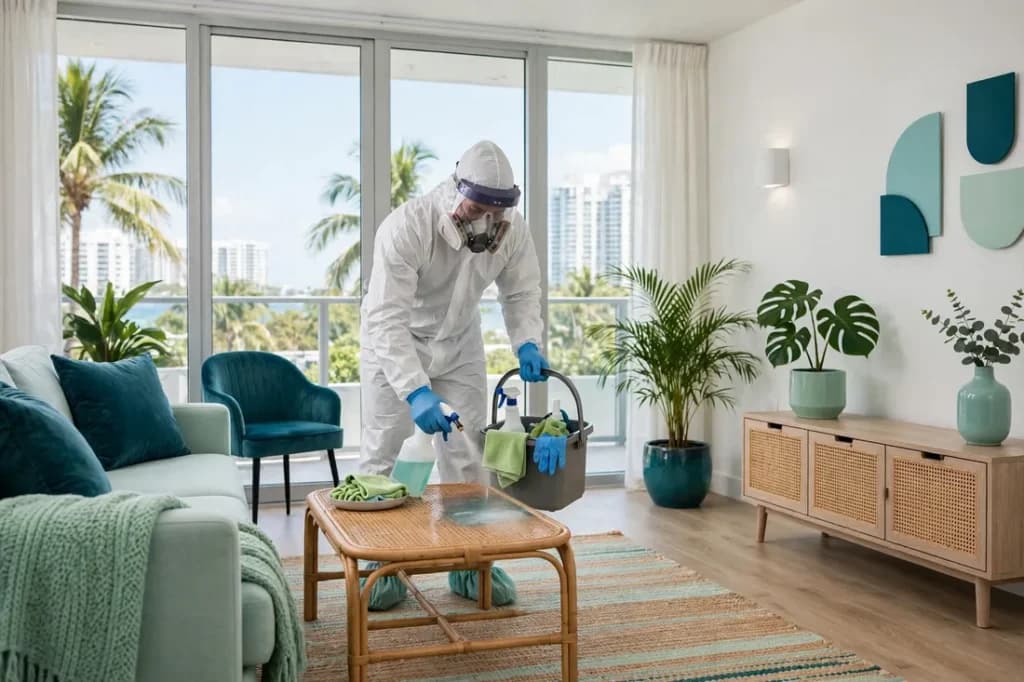
Short-term rental biohazard cleanup is the professional remediation of a vacation rental or Airbnb-style unit after blood, bodily fluids, sewage, drug residue, or a death has contaminated it. Hosts carry a legal duty to provide a safe unit, a platform duty to disclose and remediate, and a business duty to turn the unit over fast without cutting corners on safety.
The core rule is simple. A unit with biological contamination cannot go back on the market until trained crews have remediated it and verified it safe.
Host Duties After a Biohazard Event in a Short-Term Rental
A host’s first duty is safety, not the next booking. Close the unit, keep guests and cleaners out, and do not let a regular housekeeper handle blood or bodily fluids. Housekeepers are not trained or equipped for biohazard work, and asking them to handle it exposes them to pathogens and exposes you to liability.
Your second duty is disclosure. Platforms like Airbnb require hosts to report safety incidents and to keep a unit off the market until the issue is resolved. Local rules add another layer. Miami-Dade County and the City of Miami both regulate short-term rentals, and a unit tied to a police investigation stays closed until law enforcement releases it.
Your third duty is documentation. Photograph the scene before cleanup, keep the police report number if one exists, and get a written scope from the cleanup company. That file protects you with the platform, the insurer, and the next guest.
Turnover Steps That Protect Guests and Hosts
A safe short-term rental turnover after a biohazard event follows a fixed sequence. Assessment comes first. A professional crew maps the contamination, including what wicked into carpet padding, subflooring, or drywall. Guests walk on surfaces, and contamination spreads through foot traffic in ways a visual check misses.
Containment comes next. Barriers and negative air pressure keep contamination out of hallways and neighboring units. In a condo building, that matters twice over, because shared HVAC can carry particles to other units.
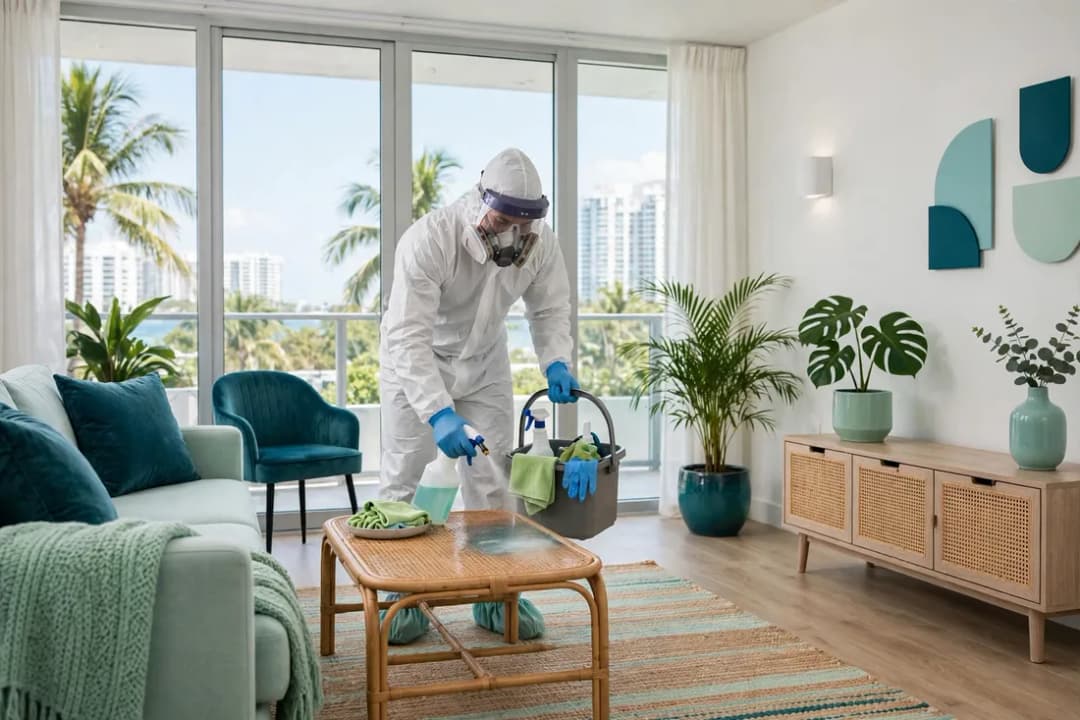
Removal, disinfection, and deodorization follow the same professional standard as any biohazard cleanup job. EPA-registered disinfectants are applied at label dwell times. Porous materials that absorbed contamination are cut out and disposed of through a licensed medical-waste transporter.
Verification closes the job. A reputable crew confirms the space is safe before it reopens. Ask for that confirmation in writing. A platform dispute or an insurance claim without it is much harder to win.
Common Short-Term Rental Biohazard Scenarios
Sewage backups are the most frequent scenario in Miami rentals. A backed-up toilet or a failed drain floods a bathroom with Category 3 black water. The unit is uninhabitable until remediation and moisture verification are complete. Rushing it back online risks mold growth and a guest illness complaint.
Injuries and deaths are rarer but heavier. A guest injury that leaves blood, a drug overdose, or an unattended death all require professional trauma cleanup after police or the medical examiner releases the scene. Hosts sometimes learn about these events from a neighbor or a welfare check, not from the guest.
Drug residue is the quiet scenario. Meth or fentanyl residue has no smell a guest would notice, but it is a real health risk, especially for children. If a stay raises suspicion, residue testing before the next booking is cheap insurance.
Platform Rules, Insurance, and Liability Exposure
Platform host-protection programs are not a substitute for insurance. Airbnb’s Host Protection Insurance and similar programs have exclusions, documentation requirements, and claim deadlines. A host who cleans first and reports later can lose coverage. Report the incident to the platform the same day, in writing, and keep the case number.
Your own insurance matters just as much. A standard homeowners policy usually excludes short-term rental activity. A landlord policy may exclude it too. Hosts need a policy that explicitly covers short-term rental use, or a commercial rider, or the gap falls on them personally.
Liability is where hosts underestimate exposure. Renting a unit you know or should know is contaminated can support a negligence claim from the next guest. That is why the written verification from the cleanup crew matters. It is your evidence that the unit was safe when it reopened.
For the broader landlord playbook, our guide to rental turnover after biohazard cleanup covers readiness standards, and the tenant death rental checklist covers the legal and practical steps when someone dies in a unit.
Downtime Costs and How Hosts Recover Them
Every closed night is lost revenue, and a biohazard remediation can close a unit for days. Hosts recover downtime in three places. First, the platform’s host-protection program, if the incident qualifies. Second, their own short-term rental insurance, if it includes loss of income. Third, the responsible guest’s liability, where a guest caused the damage.
Document the loss as carefully as the cleanup. Keep the booking calendar showing blocked nights, the nightly rate, and any platform cancellation penalties. Adjusters pay documented losses. They discount estimates.
One practical tip from the field: never promise a reopening date to the platform or to future guests before the crew gives you one. A missed reopening date creates a second dispute on top of the first.
Summary
Short-term rental hosts must close a contaminated unit, keep untrained cleaners out, report to the platform, and hire professional remediation with written verification before reopening. Sewage, injuries, deaths, and drug residue are the scenarios to plan for, and platform coverage plus proper short-term rental insurance decide who pays.
Protect your guests, your reviews, and your liability by doing it right the first time. If a Miami short-term rental needs professional cleanup, contact Hazard Guard or call (888) 976-0045. Our crews respond around the clock and document every job for your platform and insurance claims.