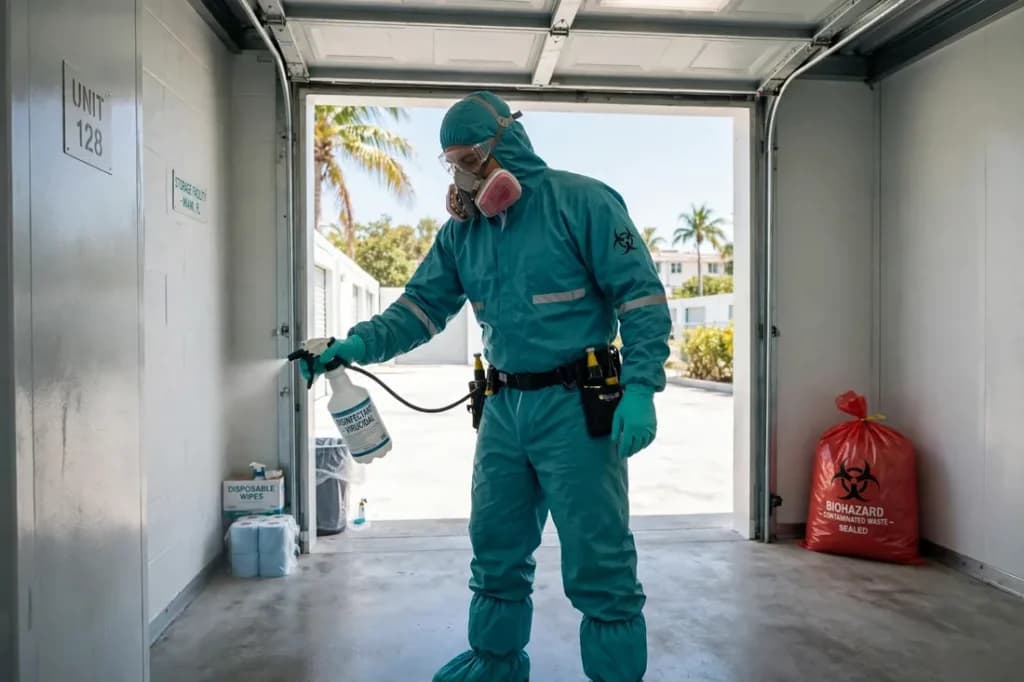
Storage unit and garage biohazard cleanup is the professional removal, decontamination, and lawful disposal of biological hazards from storage spaces. That means blood, bodily fluids, animal waste, decomposition residue, drug paraphernalia, and sewage contamination in units, garages, and sheds.
These spaces hide hazards longer than rooms people use every day. A closed unit in Miami heat can sit for months before anyone opens the door.
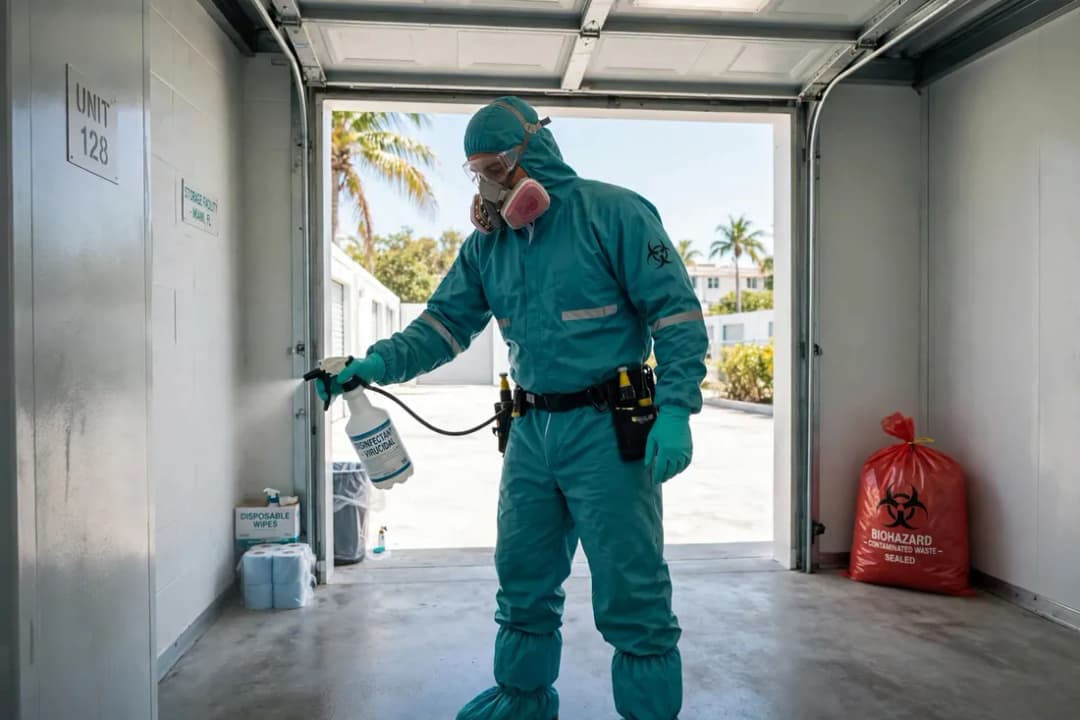
Storage Unit and Garage Biohazard Cleanup Covers More Than Clutter
Most people picture a messy garage. The real job is different. Biohazard cleanup starts where ordinary junk removal stops, at the point contamination makes a space unsafe to enter without protection.
A storage unit or garage becomes a biohazard job when it holds blood or bodily fluids, animal waste and carcasses, decomposition, drug residue and sharps, sewage, or mold colonies fed by trapped moisture. Any one of these turns a cleanout into regulated work.
Our biohazard cleanup team in Miami treats these jobs like any other contaminated property. We assess first, contain the space, remove what cannot be saved, disinfect what can, and dispose of waste through a licensed transporter.
The setting changes the tactics, not the standard. The same OSHA Bloodborne Pathogens Standard (29 CFR 1910.1030) applies in a storage facility in Doral as it does in a living room in Coral Gables.
Common Hazards Found in Storage Units and Garages
Storage spaces collect hazards quietly. Nobody watches them daily, so problems grow undisturbed. These are the ones my crews find most often.
Animal Waste and Pest Contamination
Rodents and raccoons get into units through gaps around roll-up doors. They nest in boxes, chew through bags, and leave droppings and urine across everything.
Droppings carry disease risk. The CDC notes that rodent waste can transmit hantavirus and leptospirosis. We treat any space with heavy droppings as contaminated, not dirty.
A common mistake is sweeping it dry. That throws contaminated dust into the air. Pros wet it down first, then remove it in sealed bags while wearing respirators.
Decomposition and Unattended Death
People die in garages. It happens more than anyone wants to admit. Cars, heat, and isolation make garages a real location for unattended deaths and suicides.
Storage units hold a different version of the same problem. Families store a loved one’s belongings after a death, then discover mold, pests, or fluids on items packed years ago.
Our unattended death cleanup service handles these scenes with the same discretion and process as a home interior. The location is secondary. The contamination is what matters.
Drug Residue and Sharps
Garages and storage units are common places to stash drugs and paraphernalia. We find needles, pipes, and chemical residue in units rented under someone else’s name.
Fentanyl residue is the serious one. It can be dangerous through skin contact and inhalation in enclosed spaces. Crews test before they touch, and they never sort loose items by hand without gloves.
If you open a unit and see needles or white powder, stop. Close the door and call a professional. Do not move anything.
Mold, Sewage, and Water Damage
Miami garages flood. Storm surge, heavy rain, and broken pipes push water under doors. The water sits, the humidity stays high, and mold colonizes cardboard and fabric within days.
Sewage backups are worse. Category 3 black water carries bacteria and viruses, and it soaks into everything porous. A garage full of sewage-soaked boxes is a biohazard job, not a weekend cleanout.
Miami Heat and Humidity Make These Spaces Worse
A closed storage unit in Miami in August is an oven. Interior temperatures climb past 120 degrees Fahrenheit. Heat accelerates decomposition, bakes odors into concrete, and speeds mold growth.
Humidity does the rest. Moisture condenses on metal doors and concrete floors overnight. Cardboard wicks it up. Within weeks, boxes at the bottom of a stack are soft, stained, and colonized.
I worked a unit in Hialeah last summer where the renter had not opened the door in two years. The front boxes looked fine. Behind them, a roof leak had soaked the back wall for months. The mold had spread across a full wall of furniture.
That is the pattern in this city. What you see from the doorway tells you almost nothing. Pros assess the full space, including behind stacks and under pallets, before anyone starts moving things.
Ventilation matters too. Most storage units have none. Garages often have one small vent, or none at all. Airborne particles stay suspended longer in still air, which is why crews isolate the space and wear respirators even when the visible mess looks small.
The Professional Cleanup Process for Storage Spaces
The sequence is the same as any biohazard job, adapted to the space. Here is how my crews work a unit or garage.
1. Assessment and Testing
We walk the space and map contamination. We test surfaces where drug residue or decomposition is suspected. We check for structural hazards like sagging shelves or unstable stacks.
Nothing moves until the assessment is done. Moving boxes before testing spreads contamination to clean areas.
2. Containment
We seal the doorway with plastic sheeting and set up negative air pressure where the layout allows. In a storage facility, this also protects the units on either side.
Neighbors matter here. A unit shares walls and air with other renters’ property. Containment is as much about their belongings as yours.
3. Sorting and Removal
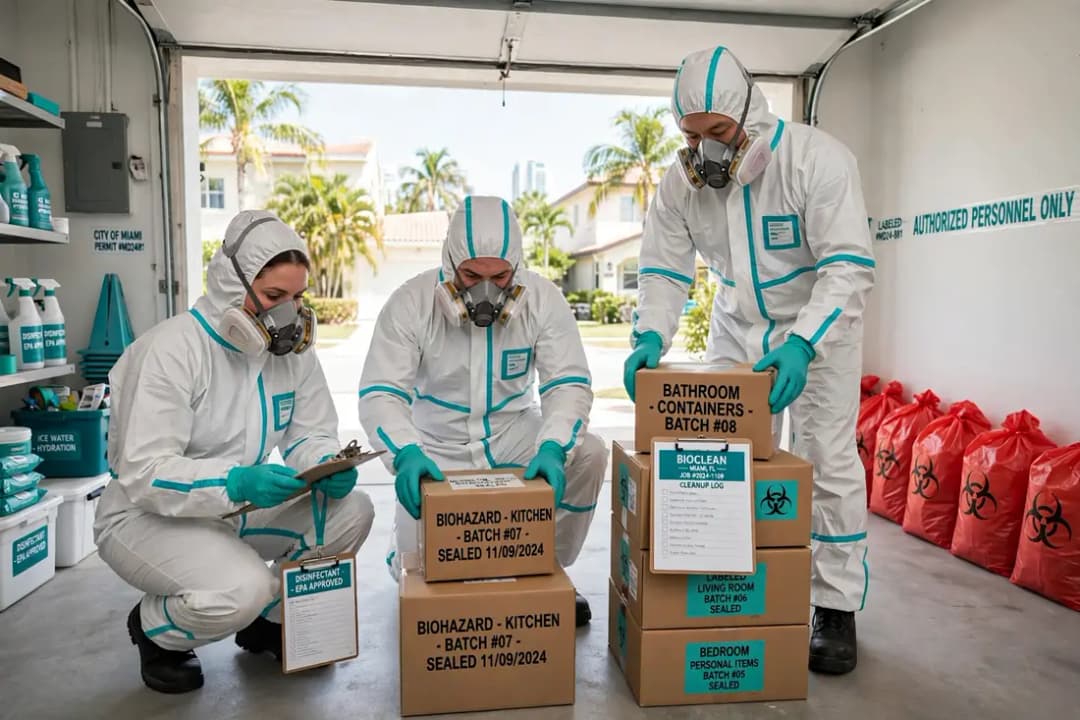
Contaminated porous items get bagged and removed: soaked cardboard, stained fabric, animal-soiled mattresses. Non-porous items like metal shelving and sealed plastic bins get treated and kept where possible.
When a unit has crossed from clutter into hoarding, our hoarding cleanup service handles the staged sorting process with the same care.
Every bag is labeled and staged for licensed disposal. Household trash cannot legally take biohazardous waste in Florida. Our guide to the 4 types of biohazard waste explains what goes into each waste stream.
4. Cleaning and Disinfection
Surfaces are cleaned first, then treated with EPA-registered disinfectants at label-directed dilutions and dwell times. Concrete floors get special attention. Porous concrete absorbs fluids, so we use enzyme treatments before disinfection.
Dwell time is the part most people skip. A disinfectant needs wet contact time, usually 3 to 10 minutes, to actually kill pathogens. Spray and wipe is not disinfection.
5. Odor Removal and Verification
Enzyme treatments and hydroxyl generators neutralize odor at the source. We verify with moisture meters and visual inspection before calling the job done.
For a storage unit, verification matters twice over. The facility manager will inspect the unit before it goes back on the market. A clean verification report protects the renter from damage claims.
Storage Unit Rules and Who Is Responsible
Responsibility depends on who rented the unit and what the lease says. Three parties show up in these jobs.
The renter is usually responsible for the contents and the condition of the unit. If contamination came from their belongings, the cleanup cost is theirs. Their renters insurance or homeowners policy may cover part of it, depending on the cause.
The facility operator owns the structure. Under Florida’s self-storage facility law, Chapter 83, Part III, Florida Statutes, operators can lien and dispose of abandoned unit contents after notice. That does not make them responsible for a renter’s biohazard, but they can deny access until the unit is professionally cleaned.
Landlords face the same question with garages in rental homes. A tenant’s abandoned belongings, or a death in a rental garage, falls on the property owner to resolve before the next tenant moves in. Our guide on rental turnover after biohazard cleanup covers that process in detail.
The practical rule is simple. Whoever controls the space hires the crew. Insurance and liability get sorted after the space is safe.
What Gets Saved, Cleaned, or Thrown Away
Families ask this first, every time. The answer depends on the material and the contamination level.
Metal, glass, and sealed hard plastic can usually be disinfected and kept. Solid wood furniture can often be treated, though porous finishes absorb fluids and odors.
Cardboard, fabric, mattresses, and upholstered furniture soaked in fluids or waste almost never survive. They are porous, they hold pathogens, and no amount of surface cleaning reaches the interior.
Paper documents and photos are the hardest calls. If they matter, we isolate them and advise on professional document recovery. We never throw away keepsakes without the owner’s decision.
The short version is this: if it absorbed contamination, it goes. If it can be fully disinfected, it stays.
Garage Cleanup After a Death or Trauma Event
A garage is often where a family finds a loved one. That makes these jobs emotionally different from a storage cleanout. The crew’s job is to restore the space while giving the family room to grieve.
We work discreetly. Unmarked vehicles, no scene discussion with neighbors, and a single point of contact for the family. We photograph everything before removal, so the family has a record for insurance and for their own peace of mind.
Timing matters. Law enforcement must release the scene before cleanup begins. Once released, crews can usually start the same day. Fast response matters in Miami heat, where decomposition accelerates within hours.
If the garage belongs to a rental property, the landlord’s obligations start the moment the scene is released. Delay adds odor damage to the structure and extends the vacancy.
What Not to Do Before the Crew Arrives
Good intentions cause most of the secondary damage we see. Avoid these mistakes.
Do not open every box to see what is inside. Each opened box spreads contamination and releases trapped odor.
Do not sweep or vacuum droppings, dust, or debris. Dry sweeping aerosolizes pathogens. Leave it for the crew.
Do not spray household bleach on large areas. Bleach does not remove the proteins blood leaves behind, and it reacts badly with some chemical residues. It also gives a false sense of safety when the stain fades but the pathogens remain.
Do not move contaminated items into your home or car. A box carried into a clean living room moves the problem with it.
Do keep people and pets out of the space. Close the door, and if the unit is in a shared facility, tell the manager so neighboring units can be protected.
Summary
Storage unit and garage biohazard cleanup is professional remediation of biological hazards in spaces that sit closed, hot, and unwatched. Animal waste, decomposition, drug residue, sewage, and mold are the common hazards, and Miami heat and humidity make all of them worse.
Pros assess before moving anything, contain the space, remove what cannot be saved, disinfect with EPA-registered products at proper dwell times, and dispose of waste through licensed transporters. Renters usually bear the cost, facility operators control access, and landlords handle rental garages.
If you have opened a unit or garage and found something you should not handle yourself, stop and close the door. Contact Hazard Guard or call (888) 976-0045. Our crews respond 24/7 across Miami-Dade County, and the call is free.