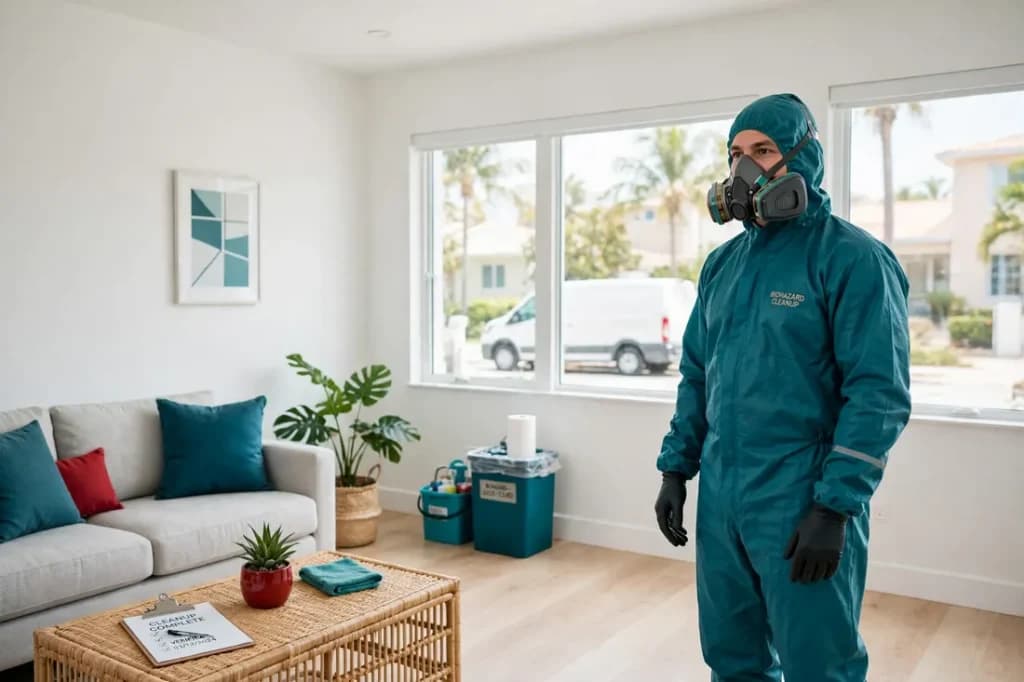
Suicide cleanup is the professional, discreet remediation of a home after a death by suicide, carried out by trained crews who remove biological hazards, disinfect affected areas, and restore the space safely. It is handled with privacy, care, and respect for the family, never as a routine cleaning job.
The work follows the same safety standards as other trauma cleanup. It adds one thing that matters just as much: compassion for the people left behind.
The First Call Sets the Tone
The first call is usually made by a family member, a landlord, or a property manager. The person calling is often exhausted and distressed.
Our job on that call is simple. Listen first, then explain clearly what happens next.
We confirm that law enforcement and the coroner have released the scene. Cleanup cannot begin before that release, and we never pressure a family to rush it.
We also arrange discreet arrival. Our vehicles are unmarked, and crews keep a low profile at the property. Neighbors do not need to know why we are there.
Privacy and Discretion Come First
Discretion is not a marketing claim for us. It is a working rule on every suicide cleanup job in Miami.
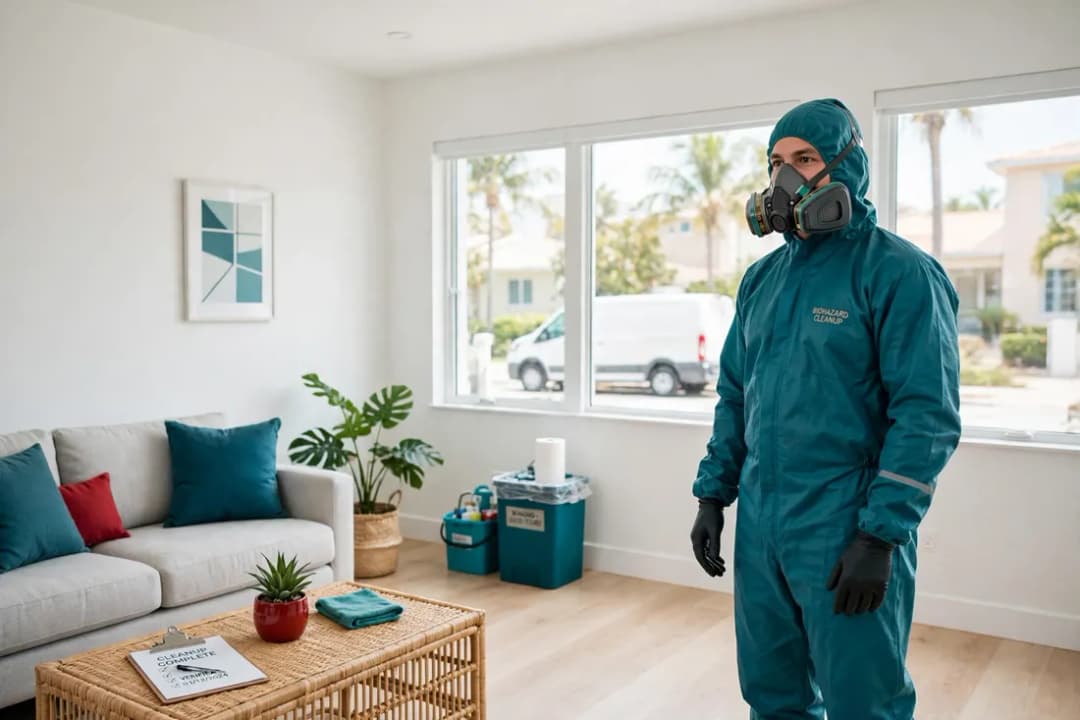
Crews arrive in unmarked vehicles and wear no logos that draw attention. We work quietly, keep doors closed, and avoid discussing the job with anyone outside the family or the authorized contact.
Inside the home, we treat personal belongings with care. Items that can be cleaned are cleaned. Items that cannot be made safe are bagged discreetly and handled exactly as the family directs.
One lesson from the field: families remember how they were treated long after they forget the technical details. A calm, respectful crew makes an unbearable week slightly easier to carry.
The Cleanup Process Step by Step
Suicide cleanup follows a careful, documented sequence. Every step protects the people who will live in the home next.
Assessment and Containment
We walk the scene and map every affected area. Contamination often reaches further than it appears to, through flooring, subflooring, and fixtures.
Containment barriers go up before any removal begins. This keeps unaffected rooms clean and limits odor migration through the home.
Removal of Contaminated Materials
Porous materials that cannot be disinfected are removed: carpet, padding, affected drywall, and soft furnishings. Each item goes into labeled biohazard bags for regulated disposal.
Nonporous surfaces are treated, not discarded. The goal is to save what can be saved safely, and to remove only what must go.
Cleaning, Disinfection, and Odor Treatment
Surfaces are cleaned first, because disinfectants cannot work through organic matter. Then we apply EPA-registered disinfectants at label-directed dwell times.
Odor treatment follows, using enzyme treatments and hydroxyl generation to neutralize odor at the source. We never mask odor with fragrance.
Verification Before Handover
We verify the space before calling the job complete. That means a visual check, a check of treated surfaces, and confirmation that waste has left through a licensed transporter.
Families receive a clear summary of what was done. That record also helps with insurance claims and landlord documentation.
Families Do Not Need to Clean the Scene Themselves
Families sometimes feel they should clean up themselves, out of love, guilt, or a wish to protect others from the task. That instinct is understandable, and it is one we gently talk people out of.
Bloodborne pathogens can remain viable in porous materials for days, according to the CDC. Household cleaners cannot reliably disinfect what has soaked below a surface.
There is also the emotional cost. Cleaning a loved one’s room after a suicide is a traumatic task, and it stays with people. Letting a professional crew carry that part is not avoidance. It is self protection.
Our suicide cleanup service in Miami exists so families do not have to face that room alone.
What the Law Requires Crews to Do
Professional cleanup in Florida follows OSHA’s Bloodborne Pathogens Standard (29 CFR 1910.1030). Crews work under an exposure control plan, with proper PPE, training, and hepatitis B vaccination offered to workers.
Biohazardous waste must be segregated, labeled, and removed by a licensed medical waste transporter. It never goes into household trash.
These rules protect the crew, the family, and the next occupants of the home. A company that skips them is cutting corners on safety, not saving you money.
Timing and What to Expect on Cost
Cleanup usually begins the same day the scene is released, and most single-room jobs finish within one day. Larger or multi-room scenes can take two days or more.
Cost depends on the size of the affected area, the materials involved, and whether flooring or fixtures must be removed. A reputable company gives a written scope and price before work begins, never an open-ended hourly tab.
If you are dealing with insurance, document everything: photos, the written scope, and the final invoice. Our guide to crime scene cleanup costs explains who typically pays and what assistance programs may help.
Support for the People Left Behind
Cleanup restores a room. It does not resolve grief, and no crew should pretend otherwise.
If you or someone close to you is struggling after a loss, the 988 Suicide and Crisis Lifeline is available around the clock in the United States, by call or text to 988. Local grief counselors and support groups in Miami-Dade County can also help in the weeks that follow.
Our guide on supporting someone after a traumatic loss offers practical ways friends and family can help without saying the wrong thing.
On our side, we keep the process simple: one point of contact, clear updates, and no unnecessary decisions forced on a grieving family.
How Suicide Cleanup Differs From General Trauma Cleanup
The technical steps overlap with other trauma cleanup work. The human side is where suicide cleanup differs most.
Families often carry guilt alongside grief, and they worry about stigma. A crew that understands that works more quietly, explains less graphically, and never treats the home like a crime scene exhibit.
The full crime scene cleanup process explains the technical sequence in detail. The difference here is tone: privacy, patience, and respect at every step.
For landlords and property managers, the same duty applies. A unit must be professionally cleaned and verified before it is shown or relet, and the family of the deceased deserves the same discretion as any other household.
Summary
Suicide cleanup is professional, discreet remediation after a death by suicide: assessment, containment, removal, disinfection, odor treatment, and verified handover. It protects health, follows OSHA and Florida waste rules, and spares families a traumatic task they should never have to carry alone.
If you need help in Miami, Contact Hazard Guard or call (888) 976-0045. Our crews respond around the clock, arrive discreetly, and the call is free.