Homicide cleanup is the professional remediation of a home or property after a homicide, carried out once law enforcement releases the scene, by trained crews who remove biological hazards, disinfect affected areas, and restore the property safely. It begins only after police release, and it follows a documented process from assessment to verified handover.
No family or property owner should face that work alone. The scene is distressing, the contamination is often hidden, and the legal and insurance paperwork matters.
Cleanup Begins Only After Police Release
Police release is the hard line. Until investigators and the coroner finish their work, the scene belongs to the investigation, and no cleanup crew may enter or disturb it.
Release can take hours or days, depending on the investigation. Once it is given, cleanup can usually begin the same day.
One practical tip from the field: ask for the release in writing, or at least note the name of the officer who gave it and the time. That note prevents confusion later, especially when an insurer or a landlord asks when work was authorized to start.
Our guide on crime scene cleanup after police release explains the timing question in more detail, including what to do while you wait.
The Homicide Cleanup Process Step by Step
Every homicide cleanup follows the same careful sequence. The scale varies, but the steps do not.
Assessment and Documentation
We walk the scene and map every affected area, including rooms that look untouched. Blood travels through foot traffic, and splatter patterns reach further than most people expect.
We photograph the scene before work begins. Those photos support insurance claims and give the property owner a clear record of the scope.
Containment
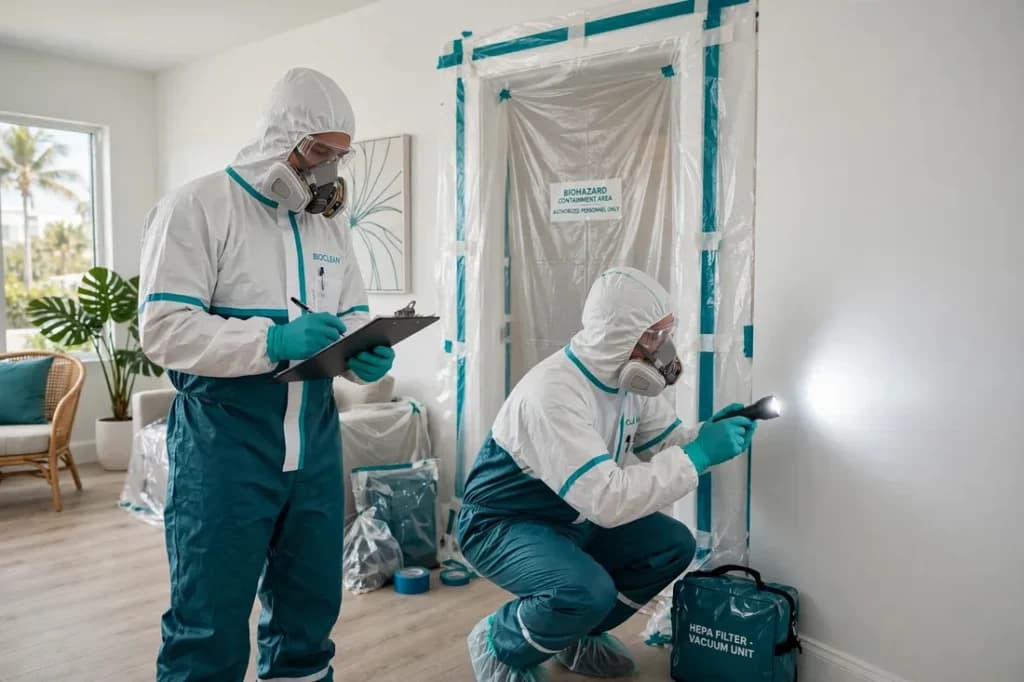
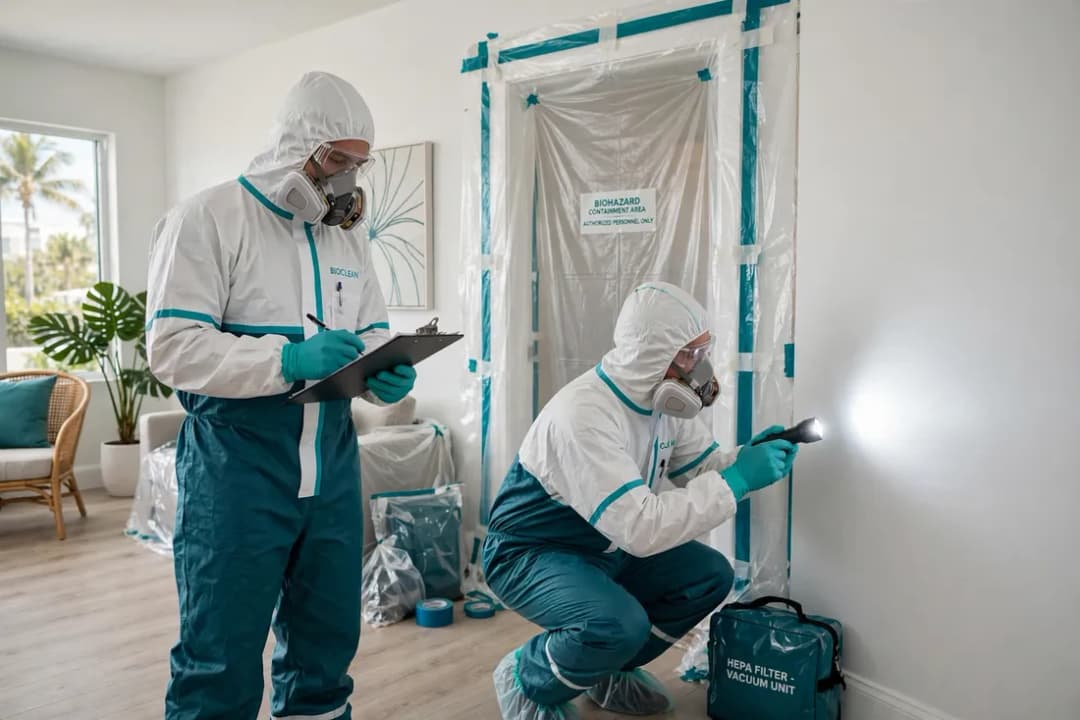
Barriers and negative air pressure go up before removal starts. Containment keeps unaffected areas clean and limits odor migration through HVAC systems, which matters a lot in Miami homes where air conditioning runs constantly.
Removal of Contaminated Materials
Porous materials that cannot be disinfected are cut out: carpet, padding, affected drywall, mattresses, and soft furnishings. Each item goes into labeled biohazard bags for regulated disposal.
Nonporous surfaces are treated rather than discarded. The goal is to remove only what must go, and to save what can be made safe.
Cleaning, Disinfection, and Odor Treatment
Surfaces are cleaned first, because disinfectants cannot work through organic matter. Then we apply EPA-registered disinfectants at label-directed dwell times, usually 3 to 10 minutes depending on the product.
Odor treatment follows with enzyme treatments and hydroxyl generation. We neutralize odor at the source rather than masking it with fragrance.
Regulated Disposal and Verification
All biohazardous waste leaves through a licensed medical waste transporter with a manifest trail. We verify treated areas before calling the job complete, and we give the owner a written summary of the work.
What Makes Homicide Scenes Different
Homicide scenes differ from other trauma scenes in three ways that affect the work.
First, the affected area is often larger. Investigators move through the property, and contamination spreads with that movement.
Second, the timeline is less predictable. Families may not get access for days, and in Miami heat, decomposition and odor can advance in that window. Crews plan for that, but families should know it is possible.
Third, the paperwork load is heavier. Insurance claims, victim assistance programs, and landlord records all draw on the same documentation, so we keep it thorough from the start.
A mistake I see often: owners let a general cleaner into the scene before a professional assessment. General cleaning spreads contamination and destroys the documentation an insurer needs. Wait for the professional crew.
Health Risks Are Real and Often Hidden
Blood and bodily fluids can carry bloodborne pathogens, including hepatitis B, hepatitis C, and HIV, as documented by the CDC. The risk is not only what is visible on a surface.
Contamination seeps into subflooring, behind baseboards, and into fixtures. A room that looks clean can still carry pathogens in materials below the surface.
That is why professional crews work under OSHA’s Bloodborne Pathogens Standard (29 CFR 1910.1030), with full PPE, an exposure control plan, and training. A homeowner with household cleaners has none of that protection, and no way to verify the result.
Who Pays for Homicide Cleanup
Payment is often the second shock after the event itself. The usual picture is this: the property owner is responsible for the property, but several routes can cover part or all of the cost.
Homeowners insurance may cover cleanup under dwelling coverage, depending on the policy and the cause. Victim compensation programs in Florida can help families of victims with crime-related costs. Our guide to crime scene cleanup costs walks through owners, victims, and assistance programs in detail.
Document everything from the first day: the police release, photos, the written scope, invoices, and the completion summary. Claims move faster with a complete file, and they stall without one.
If you are a landlord, do not relet the unit until cleanup is verified. A unit that still carries contamination is not habitable, and reletting it early creates liability that dwarfs the cleanup cost.
Discretion Matters for Neighbors and Tenants
Homicide scenes attract attention, and families do not need more of it. Our crews arrive in unmarked vehicles, work quietly, and keep doors closed.
We do not discuss the job with neighbors, and we do not share details about the deceased. The family or the authorized contact is the only audience for updates.
For property managers, discretion also protects the building. A quiet, professional cleanup reassures other tenants far more than a visible, chaotic one.
The same discreet approach applies across our crime scene cleanup service and our biohazard cleanup service in Miami.
Choosing a Homicide Cleanup Company in Miami
Not every company that advertises crime scene work is equipped for a homicide scene. Ask these questions before hiring:
- Are crews trained under OSHA bloodborne pathogens standards, with a written exposure control plan
- Does the company provide a written scope and price before work begins
- Is biohazardous waste removed by a licensed transporter with a manifest
- Will you receive a written completion summary for insurance and records
- Can the crew respond the same day the scene is released
A company that cannot answer these clearly is not ready for this work. Our homicide cleanup service in Miami meets each of these standards, and we explain the scope in plain language before any work starts.
The full crime scene cleanup process gives the same sequence in general terms, and it is a useful reference when comparing companies.
Summary
Homicide cleanup begins only after police release, and it follows a documented process: assessment, containment, removal, disinfection, odor treatment, regulated disposal, and verified handover. It protects health, preserves insurance documentation, and restores a property that no family or owner should have to face alone.
If you need help in Miami, Contact Hazard Guard or call (888) 976-0045. Our crews respond around the clock, arrive discreetly, and the call is free.