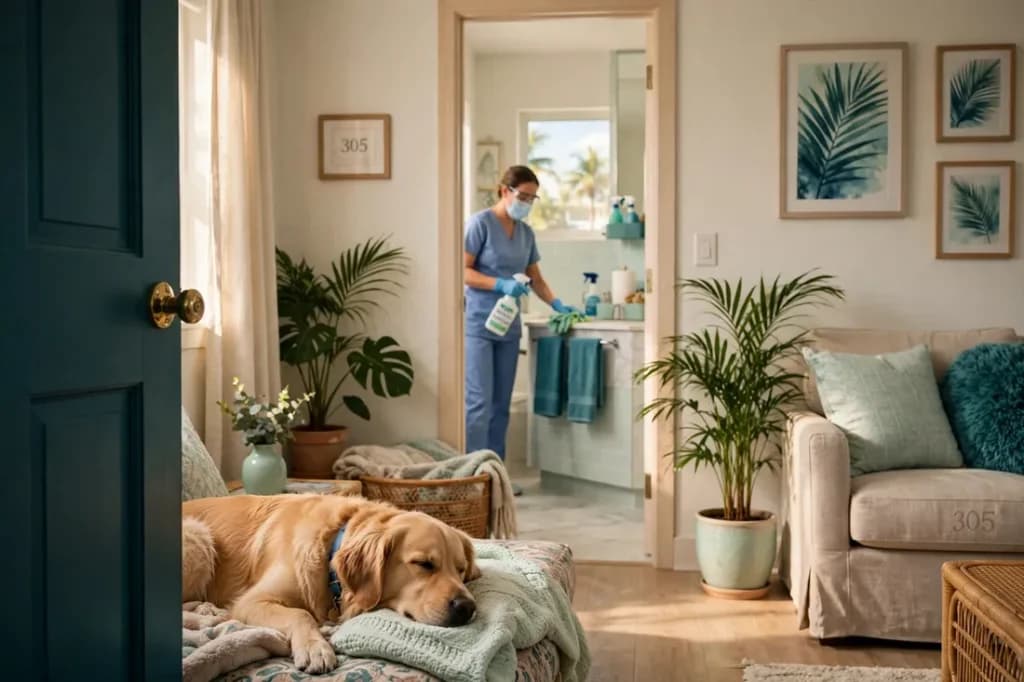
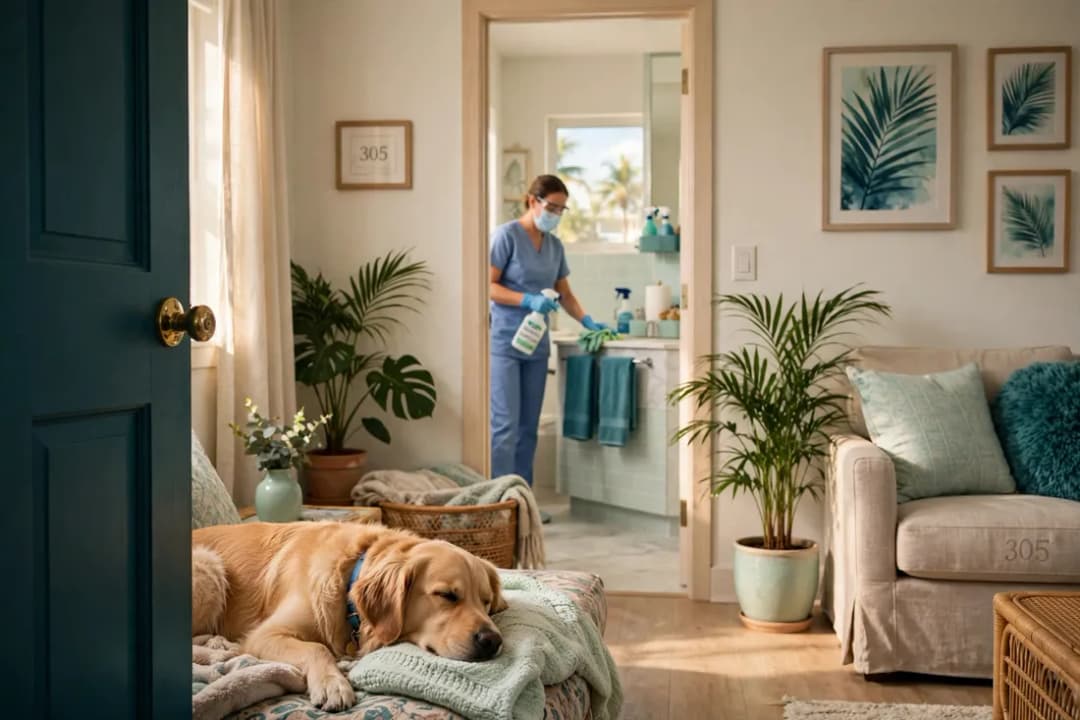
Keeping pets safe during biohazard cleanup means moving them out of the contaminated area before work begins, keeping them away until the space is verified clean and dry, and checking their paws, fur, and bowls for exposure. Pets walk through contamination, lick their paws, and drink from bowls on the floor.
They cannot tell you they were exposed. You have to plan for them the way you plan for children.
In Miami, where many homes have dogs, cats, and birds living indoors, pet safety is part of every cleanup plan. A pet that wanders back into a treated room too soon can carry chemicals and pathogens through the whole house.
Why Pets Face Higher Risk Than People
Pets live at floor level. That is where contamination settles. Blood, bodily fluids, and chemical residue all end up on floors, rugs, and low surfaces.
Dogs step in it. Cats walk through it and then groom themselves. Birds breathe air near the floor where fumes collect. The exposure routes are different from ours, and the doses are higher for their body weight.
Pets also cannot follow instructions. A closed door means nothing to a cat. A baby gate stops a toddler. It does not stop a determined dog.
That is why physical separation matters more than verbal rules. Pets belong in a closed room, a crate, or outside the home entirely during cleanup.
Move Pets Out Before Cleanup Begins
The first step is always the same. Move pets out before the crew arrives.
Choose a Safe Room or a Safe Home
Put pets in a room far from the contaminated area, with the door closed. Give them water, food, bedding, and a litter box or potty access.
Better still, move them to a friend, family member, or boarding facility for the day. In Miami, summer heat makes cars and garages unsafe holding areas. Never leave a pet in a hot car or garage.
Tell the Crew About Your Pets
Tell the cleanup crew how many pets you have, where they are, and whether any are loose. Crews open doors and move equipment. A loose cat can slip into a contaminated room in seconds.
I have seen a cat walk across a freshly treated floor because a door was left open for equipment. The crew had to stop, re-treat the floor, and check the cat. One open door doubled the work.
Secure Bowls, Beds, and Toys
Pet bowls, beds, and toys in or near the contaminated area should be bagged or moved. Bowls on the floor collect splatter and disinfectant overspray.
After cleanup, wash bowls with soap and water before refilling. Replace any pet bedding that was in the contaminated zone. Soft materials absorb fluids and chemicals.
Dangers Pets Face During Cleanup
Disinfectant Exposure
EPA-registered disinfectants are safe on surfaces when used at label dilution and dwell time. They are not safe for pets to walk through, lick, or breathe in concentrated form.
Keep pets away until surfaces are fully dry. Wet disinfectant on paws gets licked off within minutes. That is the most common pet exposure I hear about.
Bloodborne Pathogens
Blood and bodily fluids carry hepatitis B, hepatitis C, and HIV, as documented by the CDC. Pets that walk through blood can carry pathogens on their paws and fur to clean areas, furniture, and people.
Dogs also lick blood. That is a direct ingestion route. Keep them out of the room entirely.
Sharps and Debris
Broken glass, needles, and contaminated debris are a risk for paws. A dog that steps on a needle in a contaminated area faces both injury and infection risk.
Our guide on safe sharps handling after finding a needle at home covers the same no-touch, container-first rules. Pets should never be near sharps, ever.
Fumes and Odor Treatments
Ozone and hydroxyl treatments used for odor removal are not safe for pets in the room. Birds are especially sensitive to airborne chemicals. Fish tanks should be covered or moved.
Ask the crew which treatments they are using and when the room is safe to re-enter. Do not guess.
When Pets Can Safely Return
Pets can return when the crew confirms the room is clean, dry, and verified. That means surfaces are dry to the touch, the room has been ventilated, and any odor treatment equipment is off.
Check Paws and Fur First
Before letting a pet back in, check paws, belly fur, and whiskers for residue. If you see or smell anything unusual, wash the area with mild soap and water.
Cats groom constantly. If a cat was anywhere near the work area, check its paws before it starts grooming.
Wash Bedding and Toys
Wash pet bedding, blankets, and soft toys that were in or near the work zone. Use hot water and regular detergent. Discard anything that was directly contaminated.
Hard toys and bowls can be washed with soap and water. If a toy sat in blood or bodily fluids, throw it away. It is not worth the risk.
Watch for Symptoms
Watch pets for vomiting, diarrhea, lethargy, drooling, or paw licking in the 24 to 48 hours after cleanup. Call your veterinarian if anything seems off.
Tell the vet what the pet may have been exposed to. That detail changes the advice. A vet cannot help without it.
Pets and Hoarding Situations
Animal hoarding homes carry extra risk. Ammonia from urine, parasites, and zoonotic disease are common. Pets in these homes may already be sick.
Our guide on animal hoarding cleanup explains the unique risks and how professionals handle them. If your home has many animals and waste buildup, do not try to manage it alone.
Rescue organizations and animal control can help place animals safely while cleanup happens. That coordination protects both the pets and the people.
What to Do If a Pet Dies at Home
A pet death at home is painful. It is also a biohazard situation. Decomposition begins quickly in Miami heat, and bodily fluids can contaminate floors and furniture.
Do not handle the body with bare hands. Wear gloves, place the body in a sealed bag, and call your veterinarian or a pet cremation service. If fluids have soaked into flooring or furniture, a professional biohazard cleanup crew can handle the decontamination.
Grief makes people want to clean up themselves. That is understandable. But decomposition fluids carry real infection risk, and the emotional cost of handling it alone is high.
For deaths involving blood or trauma, a professional trauma cleanup crew handles the scene safely and discreetly.
Planning Ahead: A Pet Safety Checklist
Keep a short plan ready before you ever need it.
- A carrier or leash by the door, so pets can be moved fast.
- A neighbor or family member who can take pets for a day.
- The vet’s number saved in your phone.
- Pet food, water, and medication in a go bag.
- A list of every pet in the home, so the crew knows who to watch for.
Our guide on how to protect your family from biohazards before professionals arrive covers the same isolation steps for people. Pets need the same protection, planned in advance.
Summary
Keeping pets safe during biohazard cleanup means moving them out before work begins, keeping them away until surfaces are dry and verified, and checking paws, fur, and bowls before they return. Pets face higher risk than people because they live at floor level and groom themselves.
Never let a pet walk through a contaminated or freshly treated room. Plan their safe place in advance, tell the crew about every pet, and watch for symptoms for 48 hours after cleanup.
If your Miami home needs biohazard cleanup and you have pets, tell us when you call. Contact Hazard Guard or call (888) 976-0045. Our crews respond 24/7, and the call is free.