Florida biomedical waste rules are the state regulations for how infectious waste is segregated, stored, transported, and treated. They live in Chapter 64E-16 of the Florida Administrative Code. They apply to anyone who generates, transports, stores, or treats biomedical waste.
Property owners in Miami encounter these rules after trauma scenes, unattended deaths, crime scenes, and any cleanup involving blood or bodily fluids. The waste your cleanup crew removes from your property is governed by these rules from the moment it is bagged.
The headline facts: storage is capped at 30 days, waste must travel in sealed red bags or sharps containers, and only permitted transporters may haul it.
What Florida Counts as Biomedical Waste
Florida defines biomedical waste as solid or liquid waste that may present a threat of infection to humans. In practice, on a cleanup job, that means two categories.
Sharps come first: needles, syringes, blades, scalpels, glass slides, and any item that can puncture skin. These go into rigid, puncture-resistant sharps containers, not bags.
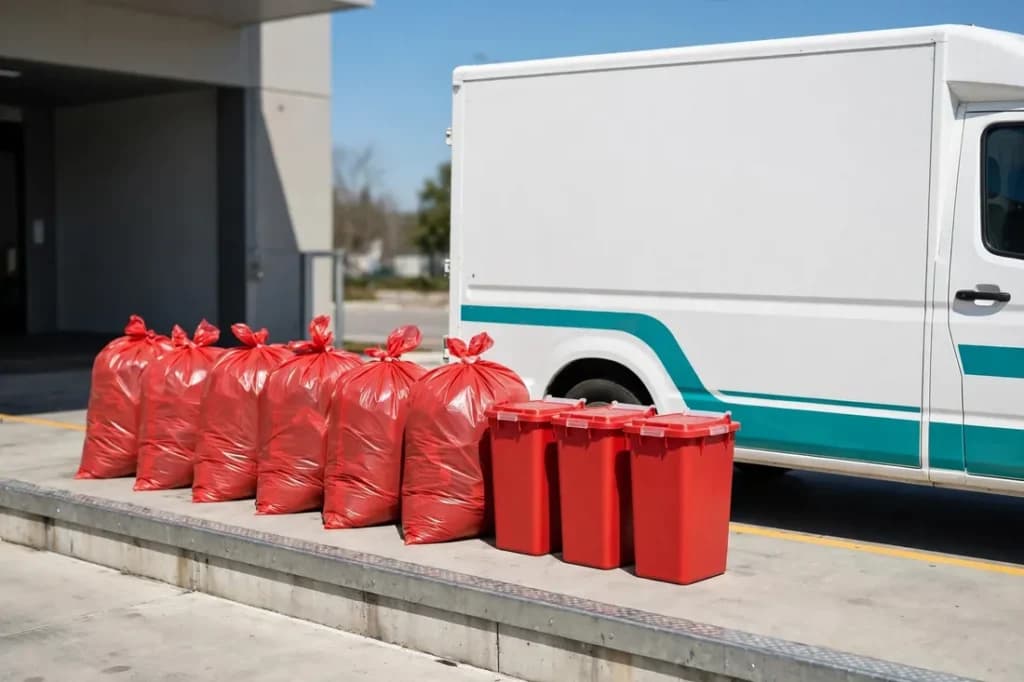
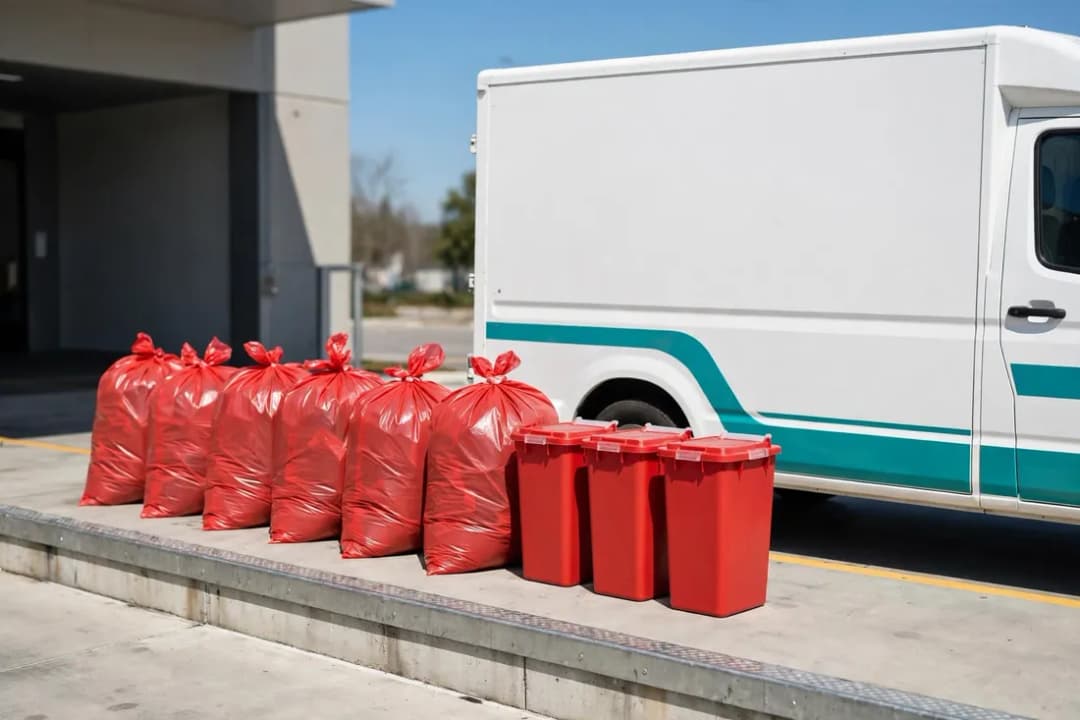
Non-sharps cover everything else contaminated with blood or bodily fluids: blood-soaked bandages, gauze, gloves, and any material saturated with body fluids. These go into red, impermeable bags.
The segregation happens at the point of origin. That is the room where the waste is generated. Sorting it later, at a storage area or on the truck, is not how the rule works. Mix general trash into biomedical waste and the whole load gets managed as biomedical waste. That mistake costs the generator money.
The 30-Day Storage Rule
This is the number every property owner should remember: 30 days. Under 64E-16.004, Florida Administrative Code, biomedical waste cannot be stored at the generating facility for more than 30 days.
The clock starts when the first non-sharps item goes into a red bag or sharps container, or when a sharps-only container is sealed. The same 30-day cap applies at any storage facility after collection, counting from the day of pickup.
Storage areas have their own requirements. Indoor areas must have restricted access, be designated in a written operating plan, sit away from pedestrian traffic, stay vermin and insect free, and be built from smooth, cleanable materials that are impervious to liquids.
Outdoor storage areas must meet the same criteria plus carry the international biological hazard symbol at a minimum of six inches in diameter. They must be secured against vandalism and unauthorized entry.
For a property owner, the practical point is simple. After a cleanup job, waste should leave your property on a licensed truck, not sit in your garage. I have seen landlords store red bags “until someone picks them up” for weeks. That is a violation with your name on it.
How Biomedical Waste Must Be Packaged and Labeled
Every package of biomedical waste must stay sealed until treatment. Ruptured or leaking packages must go into larger packaging without disturbing the original seal.
Labeling is specific. Each package must carry the international biological hazard symbol and one of the approved phrases: “BIOMEDICAL WASTE,” “BIOHAZARDOUS WASTE,” “BIOHAZARD,” “INFECTIOUS WASTE,” or “INFECTIOUS SUBSTANCE.”
For offsite transport, waste travels in rigid, leak-proof secondary containers. The outer container carries the generator’s name and address plus the date the waste was generated. A manifest accompanies the waste to its final treatment or disposal destination.
This paper trail is what protects you. The full chain from your property to the treatment facility is documented in our article on how biomedical waste is legally disposed of. When your insurance adjuster asks for proof of proper disposal, the manifest is your answer.

Who Can Transport and Treat Biomedical Waste in Florida
Only permitted biomedical waste transporters may haul this waste in Florida. Generators and transporters must be permitted under Chapter 64E-16, and treatment facilities need their own permits.
This is another vetting question for property owners. Ask your cleanup company who their licensed transporter is. If they hesitate, or if waste is leaving your property in an unmarked truck, something is wrong.
I have watched an unmarked pickup truck pull away from a job site with red bags in the open bed. No placard, no manifest, no secondary containment. That waste could end up anywhere, and the liability follows the generator.
Treatment happens through approved methods like incineration or autoclaving. Landfills do not take untreated biomedical waste. Your household trash service cannot legally take it either, which is why blood cleanup crews never bag waste with your regular garbage.
What This Means for Miami Property Owners After a Cleanup Job
Three takeaways for anyone managing a property in Miami-Dade County.
First, confirm the biohazard cleanup company you hire works with a permitted biomedical waste transporter and generates a manifest for every job. That is your proof the waste left the legal way.
Second, understand what kinds of waste these rules cover. Our guide to the 4 types of biohazard waste maps Florida’s categories to what you will actually see on a job.
Third, keep the documentation. Store the manifest with your property records. If an insurer, tenant, or regulator ever questions the cleanup, you have the paper trail. Properties with trauma cleanup histories in particular benefit from keeping this paperwork indefinitely.
The federal layer matters too. Our guide to who regulates biohazard cleanup covers OSHA, the EPA, and how they intersect with Florida’s rules.
Summary
Florida Chapter 64E-16 governs biomedical waste from generation to treatment. Storage is capped at 30 days. Waste must be segregated at the point of origin into red bags or sharps containers, sealed, labeled, and moved by permitted transporters with a manifest.
For Miami property owners, compliance is mostly about hiring the right company and keeping the paperwork. Get the manifest, store it, and never let biomedical waste sit.
Need help in Miami? Contact Hazard Guard or call (888) 976-0045. Our crews are available around the clock, and the call is free.