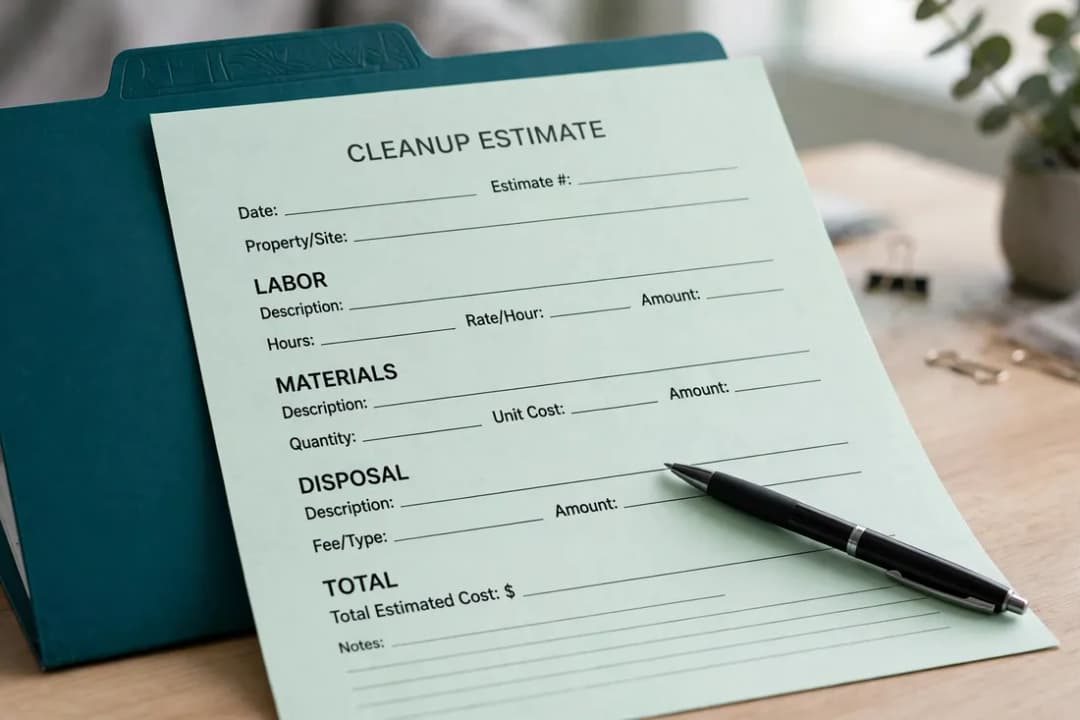
A biohazard cleanup estimate is a written scope of work with a fixed price. It lists labor, materials, disposal, and a total. It also states how long the price is valid and what happens if the scope changes.
If an estimate has no line items, no total, or no validity date, it is not an estimate. It is a guess with your name on it.
In Miami, where emergency cleanups often happen under stress, families sign whatever is put in front of them. That is when hidden charges appear.

What a Proper Estimate Must Contain
A proper estimate has five parts. If any are missing, ask for them before you sign.
Scope of Work
The estimate describes exactly what will be done. Rooms affected, materials to be removed, surfaces to be treated, and the verification step at the end.
Vague scope is the biggest red flag. “Clean up biohazard” is not a scope. “Remove and dispose of contaminated carpet in bedroom, treat subfloor, disinfect all hard surfaces, verify with moisture and visual inspection” is a scope.
Labor
Labor shows hours and rate, or a flat crew fee. Hourly billing with no cap is a warning sign. A reputable company gives you a fixed labor number or a capped range.
Ask whether the rate covers the full crew or one technician. That distinction has doubled bills before.
Materials and Equipment
Disinfectants, PPE, containment materials, and equipment rental should be listed. These are real costs. They should also be itemized, not buried in a single “supplies” line.
If materials are listed as one lump sum with no breakdown, ask for the breakdown. You are entitled to it.
Disposal
Biomedical waste disposal is a regulated cost. It goes through a licensed transporter with a manifest. The estimate should show the disposal fee as its own line.
Disposal is the most common hidden charge. I have reviewed estimates where disposal was never mentioned, then appeared as a separate invoice for hundreds of dollars after the job.
Total and Validity
The estimate ends with a total and a validity period, usually 30 days. Prices change. A validity date protects both sides.
No total means no agreement. No validity date means the price can change tomorrow.
Hidden Charges to Watch For
The Open-Ended Hourly Rate
An estimate that says “labor at $150 per hour, time to be determined” is an open tab. The job takes as long as the company says it takes.
Get a fixed price or a written cap. If the company cannot estimate the hours, they have not assessed the scene properly.
The Vague Miscellaneous Line
A line that says “miscellaneous” or “other” with a large dollar figure is a hiding place. Every charge should have a name.
Ask what is inside that line. If the answer is vague, the charge is not legitimate.
Disposal Added After the Job
Some companies quote cleanup only, then bill disposal separately after the work is done. By then you have no leverage.
Disposal must be in the original estimate. If it is not, ask for a revised estimate before work starts.
Equipment Fees You Never Agreed To
Air scrubbers, hydroxyl generators, and ozone machines cost money to run. They should be listed in the estimate if they will be used.
A fee for equipment that appears on the final invoice but not the estimate is a hidden charge. Ask for the equipment list up front.
Emergency and After-Hours Surcharges
Emergency response at night or on weekends may carry a surcharge. That is legitimate. But the surcharge must be disclosed before work begins, not added at the end.
Ask whether the quoted price includes after-hours response. Get the answer in writing.
Red Flags That Mean Walk Away
No Written Estimate at All
A company that starts work without a written estimate is asking you to trust a blank check. Do not sign it.
Reputable companies scope the job, write it down, and get your signature before touching anything.
Pressure to Sign Immediately
High-pressure tactics are a red flag in any industry. In biohazard cleanup, they are worse, because the customer is often grieving or in crisis.
A legitimate company gives you time to read the estimate and call your insurer. If someone says the price expires in an hour, keep calling around.
A Price Quoted Over the Phone
No one can price a biohazard job without seeing the scene. A phone quote is a guess. It will change once the crew arrives, and not in your favor.
Our guide on biohazard cleanup cost explains the real price ranges by service and what drives them. Use it to check any quote you receive.
No Insurance or License Details
The estimate should name the company, its insurance, and its certifications. If those details are missing, the company may not have them.
Our guide on how biohazard cleanup companies price their work explains the pricing models in detail and the red flags in each one.
How Estimates Connect to Insurance
Your insurer needs the estimate to approve a claim. A detailed estimate with photos and a clear scope speeds approval. A vague estimate slows it down.
Send the estimate to your adjuster before work starts when possible. Get written approval for the scope. That protects you if the insurer later questions the cost.
Our guide on how to file an insurance claim for biohazard cleanup walks through the full process step by step, including the documentation your adjuster will want.
If your claim is denied, do not accept the first answer. Our guide on insurance denied biohazard cleanup claims explains the appeal steps and the documentation that wins appeals.
Comparing Two Estimates
Get two written estimates when you can. Compare them line by line.
Look for the same scope in both. If one estimate is far cheaper, check what it left out. Disposal, verification, and odor treatment are the lines that get dropped to make a price look low.
A cheap estimate that omits disposal is not cheap. It is incomplete. The final bill will catch up.
Also compare the service behind the price. A biohazard cleanup job, a blood cleanup job, and a trauma cleanup job have different scopes. Make sure the estimate matches the situation you actually have.
What to Do Before You Sign
Read the whole estimate. Check the scope, the line items, the total, and the validity date. Ask about anything you do not understand.
Confirm disposal is included. Confirm the price is fixed or capped. Confirm what happens if the crew finds more contamination than expected.
Then sign. A signed estimate protects you. It turns a conversation into an agreement.
Summary
A biohazard cleanup estimate is a written scope with a fixed price, itemized labor, materials, and disposal, plus a total and a validity date. Hidden charges hide in open-ended hourly rates, vague miscellaneous lines, disposal billed after the job, and equipment fees never disclosed.
Never sign an estimate you have not read. Never accept a phone quote as a price. And never let pressure replace paperwork.
If you need a clear, written estimate for a Miami property, Contact Hazard Guard or call (888) 976-0045. Our crews respond 24/7, and the call is free.